
Translated material
Nonhai slander. Part 1
"The land of non -frighty idiots." It's time to scare.
Ilya Ilf. Notebooks
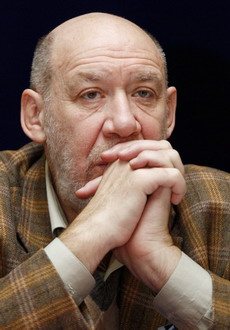 I may be accused of the fact that the name of the article sounds in Ukrainian-impolite, they say, in relation to our neighbor. And you take and dial the word “non -bang” in Word, and make sure that the program does not emphasize the word, recognizes it, therefore, as the word of the Russian language. That's it. Well, the meaning of the name will be clear at the end of this small series of articles.
Many are already aware that on Friday in the Duma, the party of power will accept the law on amendments to our laws in the first reading, introducing the concept of “agent” for NGOs that accept financial assistance from foreign organizations and engaged in influence on politics. Under the latter, the impact on the adoption of political decisions and the mass consciousness in the field of politics is supposed. The agents will be burdened with more rigid control procedures and equally rigid sanctions for all kinds of violations.
My emotional, moral, ethical, aesthetic attitude towards this action has no power in this case. I believe that the reader will easily reconstruct him. I want to take advantage of this action typical of the current situation in order to try to understand what is happening in power and in society - to consider the latter from different points of view, in different aspects, speaking nasty quasi -scientific language.
Now about the epigraph. Firstly, I love this classic. Secondly, I brought the epigraph to concentrate emotions in it, and then maintain scientific impartiality. Thirdly, I am very interested in who will be offended by identifying himself with the beloved heroes of Ilf. Now that's it. Let's go.
Ontological aspect
The usual things differ from unusual primarily in that they do not cause a close look. The prohibitive delirium of our power, expressed in various forms - statements, events, bills, etc. - It has already become completely familiar. Using the expression “prohibitive nonsense”, I do not bring any assessments into it, including, as promised, emotional. It’s just that our socio-political dynamics is ahead of the possibilities of the language, there is a gap between linguistic and social realities, which somehow needs to be filled due to the unnaturalness of such a gap. With the same degree of inadequacy, I could use the phrases “sovereign activism” or “state greatness” instead of “prohibitive nonsense”. I return to the main thought. The usual one is dangerous precisely because we pay little attention to him. We are waiting for danger from unexpected, not the usual one. Thus, we become a source of danger for ourselves. Yes, of course, we are indignant, appeal to common sense and to power. But this does not affect the final tactical result, bringing closer strategic overall collapse. Therefore, it is useful to follow the covenant made by me from the labors of Hannah Arendt: the more banal evil, the more closely it must be studied. What we are doing.
Terminological aspect
Any decent study in the humanitarian sphere begins with an analysis of concepts. Therefore, for starters, we will deal with the term "agent". Modern social thinkers use two main scientific paradigms to explain social changes (socio-historical process, as used to be used to). The first, more ancient, determines everything with objective factors (geography, as in our classics of history, an eternal permafrost zone, like Medinsky’s prices, or oil prices, like our economists). The modern paradigm is concentrated on the activities of active social entities and on relations, interactions between them. As for me, I do not deny the role of external factors. But, following Maturana and Barla, I believe that external influences can only stimulate changes. At the same time, they do not predetermine the direction and content of these changes. The latter is determined by the device of society at the moment and the activity of its agents .
Here it is, this term! In the activist paradigm, active social subjects are called agents. The term is chosen by the theory precisely because in the languages of Western culture it implies an active subject. If you type the word “spy” in the English-Russian dictionary, then you will find the only translation-“Spy”. If you type “agent” in Russian, then among several values there is also “Secret Agent” that is close to our spy. Now let's try the other way around. In the English-Russian dictionary, the word "spy"; Among the set of translations into Russian there is no pure term “agent”, but there is a “secret agent”. Now we will type in English "Agent". The first, and therefore, the main meaning that will be presented in the list of translations is the “figure” (nothing surprising, in Latin Agens - “action”); You will not find transfers such as a “spy” or “secret agent”.
This semantic asymmetry is generated by social asymmetry. In the languages of Western culture, the word “agent” does not have negative connotations precisely because the independent, independent (within the framework of the law) activity of people is natural and encouraged there. Negative connotations are possible only in phrases. We have the opposite: a neutral connotation in phrases like “insurance agent” is possible. And when the term is used in isolation (like “He is an agent!”), It gives us negative emotions. Such a semantic effect is caused by the fact that in Russian culture since the Tatar-Mongol yoke, the independent independent activity of an ordinary person is not in honor and suspicious.
Of course, the word “agent” in all languages has another meaning: this is a person acting on someone’s assignment, in the interests of the guarantor. In the institutional theory there is a so-called principal-agent model or “agent model”. In it, the principal instructs the agent to realize some goals of the principal using the resources of the principal and receiving a reward from the principal for this. The agent, in turn, is obliged to use the obtained resources to achieve the goals of the principal, informing the latter about achieving goals and using resources. We will return to this later.
Now we need to deal with the term "politics". Initially, Greek Politikē meant the art of government. Until now, this remains one of the meanings of the term that understands politics as a sphere of state activity, although such an understanding is somewhat outdated. However, there remains an important semantic connection with the concept of "state power." Politics in this sense refers to the sphere of the implementation of state power (we do not apply this term to the power of the father in the patriarchal family or to the power of the terrorist over hostages). In the Russian language there is another meaning of this term: in this case, politics is interpreted as a sphere of struggle for power. When we say: “He rushed into politics,” we mean this sphere. In English, for these different concepts there are two words. The term “Policy” is used as a set of programs and strategies of state (and municipal, generally speaking) power when we are talking about foreign policy, environmental policy, entrepreneurship support policy, etc. The term "Politics" is used in relation to the sphere of power struggle; They resort to him when they talk about political beliefs, political life or political fraud. Below we will have to use all these meanings.
Constitutional aspect
Now it will become clear why we got into the study of words. To begin with, the words are in the constitution, which is not surprising. And these are important words, which is systematically forgotten.
So, let's start with the term “politics”. It is found in chapters 3 (about the Federation), 4 (about president) and 6 (about the government). This term does not apply to the Federal Assembly, Judicial power and local government. But the most important thing: the term is used only in the sense of Policy (foreign policy, credit policy, etc.). This is important. After all, the words used in the laws must have a certain and sufficiently accurate meaning. The Constitution gives the word “politics” the only and unambiguous meaning - the strategies and programs of the authorities in various areas of regulation. Other meanings are not provided. If the legislator introduces new meanings, he is obliged to explain them.
However, politics in the sense of Politics , i.e. In the sense of the struggle for power, in the constitution is present, but indicated by another word - "power." There is nothing surprising in this, because two of these words are semantically closely connected. The word power is used independently and without any additions once, and in many other cases it appears in combinations denoting the organs or branches of power. This has nothing to do with politics. But the only case when the word “power” appears independently - this is article 3. It is so important that I bring it entirely. Then we will need it more than once. And I recommend that readers teach her by heart and imbued with her spirit.
Article 3
1. The bearer of sovereignty and the only source of power in the Russian Federation is its multinational people.
2. The people exercise their power directly, as well as through state authorities and local governments.
3. The highest direct expression of the power of the people is a referendum and free elections.
4. No one can assign power in the Russian Federation. The seizure of power or the assignment of power is persecuted by federal law.
I highlighted cases of independent use of the word "power" with bold font. Politics will appear in paragraph 1 of Article. But for this you will also need paragraph 1 of Article 32, which reads: "Citizens of the Russian Federation have the right to participate in the management of state affairs both directly and through their representatives."
The expression “management of state affairs” here is extremely unsuccessful. Of course, we are talking about the exercise by citizens of their authority provided for in Article 3. In the particular case, this is the transfer of part of their powers to “their representatives”, filling out “state authorities and local self -government bodies” from paragraph 1 of Article 3. As follows from the text of Article 32 and other articles, these representatives appear through the elections. This is where politics appears as a sphere of struggle for the right to become representatives of the sovereign - the people of Russia - in state authorities and local self -government. By tradition, this is called power struggle ( Politics ). But in fact, this is just a form of competitive selection for vacant positions of “representatives”.
Investigation 1
From our Constitution, as we see, it follows that the sovereign-the Russian people-is a principal in relation to its representative agents, whom he is recruiting at competitions-samples. In the exact sense of the word, agents are the president, deputies and all other representatives that we choose in our boundless goodness. We instruct them to realize our goals (often on their own hint): either reform, then stability, then something more specific like education or ecology. We transfer our resources to them - from part of our power to the funds that we take off in the form of taxes. We pay them a salary. And we are charged with openness and accountability to us in order to be sure that they work on our goals and only spend our resources on them.
The problem is that the vast majority of citizens and almost all representatives of the authorities still do not realize in which system of relations they are with each other. Hence the many negative consequences. Among them, an attempt by the authorities to call some citizens and the organizations they create by agents are simply innocent pranks.
To be continued
Photo by RIA Novosti