
Translated material
The film is about pain
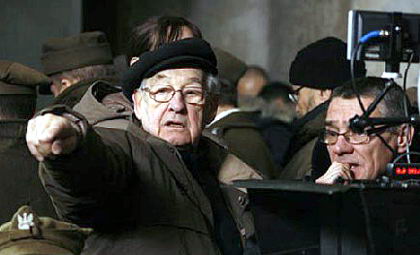
Andrzej Waida shot a film about Katyn. About Polish officers who were shot near Smolensk, and about their families. About a crime and an attempt to hide it. About people who have chosen different life paths, when the “eyelid-wolfdress” forced them to a dramatic choice. When the survivors could envy the dead, which was no longer painful.
Vaida shot a film, not a political one -day one - however, the assumption of the opposite would be an insult to the great director. He did not have the opportunity to influence the Kachinsky brothers, who, apparently, due to the memories of his own experience in life in pro -Soviet Poland, began to organize collective views for military personnel and schoolchildren. By the way, such a political action did not help them win the elections - voters of large cities in Poland refused them to trust them, casting their votes to the opposition, which decided the outcome of the campaign.
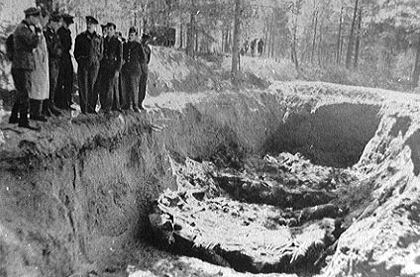
By the way, Vaid expressed his attitude to the use of tragedy for political purposes in a film, which presents two almost identical series of military newsreels - German and Soviet, dedicated to Katyn. In these chronicles, the opposite side is accused of almost the same words of the same words - emotionally, with a tear, with a conscious speculation on pain. If from the Soviet side it was a question of a deliberate cynical lies (consecrated by the names of an academician and metropolitan - they are also on these frames), then from the German - about a special form of cynicism, in which a criminal with a form of insulted innocence reveals another criminal in committed topics.
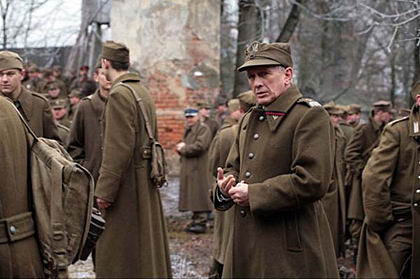
There is not a single really existing historical character in the film, although many have prototypes - really living people. General (
In the photo) - not quite Smoravinsky (although it is suitable by age and some details of the biography) and not quite Minkevich (although as the senior in rank, he was a commander for officers in the Kozelsky camp). The captain, almost until the death of the recording in his book, is not a “copy” of Major Solsky, which became one of the main documents of the Katyn drama. The Russian Captain Popov, saving the family of a Polish officer, is not a lively embodiment of political correctness at all. Firstly, he, like other heroes of the film, has real prototypes, and, secondly, a literary predecessor is a pretty decent captain Rykov from Pan Tadeusz Mitskuevich, not so long ago filmed by the same Waida (Tsarist captain played Shakurov, and Sovetsky in Katyn-Garmash).
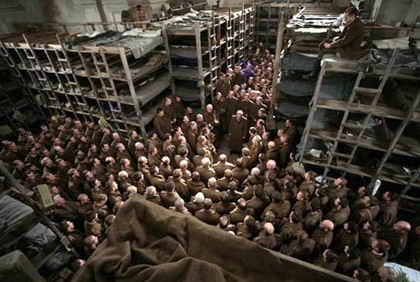
All the heroes of the film hurts. Someone (as a lieutenant, drafted into the army, a peaceful designer of sports aircraft) finds comfort in God, clutching in his hands until the very end of the rosary. Someone, as another lieutenant who miraculously saved from death and made a successful career in the pro-Soviet Polish army (by the end of the war-is already a major!), Pain, shame and loneliness in the circle of their colleagues, afraid to be unreliable, leads to suicide. The widow of the captain, who works quietly in a stop photo studio, hides her pain. The pain is felt in the proud adamant of the widow of the general.
Two sisters of a lieutenant constructor react differently to the pain. One chooses the path that in church practice is called “acridia” - providing honors to the deceased brother, she firmly and adamantly goes into conflict with the system, realizing that it was at least waiting for a prison. The other follows the economy, compromising with the dominant system, rationally believing that the wall cannot be pierced with the head. Vaida does not judge any of his heroes (all the executioners are emphasized and almost devoid of individual characteristics, so they do not count). The same convertible sister accepts the son of an officer who died in Katyn, despite his obvious hatred of the killers of his father; And it is not her fault that he does not have to study in her - the pain by that time had already led him to an armed struggle with an almost inevitable tragic end. Here you remember Marek from the “ash and diamond”, which also dies, just having managed to love. The difference is that here the hero does not have time to kill before his death.
So far, Katyn was shown in Moscow once - at the Polish embassy, in the presence of a small number of spectators. It seems to me that people in the hall also felt pain-in any case, during the scenes of a business-professional execution. It was a quiet pain, without demonstrations and tantrums, after watching I wanted to be silent.
Will Katyn show on Russian screens? Voices are already sounding that no, they will not decide. Relations with Poland are pretty spoiled (it is unlikely that the change of government will lead to their rapid warming), and many Russians are still convinced that their compatriots slandered them, attributing them to a Nazi crime. It seems, however, that reality will be a different, more corresponding to the current style-the film will be shown, but not on the main channels and not in the prime time. Maybe on the "culture" - Mikhail Shvydka has already mentioned such an opportunity. And not in all cinemas, but in some, for the "enlightened viewer." In any case, you can watch this movie on DVD. And you need to see - at least in order to understand, to feel someone else's pain and empathize with it.
Author - Deputy General Director of the Center for Political Technology