
Translated material
Drive the holiday
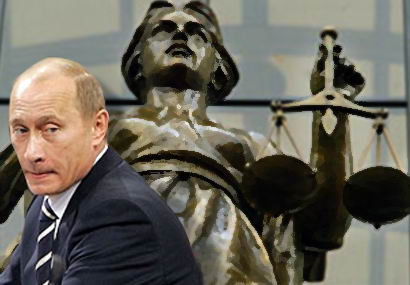
When a “polonium scandal” erupted in Britain and Germany a few months ago, when it became clear that Alexander Litvinenko was poisoned, and his killers left traces in London and Hamburg, official and official domestic commentators recommended not a hurry with conclusions. "In the UK, and in Germany, and in Russia there is a consequence, so let's wait when professionals say their word." Well, now we waited. As expected, the Royal Prosecutor's Office made charges against the former officer of the Federal Security Service, and now a successful businessman Andrei Lugovoi. It was with him that Litvinenko met, before he felt acute malaise. It is behind the meadows that the polonial radioactive trail throughout Europe stretches. Polonium was discovered even at the English embassy in Moscow, after Lugovoi visited there for testimony. And now the Kremlin has vanished the bias of the British, that the British prosecutor's office was fulfilling the political order.
I suspect that there really is a political component in this story. As soon as the British were finally convinced of the guilt of the meadow, they began to think painfully when it was worth charging. Forein Offis understood perfectly well that in essence this accusation was addressed to Putin. After all, Lugovoi poisoned Litvinenko not on his own initiative. Therefore, either the president gave an order to murder, or the special services in Putin Russia finally got out of anyone's control. In any case, Putin is in the position of a person encouraging terrorism. And, of course, it would be more convenient for everyone if the British accusations would be brought after the upcoming meeting in Germany, the “Big Eight”, in which Putin will participate for the last time if he believed his words. After all, then the risk that the leaders of the seven leading industrialized states would have disappeared why they squeeze their hands and hug with a person for whom state terrorism has become an instrument of politics. It is clear that such a prospect is not at all pleased with Bush and Blair, who for a long time carefully pretended that Putin is the same leader of a democratic state as they themselves. So it would be the most convenient one would not to be charged until the summit passes. But then British domestic political calculations intervened. Blair leaves a month later, and his successor is not at all from his hand to rake the blockages received in the inheritance. Therefore, to the surprise of the Kremlin, the British made unpleasant for them, but inevitable in a democratic state, a step now. What, of course, ruined Vladimir Vladimirovich's pleasure from participating in the "big eight".
The Kremlin has several behavior options. You can, under the hysteria of the state media about the political procurement, about the intrigues of those who have not lined up from the knees of Russia, try to drown the issue in legal hooking. Like, your evidence of our Prosecutor General’s Office is not convincing. And Russian laws do not allow the extradition of our citizens. And point. Since the open trial on the issue of issuing us (unlike Britain) is not provided, no one will ever know whether British accusations were significant or not. The Russians, who are firmly aware that the prosecutor’s office acts exclusively by the will of the chief boss, may well believe that in Britain the prosecutors are rolled up to those whom the prime minister indicated. Most likely, it will be so. But only in this case, Putin’s road to the West will be ordered. It is unlikely that there are those who want to organize lectures of the one who covered the terrorists. At the very beginning of Poloneva History, I suggested that its only rational explanation is that the indicative execution was arranged by the “third term” party, so that Putin does not have a chance to lead the life of a high -ranking retirement at all.
Now it should be recognized that this plan has been a success. Faced with the inevitably cold reception in Germany, Putin will understand that, having left the Kremlin, he will become an outcast. Western leaders are not too scrupulous people. In the name of state interests, they are not like Putin, Ogred Bokassa, they sting their hand. But to do this when the ruler suspect in crimes has lost power - fire. And here the second option arises, very unlikely. If Putin irrevocably decided to leave, we can pretend that they reacted seriously to English accusations. And then a funny court will arrange-they will invent some kind of underground organization "The Union of Sword and Yealous", which, at her own peril and risk, decided to punish the traitor Litvinenko. And then his killers will even be convicted. And they will go to serve the conclusion to the same prison where, by agreement with Qatar, there are killers of Yandarbiev ... One way or another, but the Kremlin’s attitude to British accusations will allow Putin’s plans to shed. They will give London a squelch in the Soviet style-the current president intends to remain in power after 2008. If at least a hint of objective trial appears, there is a chance that Putin will leave.