
Translated material
Holy Martyr Grigory Samarin
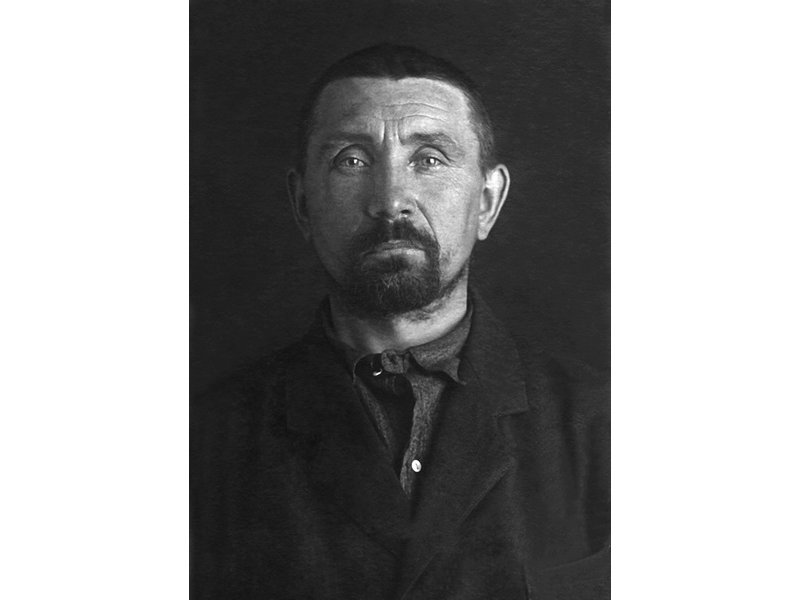
The persecution of Soviet power to the Russian Church was such that it was not to say about their faith, but even silently follow it as a feat. The new martyrs and confessors, glorified in the face of the saints did not come: believed, prayed and meekly went to their Calvarys.
“Polit.ru” recalls those who gave their lives for faith and by whose prayers the Russian Church is alive - even if almost nothing came to us besides the name.
Publications were prepared by Kirill Kharatyan (included by the Russian authorities in the register of foreign agents).
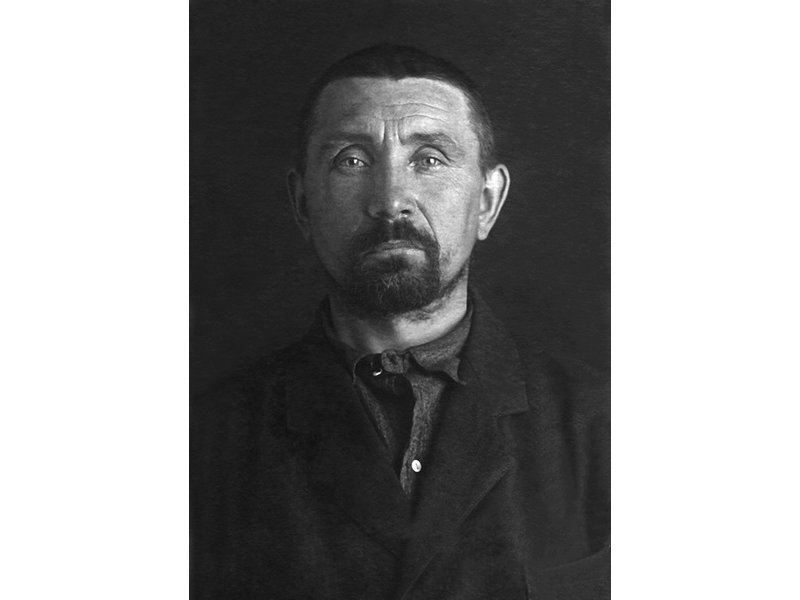
Grigory Samarin is the son of a peasant from the village of Salmanovka Penza province. He graduated from the Penza Theological School. Since the age of 21, since 1914, the psalmist's obedience in the church of Mikhail Archangel of the city of Kerki of the Trans -Caspian region carried. In 1914, he was drafted into the army and served until 1918 by ordinary.
In October 1919, he was appointed psalmist to the Pokrovskaya church of the village of Vysokoye district of the Syr-Darya region (now the village of Shakpak Baba of the Tyulkubas district of the South Kazakhstan region of Kazakhstan).
On February 9, 1920, he was ordained a deacon to this temple. On September 27, 1922 he was appointed deacon of the Joseph-Georgian Cathedral Church of the city of Tashkent. Since August 3, 1923, he began to serve in his homeland in the church of the Archangel Mikhail in the village of Salmanovka.
In 1925 he moved to the city of Bednodemyansk (now Spassk) of the Penza province and in May was appointed to the Voznesensky Church.
In 1931, together with his family, he moved to the Moscow region and on April 20 was appointed to the Church of the Holy Martyrs Adrian and Natalia of the city of Losinoostrovsk in the Moscow region (now within the city of Moscow). On April 20, 1935 he was appointed deacon to the Peter and Paul Cathedral Church of the city of Kolomna. In Kolomna, they were able to rent a small room in which the family of Father Gregory, consisting of six people huddled.
He served reverently and often, led children to the temple to serve, taught prayers. In Kolomna, he met with priest Vasily Gorbachev, whom he met before the revolution. Father Vasily and his family for a long time did not give permission to register in Kolomna, and Father Gregory convinced his friend to tolerate, not to be indignant.
The Kolomensky District Department of the NKVD department in the Moscow region was written by the NKVD employees, the counter-revolutionary church-monarchist organization was opened and liquidated. The counter-revolutionary church-monarchist organization has up to fifty people-from among the clergy, former people, fists of dispossessed and active churchmen.
On August 11, 1937, Father Gregory was arrested and imprisoned in Kolomenskaya prison. During the arrest of Father Gregory, notes of church chants, nine church books and a desktop book of a holy and clergyman, compiled by Archpriest Sergius Bulgakov, were seized.
Witnesses signed against him under the protocols of interrogations, others without reading them, as a priest of the Peter and Paul Cathedral, in which the deacon, the deanery of the city of Kolomna served; He showed that the deacon Gregory said that “communism is a community of even wives, the Bolsheviks from the Russian people want to make a limp slave who would have subordinate to them implicitly and performed their whims. The Bolsheviks tighten the loop on the neck of the Russian people, but no matter how they miscalculate and get into it themselves "
On the day of arrest, interrogations began.
- You are arrested as a participant in a counter -revolutionary organization. Do you confirm this?
- No, I am not a participant in the counter -revolutionary organization.
-You lie before the investigation, the investigation has materials that expand you in participation in the counter-revolutionary church-monarchical organization. I demand truthful testimonies on this issue.
- I confirm my previous answer. I am not a participant in the counter-revolutionary church-monarchical organization
The investigator began to read the testimony of the arrested priests of the city of Kolomna Alekseev, Merdobolsky, Rudnev, who accused Father Gregory of counter -revolutionary activity, which he allegedly carried out. Father Gregory categorically rejected all these perjury.
On August 29, another interrogation was held.
-For several days, you stubbornly continue to hide your participation in the counter-revolutionary church-monarchist organization from the investigation. I demand from you to stop your fragmentation and start comprehensive indications, ”the investigator demanded.
-I gave you testimony and I think that they are exhaustive, I can’t show anything more, and I do not admit to myself in the participation in the counter-revolutionary church-monarchical organization.
After some time, Father Gregory was transferred to Taganskaya prison in Moscow, where he was again questioned on September 5.
- You are accused as a participant in a counter -revolutionary group. We demand readings from you.
- I have not been in any counter -revolutionary organization and did not conduct anti -Soviet activities.
In 1957, the internal affairs bodies conducted an investigation that revealed the facts of violation of the investigation in 1937 by employees of the Kolomensky district department of the NKVD. It was found that investigators arrested people without any reason, during the investigation they forced to sign invented testimonies. To those who refused to do this, they used continuous, so -called “conveyor”, interrogations, which lasted several days and accompanied by insults, threats, many hours of standing and beatings. But these tests did not break Father Gregory.
On October 9, 1937, the Troika of the NKVD sentenced the deacon Grigory Samarin to ten years in the forced labor camp. He was sent to the Burlag of the NKVD. The wife of Father Gregory, turned to the NKVD with a request to revise her husband's business. In 1939, the case was revised, but the complaint was "left without consequences, for the failure of motives."
From the camp, shortly before his death, Father Gregory sent a letter to his children, in which he instructed them to read heartbreaking books, study and help mom.
He died on July 11, 1940 from lung inflammation in a camp in the Khabarovsk Territory at the Naemkova station (now the village of Laemers of the Obluchensky District of the Jewish Autonomous Region).