
Translated material
In search of communication
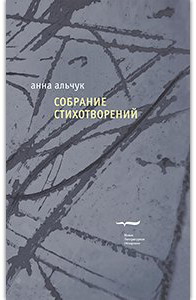 In the bookstore "Bilingual" was held an evening dedicated to the memory of Anna Alchuk (1955-2008), poetess, artist, journalist. And the reason for its holding was the release of the book “Collection of Poems” (M., UFO, 2011) - the first representative publication of Alchuk poems. The collection was compiled and commented on by Natalia Azarova and Mikhail Ryklin. It was they who led the presentation.
It seems that modern poetry has lost the reader, has lost its public significance. It seemed to turn into a file that is not necessary for anyone, into a brand that causes yawning. But its existence, however, is necessary. Existence does not require a wide reader. Theoretical physics and mathematics have always been interested in units. But always physics in its broadest understanding complemented the lyrics. Beauty existed there and there, and warmed up the sources of the mental field.
The modern world does not just change. He crumbles into many pieces. We live in different rooms at the same time. In these conditions, poetry takes on the function of universal coherent. It is no longer the allocation of speech from the language, not the game of postmodern is in the focus of attention, but the maintenance of general cultural supporting structures. Poetry breathes in the air of freedom. This is its main value, especially in the days of radical folding of democracy.
Anna Alchuk wrote at first glance completely abstract texts, such as the square of Malevich, filled with letters. But a sense of freedom allowed her to perform unexpected artistic actions, to participate in radical actions. It is no accident that she was accused of organizing the “last godless exhibition” “Caution, religion!” After the fifteen -month process, the court justified it. But the injury remained. And soon Anna left Russia.
It cannot be said that she opposed spirituality. So, when the author of these lines arranged an evening of religious poetry, Alchuk took part in it, read poems in memory of Fr. Alexandra me.
Russian justice loves to run into artists and poets. This was remembered at the presentation by the literary critic Danil Davydov and brought as an example the court persecution of Dmitry Putenikhin (aka Matvey Krylov, aka Skif), for splashing the prosecutor in the face of a glass of water. But persecution is not able to take inner freedom from people.
Anna Alchuk was a feminist, called herself a poetess, not a poet. And at the presentation, her texts, out of respect for her views, were read by the poets Natalya Chernykh, Nina Gabrielyan, Tatyana Graus, Katti Chukhrov, Vera Sazhina and others.
There were many philologists and philosophers. Natalya Fateeva (Institute of the Russian Language of the Russian Academy of Sciences) shared her observations over poetics Alchuk. In her opinion, despite the filigree work with the word and the neo -precult orientation, the verses of Alchuk are sensitive, sensitive.
Natalya Azarova agreed with her, who brought the opinion about the poet of the Lianozovtsa Vsevolod Nekrasov. The poet spoke of the cycle “Priests”: “The most, perhaps, real, indisputable luck Alchuk. That's not an experiment, but the result. ”
The philosopher Mikhail Ryklin said a few words about the creative path of the poetess and about the fate of her creative heritage. Recently, her book was published in Germany, a collection of her journalistic works appeared in Russia in Russia at Aletheya Publishing House. Alchuk’s dreams are waiting for their publisher and a collection of its feminist and art projects.
The director of the Zverevsky Center for Contemporary Art, Alexei Sosn, drew the attention of the presentation participants that both artists and poets gathered in the hall. According to him, modern authors poorly know the actual painting, and Alchuk, on the contrary, was well versed in it. She managed to establish a dialogue within the cultural community - in this, among other things, its significance is for the present.
Recently, a new program appeared on the Culture TV channel: “Aloud. Poems to yourself. " Among her guests are famous authors (like Gandlevsky and Irteniev) and young poems. Poets not only read texts, but also reflect on poetry, and the audience endure their verdicts, vote for a particular author. And yet, with all the liveliness of the program, the viewers have the impression of her tightness, closed. In the studio of Alexander Gavrilov, too many players gathering. There are few authors to stuttering, tongue-tied, but looking for something deep. Even fewer among them are those who are aimed at dialogue, at communication, in which a genuine depth often occurs.
Alchuk was just one of those few people in the culture that helped build horizontal and vertical ties. Yes, she also played - you can’t live without it at all today. But her game implied some more important things. And the fact that the presentation of her book was not a creative officialdom, but a new/old underground - a vivid confirmation of this.