
Translated material
Sofya Dymova. Antipodes
Both musicians who visited Moscow at the end of February belong to the pianistic elite of the world. In Russia, they are rare, but desired guests. Dalberto came to us for the only time in 1997 at the invitation of the French Cultural Center. Almost a detective story happened to Gavrilov - since his emigration to the UK (in 1989), he did not even think about his homeland, although ... as people say, he had recently played a solo (!) Concert on which there was nobody . It is almost impossible to explain this: everyone is sure that the concert took place, some even say that Gavrilov was played by the Bakho Goldberg Coming , but not a single soul (neither criticism, nor students, nor professor, nor simple music lovers) were at this concert. Mystiki therefore, as soon as the cherished tickets to Gavrilov appeared at the box office of the Great Hall of the Conservatory, the horde flew up and bought everything to the ground.
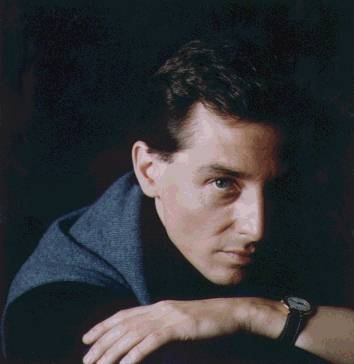 Dalberto was known about the concert in advance. But in order to get to him, it was necessary to have a good reaction and not to hesitate with the purchase of tickets - sitting places in the arms ward, as you know, very few, and to get a hare for the thick Kremlin walls equivalent to the feat.
Those few people who fell into both concerts were incredibly lucky: rarely when it seems the case of seeing and heard two antagonists. This time - introduced himself. From the slightly that they are related, I can name an excellent school, thanks to which they became those who they became - good pianists. Dalberto - "musical grandson" of the great Alfred Corto; Gavrilov is a pet of the main blacksmith of Russian talents, professor of the Moscow Conservatory Leo Naumov. Both have the world's largest pianistic competitions: Klara Khaskil and the competition in Lids - Dalberto and Tchaikovsky’s name - at Gavrilov. The similarity, in fact, ends on this.
Then the differences begin. Injected at first glance, but an important detail - as a pianist approaches the piano. For Dalberto - the tool is akin to a beautiful lady, to which he is approaching with reverence and which concerns with tenderness. It is not located on wide gestures towards the public and the only thing that completely absorbs his attention is the instrument. Dalberto with amazing accuracy reproduces the traditions of the French piano school - his game is easy and elastic, devoid of aggression. The passages are carried by a cloud of golden dust, and the amazing possession of the pedal denies any possibility of echoes, or, as some professionals call it, “belching”. Dalberto's experienced hands - like the brushes of the impressionist, Pissarro or Sisleya - he avoids sharp contrasts, the piano sounds in half -tones. Noktyurna and impromptu Gabriel Fore - ideal for such "sound painting". 
For Dalberto, this approach is unacceptable. In the Bolshoi -Minor Sonata of Schubert, he chooses another tactic - the contours of the whole are neatly obscured and the form turns into a certain stream of consciousness, where one image imperceptibly and smoothly transforms into another. Cultures arise as a result of a gradual increase in sonority, but they never fall brick on the head. This “stream” somewhat contradicts Schubert - he, of course, is a romantic and the ill -fated inventor of “Divine Longs”, but the Austro -German passion for the classic, tightly knocked out forms in his blood. The rolls of French lace, projected at Schubert, cause slight bewilderment. In addition, Dalberto for one well -known reason in any episode is looking for dance rhythms. And he finds them, due to which the large -scale Schubertovskiy sonata turns into a set of decorative PA. Strange concept.
Here, it seems, the keyword is felt - "Concept". Dalberto has an excess of them, which you never think about, looking at him. A perfectly working head - first of all. Soul impulses - after. Gavrilov, with his defiant-prostious robe, designed to prove something to the world (which is unknown), the conceptual approach is little familiar. Everything is coming from the heart, which is alien to rationalism.
So, through many details, the main thing comes out - the essence of the talent. Gavrilov has a bright natural, spontaneous one, which he himself and the audience rely on. Everything related to the ephemeral concept of "innate" is unpredictable - therefore, in Gavrilov life there are wild failures and fantastic triumphs. A series of glimpses, breakthroughs there, replace the routine of the routine. Gavrilov can amaze and annoy. The share of "experience" in his career is minimal, and the words "progress" and "evolution" even become an empty sound. Dalberto’s talent is based on the experience - he goes to the career peaks, filigently calculating his path, weighing all the pros and cons. His good luck is a profit, they are given by many hours of painstaking work. There is nothing extreme in the form of Dalberto; Perhaps that is why the shaky micromy of the Schubertov sonata needs to be logically comprehended and taught already in the "normal", formatted (albeit quite prosaic) form. If you combine both pianists into one whole, then it seems that you get an absolute ideal - they are so well complemented by each other. But that is the whole charm of human nature that it is imperfect and gives rise to the phenomenon of antipodes.