
Translated material
Swedish regiment #28 (108)
The presented books as a whole reflect the assortment of the Moscow shop AD Marginem
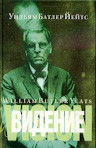
William Butler Yates. Vision: poetic, dramatic, magical / per. from English. T. Azarkovich, N. Bavina, K. Golubovich, O. Isaeva, D. Krotova, E. Lavut, S. Likhacheva, A. Nesterova, K. Chukhrukidze; comp. And the foreword. K. Golubovich; general. editors and comment. N. Bavina, K. Golubovich; Article "W.B. Yates: Sub Rosa Mystica" by A. Nesterova. - M.: Logos, 2000. - 768 p.; circulation of 2000 copies; ISBN 5-8163-00121.
The huge Tomina soars over the countertop, like a clot of ectoplasm - above the gentleman's head from a photo on the cover: real and at the same time incomprehensible. Ksenia Golubovich combined the chosen texts of the great Irish (1865-1939) in an unprecedented conglomerate. The nucleus of the book is “Vision” (Vision, 1925-1937), a treatise dictated by Yates with spirits through George Hide Lee, a woman who the poet took to his wife only because she was a medium. All adjacent texts are highlighted with a strange radiance of this core: an essay about fairies, goblins and banns ; Articles about poetry and drama; political journalism; memoir fragments; novelist trilogy about Michael Robarts; four one -act plays; But first of all - the dry "chronology of life" at the very end. According to the compiler, both artistic creativity, and militant nationalism, and the broken sexuality of Yates are just a consequence of its obsession with supernatural. “He was to sew a book from a virgin parchment, consecrate it and take it with him to a frustration ... He had to stand there in the middle ... terrifying visions until dawn, and from that fear he would not recover to death” (“Witches, Sorcerers and Irish folklore,” 1914).
In the bottomless barrel of his admiration for the conceptual will, K. Golubovich RZh cannot but add a teaspoon of disappointment with the quality of comments. Close our eyes to numerous typos; But why, why, why is the Italian console to the name "Deli" is transliterated in them as "Degli"? Why is Wordsworth stubbornly called Wordsword? And finally, euphemism - "Ethimism"?
Quote: you rarely meet a full -fledged ghost - after all, the dead are cloudy - and therefore often only a head or a small part of the body - no more than to recognize - shows over the folds of clothing under which the void is guessed, and sometimes you are short of the arms or legs; Sometimes some Revenant will borrow someone else's, half-finished likeness, and then the exhausted old man appears as the owner of young girlish hands ... Sometimes animals appear, for some reason very often bears, but most often birds and dogs ... Everything that happens with theatrical action or empty struck ... The experiments of Dr. Vybovich often break down from a naked girl in one foot, which constantly appears, which constantly appears. Before the gaze of his medium, he claims that she never lived on earth. He even took a picture of it, leaving the camera in an empty room where she promised to appear, but he is not so confident in her honesty that he doubts whether she had a picture of an illustrated newspaper under the lens.
Review of RG on the book of U.B. Jita "Celtic twilight" (St. Petersburg: Inapress, 1998)
Order a detailed review?
Francis Ponj . On the side of things / per. with fr. D. Krotova, B. Dubina; sost., comment., afterwood. Daria Krotova. - M.: Gnosis, 2000. - 208 p.; circulation of 2000 copies; ISBN 5-8163-00113.
Francis Ponj was born in 1899, died in 1989. And almost all this time he blocked the structures of his native speech in writing. He opposed the language - on the side of things. So to speak, he beat the enemy with his weapons. In essence, Rene Shar, Maurice Blancho, Philip Sollers, Philip Zhakota were the same. All of them were abundantly published by a solid company Gallimard. And the solid sociologist Boris Dubin at his leisure translated them almost all. And continues to translate.
Quote: Water is elusive for me ... it slips between the fingers. And not only! It turns out that it is not so neat (like a lizard or frog): there are traces, spots on my hands, which need to be dried or wiped for a long time. She eludes me, but at the same time marks me, and I can not do anything about it.
In fact, this is the same thing: it eludes, eludes any definition, and at the same time leaves traces in my soul and paper, shapeless spots.
Order a detailed review?

Georg Henrik von Vrigt. Three thinkers: essay / per. with the shb. G.M. Kovalenko; per. from English. I.B. Volkova; Predwell. Dr. Timo Vihawinen. -St. Petersburg: the Russian-Baltic information center Blits, 2000 (series " Rushy in the world . Finland).-256 p.; Circulation 3000 copies; ISBN 5-86789-124-0.
"Dostoevsky", "Tolstoy as a thinker", "Berdyaev", "modernization as pseudomorphosis (this is about to what extent Russian mentality is alien to communism. - RZh )." G.Kh. von Vrigt (b. 1916) - academician, philosopher, student of Ludwig Wittgenstein. Earlier in Russia, his monograph "Logical and Philosophical Research" was published (metro: 1986). Almost "Logical and Philosophical Treatise".
Quote: if you want the statement “morality should be based on religion” to be something more than the play of words, you need to be able to show that moral rules receive their obligatory character from something that is higher than morality, for example, from faith in God, whose will expresses the moral imperative, or from something in that spirit ... Tolstoy did not do this.
Order a detailed review?

Edward Morgan Forster . Favorites: Collection / Per. from English. - M.: OJSC Publishing House "Rainbow", 2000 (series "Masters of modern prose"). - 400 s.; circulation 5000 copies; ISBN 5-05-005008-1.
So Forster is overshadowed by the authoritative triliary "SME". True, without a thorough preface traditional for this series. Six stories. Family Saga "Where are the Angels are afraid to step." Anti -utopia "The machine stops". And √ scandalous "Maurice". Only not in the "verbal" interpretation of A. Cuprin , but in the respectable translation of M. Zagot.
Quote: puberty has already come, and the intellect lagged behind, and the masculine principle, as expected, entered it to sneak, imperceptibly. It is useless to try to make this transition in one fell swoop. It is useless to try to describe it, even if you show a maximum of a tact and strictly adhere to a scientific approach. The boyish brain is inadequate, it pulls back to lethargy, and it awakens not earlier than the prescribed hour.
Order a detailed review?
Karson McCallers. Reflections in the golden eye: Story. Stories / Per. from English. D. Volchek, Yu.Drozdova, Y. Zimakova, B. Ostanina, T. Shaposhnikova. - St. Petersburg: Amphora, 2000 (series "Herbarium"). - 399 p.; circulation of 6000 copies; ISBN 5-8301-0162-9.
Only the "wedding participant" remained the one who knew her by the Soviet seventy, who went crazy in the spicy literature of the American South, through the sensitive boy Truman and the dreamy girl Karson. Other - the title story and six short stories - re -retold by the most prominent representatives of the current St. Petersburg bohemia.
Quote: - I ask you, Sylvester prayed. - A behave prudent.
- prudent! - the pale face of the asshole trembled, then froze in the grimace. He pumped the table, the plates on it rected. For a moment it seemed to everyone that the table would turn over. But the jockey immediately let him go. He held out his hand to the nearest plate and put a few slices of fried potatoes in his mouth. Then, having protruded his upper lip, he chewed them leisurely, turned and spat on a red velvet carpet. “Listers,” he said in a quiet intermittent voice. He rolled this word in his mouth as if he had a taste and smell. The libertines, ”he repeated again, turned and headed for the exit with a chopping gait.
Order a detailed review?
Katie Lett. Givingic attraction: Roman / Per. from English. M.L. Pavlycheva. - M.: Thornton and Sagden, 2000. - 360 p.; circulation of 7400 copies; ISBN 0-330-33527-8; ISBN 5-93923-009-1.
The story is simple to the banal. A kind of provincial from Australia enters London, where she tries to break into high society. A friend throws her, she turns out to be pregnant and a good half of the book wanders in search of work. The novel is very physiological: the process of childbirth is described in detail, and there are no disabilities in love scenes.
Quote: In essence, all men need only a fashion model of underwear with tied pipes and in a psychiatrist. Madlin Wolfe came to this conclusion, being on the wretched streets of conservative Britain, which is not at the peak of economic development. Surprisingly, London did not need the instructors on the underwater swimming ... Participation in the suspect identification procedure cost four pounds per hour. You can still lay your hair with foam, draw a ring and wander around the Picadilles-sirkus, collecting ten pounds from Japanese tourists per photo ... There is still a service that helps "little boys look like real stallions." The responsibilities are simple: to flirt with them at receptions and cause jealousy of their arrogant girlfriends. They pay forty -five pounds per flirting, but there is no medical insurance.
The Thornton and Sagden Publishing House , marked in the Russian market in early June, acts quite sweepingly, releasing first -oriented (but not high -grade) foreign bestsellers in toothy (but far from impeccable) translations. But the advertising department at T&D works perfectly. The "big troubles" of Dave Barry and the Bridget Jones Diary Helen Fielding received a loud press. Ahead is the “beach” and “Tesseract” by Alex Garland, the “desired thing” by Tom Wolf, “following the blood trail” of Joseph Uombo, the “New York trilogy” of Paul Oster, the “empire of the Sun” by John Ballard. RG removes the hat.
Order a detailed review?
Brian Oldis . Liberated Frankenstein: Roman / Per. from English. V. Lapitsky. - St. Petersburg: Amphora, 2000 (series "New Age"). - 284 p.; circulation of 6000 copies; ISBN 5-8301-0142-4.
The main thing is to endure the first fifty pages, during which the liberated Frankenstein (English ed. - 1973) seems typical Science Fiction for the beginning of the 70s with its fixation on spatio -temporal shifts and anti -Tecratic walls. By the final, the plot and the narrative manner will undergo a series of dizzying metamorphosis. The hero will suddenly understand that the history of the latest civilization is nothing more than the history of the latest novelism; Then he will sleep with the author of the original " Frankenstein " by Mary Shelley; And finally, plunges into a total, viscous psychedelic blood pressure. At the moment, the publication of the previously not translated novel by Oldis is undoubtedly the brightest luck of the St. Petersburg Amphora. Everest among the flooded bumps and sloping mounds of the New Century series.
Quote: I was with Shelley and Mary - in subordination, a gardener. They have already aged, although I have not grown old. Mary became tiny and fragile, she wore a kapor. The bent Shelley retained, however, the striking liveliness of movements. He had a long beard. He became a member of the Council of Ministers. He was his father. He grew a plant that was supposed to bring a file clipping. His voice sounded like a mandolin. He lifted Mary and put her in his pocket. He publicly stated that he was going to take possession of Greece in a week. He sat on a mossy stone and sobbed inconsolably. Whatever I bring to him in the bowl, the raven ate everything. He launched an air snake and quickly climbed him on a rope.
There was Bairon there. This one turned fat and wore a triangle. “Nothing is disgusting to nature,” he told me, chuckling, as an explanation.
Order a detailed review?
Art bonus prepared by an independent critic Andrei Kovalev
Books are selected mainly in the Moscow shop "Gileya"
Kazimir Malevich. Letters El Lisitsky and Nikolai Punin / Publication and comment. L.A. Zizkova, A.G. Kaminskaya, A.S. Shatsk. - M.: Pinakotek, 2000. - 40 p.; The circulation is not indicated; IBSN is not specified.
This small book represents the next stage of the diverse public activity of Alexandra Shatsky, which has already published two volumes of the works of Malevich - and even the verses of Casimir the Great and terrible. Reading every line written by Malevich causes immediate frictions of the literary body of the Russian -speaking reader. The introductory article by L.A. Zizova, the heir of Punin, is so ridiculous that try not to look at it for more than five seconds. Oddly enough, Malevich’s letters mainly contain complaints and complaints, and not at all high theoretical reasoning. Even the style is somehow changing; Compare the two following passages - household and theoretical.
Quotes: 1) Dear Lazar Markovich! .. Your letter indicates that you can throw money even to letters of this content. You write for help - Are you Engels, and I am Marx? ..
2) The new classicism comes out of the ideology of the movement of human activity, and therefore this name comes out just from the theory of activity. This, of course, is not a passport system, but a system of developed functions and relationships ... Now each flap of paper should be used revolutionarily organized.
Order a detailed review?

K.K. Rotikov. Another Petersburg. - St. Petersburg: League Plus, 2000. - 640 p.; circulation 5000 copies; ISBN 5-88663-009-0.
Nervous people who accidentally bought this book should immediately close it. Because we are talking about exciting jokes and gossip from the life of the "blue" Petersburg. However, for some reason, the cover on the cover says: "Using the traditional structure of the guide, the author of" other St. Petersburg "saturates it with peculiar information from the history of literature, music, sociology, architecture." And yet (a completely mysterious phrase): "This book will be interesting to all readers of all ages and tastes." But already on the third page, a good reader learns that Emperor Peter I "lives with Menshikov’s Blyazhsky way." All the good that is in St. Petersburg is made by sodomites. After you master the book to the end, it’s even scary to go to St. Petersburg.
This is the second edition of Rotikov’s book; Apparently, the entire previous circulation was politically incorrectly torn and thrown into the basket of aesthetes deceived in the best feelings.
Quote: all these were Forethors prejudice, cantonists, singers of various choirs, craft students, mainly hairdressing, wallpaper, tailor, as well as shopkeepers without places, young clerks of the military and naval ministries, and, finally, even vitamundial officials of different departments.
Order a detailed review?
Stefan Plaggenborg. Revolution and culture: cultural guidelines between the October Revolution and the era of Stalinism / Per. With him. Irina Kartasheva. - St. Petersburg: Neva magazine, 2000. - 416 p.; circulation of 1000 copies.; ISBN 5-87516-190-6.
It is unfortunate that this is a magnificent work of the German spirit no one will read. Somehow it is now not at all fashionable - even to think about such important things as physical culture, hygiene, the work of the people, educational excursions. Only German professors save. Boris Groys, who called Stalin, the Tyran artist, the German professor Plaggenborg scraves and ascribes him a "postmodern dislocation." And so - an extremely exciting reading, translated, however, rather crookedly.
Quote: In the cultural discourse of those years, they looked at a person not as a subject of psychological reconstruction, but from the point of view of objectivism, as on the subject and approval of a new culture.
Order a detailed review?
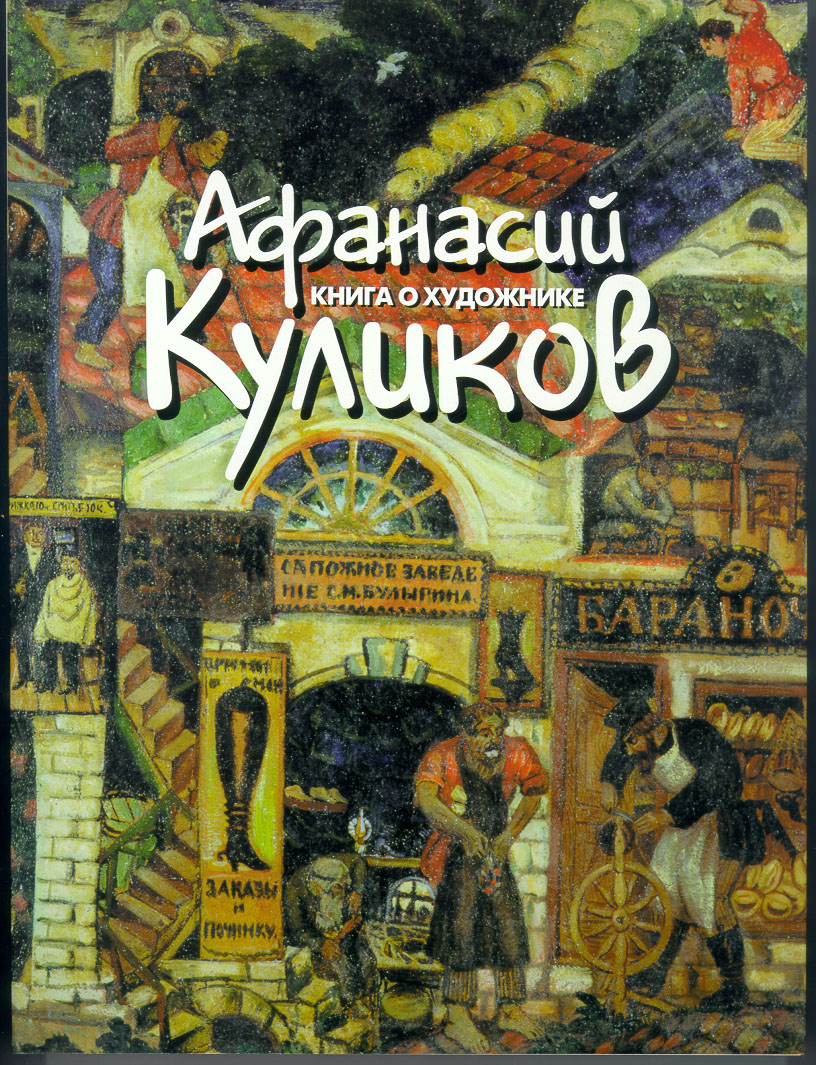
Afanasy Kulikov: a book about the artist / author of the concept of D. Bakatin; The author-compiler O. Khromov. - M.: White Coast, 2000. - 184 p.; circulation of 1000 copies.; ISBN 5-89562-5.
Only after reading the book of Herra Plaggenborg, you will understand why to open the album about Athanasia Kulikov - an ordinary Russian artist -realist. Under the kings, he painted temples, under the Bolsheviks - wrote portraits of leaders. I would have lived to our time - I would probably have painted the oligarchs. His grandson washed the grandmas somewhere and published a book about his grandfather. A delightful story. "My children are growing. What will they know about their grandfather, great -grandfather, great -great -grandfather. Where did their roots come from?" Here is from there.
The publication is especially recommended for lovers of Russian realism.
Quote: no matter how winter she was raging, no matter how hard she tried to keep the mother of the earth in the shackles, the red sun returned, looked with her fertile warm -varnish gaze at her - and the mother of cheese erased the Earth burst out of the winters and washed with light waters, tries to wash away the entire abomination of human affairs.
Order a detailed review?