
Translated material
Mikhail Bode. Diary-13
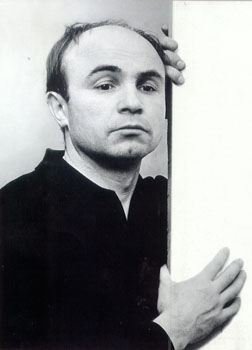 The Tretyakov Gallery shoots anniversary exhibitions with amazing inaccuracy: either a shortage, then a flight. So in the case of Viktor Popkov (1932-1974). The 70th anniversary of the birth of which is early to celebrate, the 25th anniversary of death is late. It must be assumed that the old Tretyakov workers decided to simply note the cult figure of the artist, the “sixties”, the “harsh person”, who wrote the truth about the last generation, who believed that the construction of the hydroelectric power station can be brought from every “from each according to their needs”, old women in those who were forgotten by God and the government, which were forgotten by God and the government. Far villages, himself, freezing on sketches without "heating", Pushkin in Mikhailovsky, thinking - to spit on the rain and go to St. Petersburg, or to turn to Arina Rodionovna with a virtue question: "Where is the mug?" The exhibition is clearly designed for those who remember the Pakhmutov taijing romantic chansons such as “Marchuk plays the guitar ...”, “And the girls dance on the deck ...”, those who dreamed, but did not go “for fog, for the fog and the smell of the taiga”, who trusted Shukshin and Astafyev, who loved the “seats and curators”, who loved the Sepa and Guardians, ” Sitting in a Moscow apartment. That was Viktor Popkov, a Vampilov character, who did not reach his "duck hunt" due to a thoughtful libation. The hunter found him - they became a collector, in whose car Popkov on a drunken business tried to climb on Gorky Street. The guard did not know that he was in front of him by the Laureate of Gospremi, a member of the State Property Commission and, as far as possible, at that time, the most truthful of the official artists of the USSR CIT. However, the myth of the artist -Fronter - supposedly victim of the Soviet special services - flew around Moscow in a matter of hours. The most sad thing is what art history essays later began to accompany Popkov’s work: “Having felt the immeasurability of depth, the viewer, gradually following the compositional lines of construction, covers the panorama of the landscape and then returns to the figure of Pushkin. The figure of Pushkin, leaning against the column, is, rather, a sign of the spiritual presence of the poet when“ entering ”the audience into ideological and emotions The atmosphere of the picture than the image of a specific personality. " Such words were celebrated by the 50th anniversary of the artist artist Olga Nikulina.
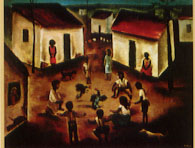
The Moscow Museum of Contemporary Art Zurab Cereteli also tried to get on a memorable date. Exactly 70 years ago in Moscow, an exhibition of the Brazilian artist Tarsila Du Amaral was held in the Museum of New Western Art. The Museum of Tsereteli celebrated the exhibition as Brazilian art, and in general, all the Latin American art of the 20th century. There is a reason - the X Congress of the International Federation on the Study of Latin America and Caribbean opens. It was thought that the masters of the Latin American avant-garde would be brought-the wild Cuban surrealist-Shaman, Vifredo Lama, who was crazy of Picasso himself, the twisted visionary of Matthew Ehawaran, from whom Andre Breton stuck, or the abstruse Torresa-Garsia. At worst, maybe they will give a dashing Latin American op artist Lesandro Sotto. The invalid surrealist-communist Frida Callo would also be glad. It was not at all. It was not her, but her more ideologically correct spouse - Diego River. Zurab Konstantinovich, although a rich man, but does not like to throw money, and therefore he did not take Latino American from Latin America itself, but took what was in the deposits of the Plane. Pushkin, in the collections of the embassies of Latin American countries and in the storerooms of the Academy of Arts headed by him. It turned out an excellent exhibition to the taste and to match the Zurab Konstantinovich himself: there are "ceremonies" Peruvian, Argentine, Brazilian, Cuban, Ecuador, Mexican, etc. etc. In a word, moderate and very average modernism. There is a vigna Kubyan Rene Portheraro, there is a sweeping “Lenin” by David Alfaro Sikeiros and the neat impressionistic early “riveres” (of course, all from the Mlime of Pushkin), the mass of the prickly Indians of the Equador Oswaldo Guayasamin, who at one time tortured the text of Soviet art historians, posters (only Posters) from the painting of a commercially well -fed Colombian Fernando Bottero. The fact that all these artists, according to the corresponding member of the Russian Academy of Architecture and Construction Sciences, doctors of art history Vladimir Khayt, "connect the indisputable novelty, the modern expressiveness of the language with the genuine, sometimes sharpened certainty of the ethno-cultural characteristics", we do not have to polemize.
Perplexity covers the viewer, who has passed on the one hand Petrovka to the other, from the Museum of Cerenet to the Rosiso museum and exhibition association, where the Velt Gallery was temporarily located and where it shows Goshi Ostrezov’s project “The Union of Sword and the Oral” for a week. Gosha has been promoting and calling for several years to a certain military-patriotic Order, in which "men who have chosen this path should take a vow of celibacy and bend in order to avoid senseless violence." A man should wear a camouflage rubber mask, the rest can be covered or not covered. Gosha speaks of the viciousness of such militaristic and professional institutions: "First of all, this affects children: the barracks spirit of education, aesthetic debut, karmic stress that affect the third generation. That is why the military population is harmful to society and its intellectual and aesthetic development." The situation turns out to be wonderful: in the gangster-Army Order they urge to enter and at the same time dissuade. Gosha, it's time to decide somehow!
Oddly enough, the exhibition in the "Pharmaceutical Order" - chambers of the XVII century - the Museum of Architecture named after the bandits. Shchuseva. The fact is that the manufacture of the famous Venetian glass from the Middle Ages on the island of Murano was engaged in a gang of robbers. In Venice, this island was not loved, the local masters were considered, according to Casanova, baked thugs and thieves. Bandit glass of glass was freed from the duties (even if it is better to blow the glass and less pierced in the lagoon), and therefore, the Moranians filled all over Europe with their products - without the “Murano”, neither the Bourbon, nor the Habsburgs, nor the Romanovs sat down at the table. The newspaper Murano is now cheerfully manufactured by Venezia, distributing its crafts from a boutique on the Bagrationovo bridge in Moscow. But, of course, this is not right. You need to be a fifth -generation bandit, for example, so lovingly to make a glass in the form of a pistol. This was able to do the Muranian masters of the border of the XVII-XVIII centuries. Apparently, the contents of the vessel had to be drunk in one gulp.
The Museum of Architecture on the same day celebrated the best in his opinion today's Moscow project - the Perensredbank building on Novinsky Boulevard. This is next to the tunnel under the garden ring and near the new Arbat. Architectural critics say, referring to old -timers ("This house was always here") that the creation of a la Andrea Palladio fit very successfully in the development of the garden ring. Maybe. Only I, living on the old Arbat, every day from my window sees the garden ring, I do not find this. I understand that the architects from Mosproekt-2 (D. Barkhin, T. Koroleva and M. Leonov), who are professionally sick of the Luzhkovo Kremlin-Bashenic Architecture, wanted to build something in the pandan of the Stalin-Reissance "House of Zholtovsky". However, I find that the newly -built Renaissance chest is the same “inserting jaw” as the new Arbat (formerly Kalinin Avenue). This is the same jacket of the "Novorussian". True, the cut is somewhat different.
PS Architecture Museum is clearly not going to go to a summer siesta. On June 26, he will show photos of Valentine Herzman "Houston. Architectural Ballad." Judging by the picture on the invitation ticket, it will be Hai-Tekovsky banking buildings. Banks again.
On the 26th, Dmitry Konrad will spin the head of the viewers with the views of "spans and openings." Stairs - a win -win motive of photographers. The exhibition included in the project of Yuri Avvakumov "24" will now take place in the Moscow house of photography (Ostozhenka, 16).
Again, the Museum of Architecture - the 27th there will open "Architecture of Colombia. 61 poster to the XVII architectural Biennale." Following the Museum of Tsereteli, the participants of the Congress of Latin Americanists in Moscow will congratulate the Museum of Architecture.
The 28th Gallery "Velta", which rents the site at Rosiso on Petrovka, will finally show a serious exhibition. The famous Moscow schedule and journalist Elena Gerchuk will show "another all." These are sad drawings on which he "visits" her "for the last time, on which" the simplest truths are presented by the simplest means. " This "all" is waiting for us all.