
Translated material
Sergey Kuznetsov. The ninth gates
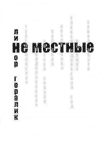
From his own, review is dedicated to the book in fact a new, but somewhat falling out of the circle of reviewed books: this book is not so that very fashionable. The magazine "Poster" did not write about her, her circulation is more than modest, and Google does not find a single review of her, except for the huge article by Oleg Dark about one of the texts of this book. A formal justification for my self-will be the fact that this is the only modern book I know about which friends called me and said that they cried all evening, reading it, and they want to buy five more copies somewhere to give their friends. When was the last time you yourself wanted to give some book to someone? This is clearly worth the reviews of the Afisha.
What are friends! I myself have already given several dozen copies - which is not surprising, because for me this book is probably the most important of what I read over the past year.
I am probably addicted because I know the author. But the genre of the column allows me to be addicted, and the reader can make his own idea of the book: it is completely posted into the network , which is not surprising, given the network fame of the author, journalist, poet and prose writer, Linor Goralik.
“Why do I need a book by Linor Goralik?” My friend said from me as a gift a thin black and white book Nemtroy (Argo -Risk, Kolomna, 2003), “I can read it on“ Faces ”. A few days later he called me to say that he was wrong: Linor Goralik as a prose writer is not like a journalist, although the author’s style, of course, is felt here and there. Then we will still say about it.
The first text of Linor Goralik, who attracted my attention, was a miniature about a hamster . I told her then that it reminds me of Lyudmila Petrushevskaya and Linor was offended, she said, they say, you are trying here, you write, but in response - it looks like it looks like that. Now I want to get better: Linor texts were written by some other Petrushevskaya: working 20 hours a day, which is easily talking with God and living on amphetamines. In a word, Petrushevskaya in the process of turning into Philip K. Dick. Or Petrushevskaya in the heaviest BED TRip, concentrated in two thousand printed signs.
Anyone who works with horror in our time runs the risk of stumbling on a reader grin voiced at the beginning of the last century by Leo Tolstoy: "It scares, not scary." Therefore, horror professionals - Stephen King or Clive Barker - are forced to resort to amazing tricks so that the study of horror does not look like a vulgar desire to scare. In the literature, this is not easy; In the cinema, rare geniuses manage.
Linor Goralik demonstrates a different way to work with horror. Her texts are not about terrible, but about expectation, a foreboding of horror. More precisely, about the foreboding of the world in which horror is the norm.
Speaking of horror, Linor almost always avoids exalted horror, what is called Sublime. A rare example of a text of this kind is just a journalistic, not included in the book - " We will leave the zoo ." In most of its texts, horror is a little horror of powerlessness and humiliation; readiness to accept this powerlessness and humiliation. This is a household horror of daily reality.
As a writer for Linor, a great success was that she left a decaying Soviet Union for a fifteen -year -old girl. It is important here not only that thanks to this he was able to preserve the memories of Soviet childhood, not allowing them to blur in the chaos of the nineties. Without living in Russia, she avoided two temptations of decades: lumpenization, economically inevitable, and noumard, growing up from a desire to oppose himself to lumpen.
The nineties gave a small selection to the inhabitants of Russia: they could either sink, agreeing to a decrease in the level and quality of life, reconciled with the beggarly salaries, old clothes and a close neomestic apartment; Or choose the crazy path of bohemia, jappy and new Russians, unconsciously contrasting themselves with the bulk of the population. In other words - to their people.
With the luck of Linor was that she did not have to choose. By her own admission, she became Yappy at eighteen years old - but on the way to the office she did not need to drive boys with dirty rags and one -legged beggars, begging in road traffic jams from her car. At twenty -five, she moved to Russia and, thereby, returned to the country of her childhood. Moscow is an ideal city for her, not local ; Existential horror does not look directly into your eyes with an automatic muzzle, as somewhere in the formidable, but pulsates under the fabric of secular life - fragile and almost transparent compared to other countries, where there is also the Internet, mobile phones and nightclubs.
(Perhaps this is a common sign of the capitals of the third world countries. But unlike Bogota or Buenos Aires in Moscow, they speak Russian)
Perhaps, due to a ten-year break, she has a good eye on the relics of the old era. She sees no reason to blame anyone for the squalor and nightmare of the surrounding life, because she remembers that they have always been. She did not spent half his life to learn how to see Moscow with a rich European city - and therefore can speak the language of people who have never heard of the OGA project, clubs the author and mix. The language that I conditionally called the language of the characters of Petrushevskaya.
So, in a strange way, the texts of Linor Goralik, who, in her own words, have passed, in the nineties, they turn out to be another evidence: thanks to the distance, she was able to see their squalor and kich not as a product of new government, but as a continuation of Soviet life and another manifestation of existential horror of being.
I wrote above about the foreboding of the world in which horror is the norm. Rather, it should be said - tense, fulfilled hopes, the expectation of such a world. So people are waiting for revelation, reports that they knew so. Because the world of horror appears through the objects of the world around us, like a bloody spot for many times painted the wall of the house. Linor Goralik knows that horror is always here, everyday life is always painful, every day as the last. She waits for wars and plague, so that you can finally say: “You see, you see! I still felt that it is! And now I’m almost not scared, because here it is, finally, and not only inside me, but around, and, therefore, everything is true, everything is so and, therefore, we can talk about it.”
She says today, and what she says is so monstrous that it is not clear how to cry when reading this book, because I want to howl, scream and cut yourself with sharp objects, so that what is hidden inside could finally go out, and hell finally opened its hospitable gates before us.
I do not believe that someone may want to give such a book to their friends.