
Translated material
Choosing Pushkin.
 Renat Gilfans. Poems. - M.: Stenographer, 1999. - 60 p.; circulation 50 copies; ISBN is not specified.
Finally, the first innocent book of the poet’s network, nominee “Tenet” Renata Gilfanov, already known in the Russian part of the network, appeared. However, her circulation, which was completely dispersed through the author’s many friends, allows this collection to be considered virtual.
Critics such as Fry and Kuritsyn had already written about Gilphanov. Fry, I remember, said that his poems are excessively prosaic, which rather allows us to conclude not about the quality of poems, but about how well Fry understands poetry. Much closer to the truth of Kuritsyn, who noted the obvious influence of Brodsky on Gilfanov. But, perhaps, even more clearly in his verses, the desire to get rid of this influence, which does not always benefit the texts. But in general, the book allows us to conclude that a new, worthy of attention and, at least, an interesting poet, whose pleasant and very rare feature - emphasized demand for his own works, appeared in the row of those who write in Russian. It is no coincidence that of what the author wrote over the past five years, the author decided to publish only a small selection of poems that applied to sixty pages.
Order a review? No, no care
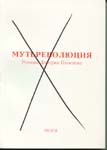 Dmitry Pimenov. Damp. Revolution. - M.: Gileya, 1999. - 272 p.; circulation 500 copies.; ISBN 5-87987-008-1.
Dmitry Pimenov’s “muddy” is good known to the network fans of literature, since it has been published on the Internet more than once - with Helman and on the website “Twilight Zone of the Soul”, where Pimenov, probably not of his own free will, ended up in the company of more or less great madmen along with Van Gogh and Nietzsche .
The novel "Revolution", which is announced on the cover, in the book, and indeed in nature, is absent. But there is a novel-series of detectives "Prose of an alternative life", including eschatological, amorous, epistolary, poetic and psychotopological detectives. The book can predict the future of the bestseller, equally associated with the moderate cult of the author and meager circulation.
Order a review? No, no care
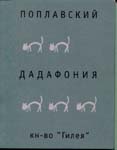 Boris Poplavsky. Dadaphony. Unknown poems 1924-1927. - M.: Gileya, 1999. - 128 p.; circulation 500 copies.; ISBN 5-87987-006-5.
The books of Boris Poplavsky - one of the most interesting Russian poets of the twentieth century - continue the leisurely return to their homeland, which began in the mid -nineties. In fairness, it is worth saying that in the West before the beginning of the seventies it was not published especially actively, and even lifetime publications can be counted on the fingers.
Unfortunately, a more or less complete collection of Poplavsky’s poems, more than once promised to readers to various publishers, still remains a matter of an indefinitely distant future. In the new collection of Giley - the second one, the first was published in 1997 - several dozen poems were included that had never previously published, and prose sketches. Fans of modern Russian literature, perhaps, will also attract the preface written by Dmitry Pimenov.
Order a review? No, no care
 Vladimir Sorokin. Blue lard. - M.: Ad Marginem, 1999. - 352 p.; The circulation is not indicated; ISBN 5-93321-004-8.
What has been talked about on the Web for so long. The publishing house "Ad Marginem" has released the next work of Vladimir Sorokin - "Blue fat" . Many are said about the genre and stylistic originality of the new creation of the cult writer. Therefore, we add only one thing from ourselves - in our opinion, it is mainly prose, and not bad.
Order a review? No, no care
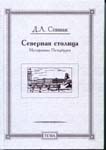 D. L. Spivak. Northern capital. Metaphysics of St. Petersburg. - St. Petersburg: Topic, 1998. - 427 p.; circulation of 2000 copies; ISBN 5-88407-057-8.
D. Spivak, known for his studies of altered states of consciousness, made an attempt to analyze the origins of St. Petersburg mythology - from the Finnish epic to the ancient Russian witchcraft tradition - and identify their influence on the mystical hobbies of the Petersburg elite in different periods of the existence of St. Petersburg as the capital of the Russian Empire. Separate chapters are devoted to the “Swedish roots” of the mythology of the Northern capital and the role of Christianity in the “St. Petersburg metaphysics” of various eras - superstitions of the times of Peter, Catherine Hermeticism, the occult delights of the times of Alexander the First and Demonism of the Silver Age .
Order a review? No, no care
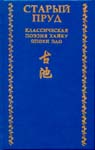 Old pond. Classical poetry Hike Edo. Per. With Yap. A. Dolina. - St. Petersburg: Hyperion, 1999. - 320 p.; circulation 4700 copies; Series "Japanese Classical Library"; ISBN 5-89332-020-4.
Edo is not only the last period of legendary Japanese isolation, two hundred and a little year from the first acquaintance with the “red -bearded barbarians of the north” to the beginning of “European Enlightenment”, this is also one of the most important points in the development of Japanese poetry. During this time, it arose and turned from low poetry for the common people into great art of initiates, the quintessence of national wisdom genre Khaikai.
In the first years, Edo has the work of Matsuo Basa, the greatest of the authors of the Khaikai, now known to the whole faith. In the same era, his great followers also created - Buson and Issa, the last of the recognized classics of the genre. The collection includes the extensive collections of their poems and, in addition, the haiku students of the bass, among which it is primarily worth paying attention to the exquisite Muaki Keraya, as well as the poets of other, less famous Khaikai schools.
Order a review? No, no care
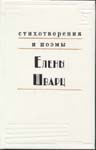 Elena Schwartz. Poems and poems. - St. Petersburg: Inapress, 1999. - 512 p.; circulation of 2000 copies; ISBN 5-87135-072-0.
The new collection is the most complete collection of verses by the famous St. Petersburg poetry Elena Schwartz . The book included fragments of all its main collections, including Samizdatovskiy-70s-80s, texts from the book "Labor and Days of the nun Lavinia", which was not published earlier in Russia (the first edition in the famous "Ardis" in 1987, the second-Belgrade, 1994).
Order a review? No, no care