
Translated material
Sergey Kuznetsov. The blood of the empire and the enemy liver
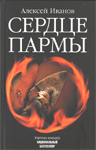 In Ce, who write about Alexei Ivanov’s novel “The Heart of Parma” primarily pay attention to his language: many ancient and firmly forgotten words literally dumbfounds the reader. Parma, Khumlt, Tamga, Sastum, Lamia - especially since these words are not ancient Slavic , as it was a historical novel from the era of Ivan the Terrible, and some wild ... a non -specialist will not even say what a language group it is. Khanty, Mansi, Voguls, Permyaks, Komi - it is the words of their ancient languages that gain a second life in the "heart of Parma". It is in the bold language experiment that most critics see the originality of the novel - in my opinion, everything is somewhat more complicated here.
Ivanov tells us about the Russian colonization of Siberia in the 15th century - that is, he talks about how the culture of Ancient Rus', almost unknown to the modern reader, destroyed or, if you like, absorbed the culture completely unknown. When the writer speaks of culture unknown to the reader, the reader cannot check where there is a reliable fact, where is the reconstruction, and where is fiction. A simple reader - not a historian - is the same as "the heart of Parma", that "Conan -Warvar", that a historical romance, that fantasy, that alternative fantasy. In other words, Alexei Ivanov spoke about the medieval Ural world as they talk about unknown worlds in the books of Tolkien's followers: with an abundance of incomprehensible words explained in the text, sometimes there is no. I probably believe that Ivanov did not come up with these words - but even if I came up with? Language conviction is evident, but there is a lot of fantastic books, and it is clearly not enough to make me not break away to read a fat volume on the colonization of the Urals in the 15th century.
Therefore, I will take a chance to appear again to a non -professional and say that the main advantage of the "heart of Parma" is an unbelied thing, called the foreign word "drive". This is a wild, brutal and crazy book, if reminiscent of fantasy, then the fantasy of the Hong Kong sample, where young children are blown up and cut off each other's fingers in the frame. One of his favorite episodes talks about how Permeaks under the leadership of the Russian Prince Michael captures the Vogulov fortress:
"It was some kind of wild, animal campaign-and even dancing, sang and beat in a tambourine like a shame some crazy. Here the warrior throws up, laughing, a child, and catching it, piercing through the berdysh. Here is a hedge of the belt and carefully strokes a chopped head. With his lips, a woman is raping a woman under the barn, and she surrenders to him with some kind of unsaturated, plumping a nearby perch, crushing someone's fingers, soaking a naked stomach, takes out a black, smoking liver and sticks into it with his teeth. The head of the Vogula and, while the endense still runs, throws her dead man in the back, knocked down from his feet. To get up - they want to get him faster to rush at each other " .
Here I want to say that a feeling of reality arises from the "heart of Parma". Because it seems that in the 15th century everything was supposed to be: combat moose, enemy liver, arrow in the ear. This, as we understand, is the definition of a good historical novel: after writing it, the past changes forever. It was in this sense that Ivanov wrote a historical novel: even if we forget about Prince Michael, then the general feeling of the Dussian Urals - “there are miracles, there is a goblin wander there” - will remain with us forever.
So - language and drive. And the third is Last but not Least - "Actual Problems". The Heart of Parma is a novel about building an empire, about the creation of Russians as a great nation, about the price that they paid for it. Five hundred years ago, the Russians were called not those who are called Russians today: to become Russia, Rus' conquered and incorporated many other peoples - and colonization went like any other colonization: with the destruction of someone else's culture, violent Christianization, burning of shrines and mass massacres. In other words, we are no better than the Americans who created the new people on the blood of the Indians - unless the Rus did it a little earlier.
Closer to the final of the book, Mikhail explains that Permians should become Russian. Not just to be baptized, but to really read Christ and renounce the old gods. Because they have no other way out.
“Everything that he said was true - but the truth is too big for a person. These Permians, of course, will not become Russians, and the children will not become them, and, probably, even great -grandchildren will not become. But someone will still become ... And they will have to pay very, very expensive. They will lose their gods, their names, fairy tales, maybe their memory, their language ... but they will retain their land for centuries, which is not their own centuries, which is not their own centuries. The cavalry of the warring squads will be trampled, and their blood in generations, which will not be in vain on the shores of the native rivers ... And what to do? Everything is absorbed by everyone: the water is softened by the earth, and the earth absorbs water, the mountains stop the clouds, and the wind is abore stones in the sand. .
This is the eternal logic of colonization. The same logic today drives transnational corporations and launches globalization. By coarsening a little, we can say that Iraq or Russia should accept McDonald's and democracy just like Permyaki - Christ. Not understanding what democracy is and not loving a hamburger - but revered them with all my heart. And if they do it well, they will be accepted into the family of civilized peoples. And it will not be much worse for them there than Permians in Russia.
(In brackets, we note that one of the mistakes of Russia in Chechnya is concluded that the Chechens are not offered to accept anything to be considered bandits - but there is no place to develop this idea).
A conversation about Russia as an empire has become a common place over the past ten years - but Ivanov shows Rus' not just as a force that creates an empire, but - literally - as a globalizing force. The history of the conquest of the Urals retains the main paradox of globalization: ruthless aliens objectively act as a humanizing force. Christianity is less bloody than paganism. Democracy of the American model of blood than the Saddam dictatorship. But this does not mean that the Permians became better, after Christianization, and the Iraqis - after a recent war. From nowhere, it does not follow at all that the less blood - the better.
“We are people, we can’t do anything without blood,” says Mikhail Kalina.
The "heart of Parma" involuntarily forces us to recall the methods that any empire created, deprives us of the opportunity to blame the Americans of new barbarism: our ancestors were no better. And therefore - why are we Russians better than Permyakov, that their culture has disappeared, and ours should stay? Unlike the heroes of the "heart of Parma", we are deprived of understanding of fate - and therefore we do not want to accept our own.
When the word "fate" sounds the word "ethics", "good" and "bad" disappears. Everyone will pass through their fate - Ural peoples, Indians, Iraqis, Russians and Americans. Sorry for them all? Yes, probably.
It seems that in favor of Ivanov’s empire there is only one argument: if you surrender voluntarily, then fewer blood will spill on the jetty shores of rivers. It is only incomprehensible whether the empire tastes so sweet as the liver of a freshly killed person.