
Translated material
Great -minded king
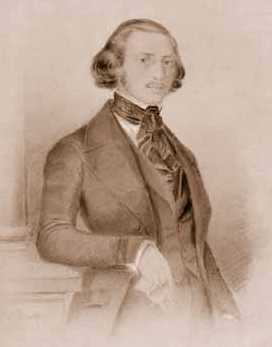 As we have already mentioned, the main prototype of Nikolai Stavrogin was, apparently, Petrashevets Nikolai Alexandrovich Spashnev . In the work of "Downsing the Demons" L.I. Saraskina examines in detail how exactly Dostoevsky addressed the biography of the prototype, composing the biography of the hero. And the biography of the prototype was really remarkable, almost even literary in its exclusivity and brightness. It is known that Dostoevsky himself, among the pupils of the Main Engineering School, felt like an outcast; Upon leaving the school, he also lived mostly a recluse and suffered a constant lack of money. All plans to begin literary activity (at least a translator) and get a stable source, income failed one after another.
The fate of Kashnev unfolded in a completely different way; Defined in the Tsarskoye Selo Lyceum, he quickly rose over his classmates and became the ideological "head of the class." It was suspicious and was not in vain: Khvshnev began to suspect about freedom and in the end they expelled from the lyceum - he did not graduate from the course. Following this, in the spring of 1840, there was a scandalous flight abroad with a stranger wife, Anna Feliksovna Savelyeva - a kind of voluntary exile, which was long for six years. It brought Skhshnev more bitterness than happiness - after four years of marriage, the "beautiful Polish" died, leaving Nikolai Alexandrovich two children. Thus, in Russia in the summer of 1846, Spechanev returned, surrounded by a mysterious halo of a romantic exile, who sacrificed everything in the name of love. Even if he had neither participation in a secret society or hard labor in front - the Biography of Spasshnev looked outwardly already formed, "built".
On this occasion, it seems quite appropriate to turn to the biography of Byron himself . He also felt a “special” person from a young age - except for exceptional emotional qualities here, probably, aristocratic origin played a role. Like Kashnev, Byron, at the age of 21, is sent on voluntary exile; And if one brings a beautiful legend from a trip to Europe, which is immediately inextricably linked with his name, then the other returns to England with the first two songs of the pilgrimage of Child -Garold . With a name surrounded by mystery, both are widely successful in society - and, in particular, with the ladies.
To get involved and exaggerate the similarity in the biographies of Byron and Khvshnev is not worth it. But it is impossible to pass by the most significant coincidence with all the desire. Kashnev returns from abroad by an almost established socialist-prisoner and is soon ready to lead the left wing of the Petrashevites circle in order to make a political revolution in Russia. Byron, shortly before his death, goes to the rescue of the Greek uprising . Thus, both consciously become "aristocrats going to democracy."
It is unlikely that Turgenev mentions in a letter to K.K. Sluchevsky from April 14 (26), 1862. (the letter, by the way, applies to Bazarov): “All the true neglects that I knew (Belinsky, Bakunin, Herzen, Dobrolyubov, Kashnev, etc.) comes from relatively kind and honest parents. And this is the great meaning: this takes away from the figures, the denials from the negatives of personal indignation, personal irritability. They go along their road because only that more sensitive to the requirements of folk life. 1
In other words, Turgenev indirectly confirms the thought, later embedded in the mouth of Petrushi Verkhovensky: "Aristocrat, when it goes into democracy, is charming!" As L.I. Saraskin writes on this occasion, " twenty years before the events of the" demons " of this opinion, Dostoevsky also held on - seeing Skashnev in front of him. And it was a mistake, a fundamental misconception." 2 , according to the experience of his own relations with Khreshnev, Dostoevsky well understood how attractive and how dangerous the charm of an aristocrat going into democracy " - the main secret of this charm Petrusha revealed in his next phrase, said by Stavrogin: " You mean nothing to sacrifice your life and his own people. " 3
If Petrusha and his prototype were ready to sacrifice only someone else's life (although Nechaev declared the opposite), then Stavrogin and his prototype in his latitude, in their aristocracy, were ready to sacrifice their own - but not in the first place. It becomes clear, in such a way that the distance between the Nechayevs and the haste is not as great as it seems. Fanatic-Nedo-Audit Nechaev is much less attractive to externally than the mysterious aristocrat of Khreshnev; But both “supern Worlds” imagine themselves, and the methods of both are similar. This is what we read in the hasty “draft draft of the compulsory subscription”: “... I bother myself, not sparing myself, take a complete and open part in the uprising and a fight ... I oblige me to come there and there, armed with firearms or cold weapons, or both, without sparing myself, take part in the fight and, as I can, spare the success of the rebellion.”
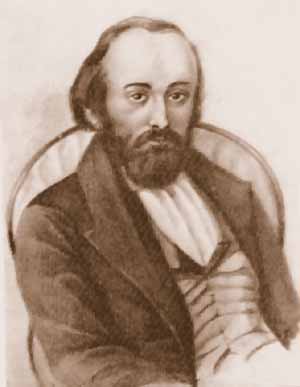 “Since we have one sabotage word left, I intend to use it without any shame and conscience ... to spread socialism, atheism, terrorism, all the best in the world ... ” , 4 - said Speckhnev at one of Petrashevsky’s collections. These words, like the above fragment of " ... project ... ", cannot but remind the Nechaevsky "Catechism of the revolutionary" : "The revolutionary is doomed ... everything is absorbed in him (as in the text - and.0.) The only exceptional interest , a single thought, a single passion - a revolution ... It should be immoral and criminal for him ... He should be ready for death and every day ... The nose should have one thought, one goal - blank destruction . " 5
The old "non -Caucca" himself, Dostoevsky could not subsequently not see the similarities of the methods of Kashnev and Nechaev (in the first case, however, the methods were never put into practice). He could not help but feel that he was more likely to look for (and found!) The applications of forces for his rich, indefatigable nature, rather than he was happy about the welfare of the people. And if Kashnev really possessed the mysterious, demonic influence on others, if Dostoevsky really sees “a mixture of Nozdrev with Byron” in nihilism, then in one of the research of Byron we find words that are to be a surprising degree that we are trying to solve some of Dostoevsky’s puzzles.
"Byron does not want to recognize social and moral principles insofar as they oppress the personality; but he is ready to admit them as free extensions of a free spirit .. .. And if he then gives his personality to the service of the cause of freedom ... He will not do this under the pressure of a categorical imperative, this will fulfill it, not as a obligation overdoor, but freely, as a common instinctive motivation, as a generic. The king, not like a diligent slave. " 6
These lines are immediately forced to recall, along with the heroes of Dostoevsky, the first and main nihilist of Russian literature, - Bazarova. Namely, in one of the conversations with Arkady Kirsanov, he says:
" - for example, I: I adhere to a negative direction. Due to the sensation. I am pleased to deny that my brain is so arranged - and Basta! Why do you like chemistry? Why do you love apples? - also due to sensations ...
-Well? And honesty is a sensation?
-Lhen it! " 7
In the previous part of the work, we referred to Pisarev’s words said about this: “Nothing, a rabbit of personal taste, prevents them from killing and robbing and nothing, a rabbit of personal taste, does not encourage people of such a warehouse to make discoveries in the field of science, and public life . 8 That is, no absolute principles, except for the benefit, does not recognize nihilism, "since they will depress the personality"; This cannot but remind the "pseudo -bond" underground: "benefit! What is the benefit? Yes, and do you take on yourself exactly what exactly the human benefit consists?" 9
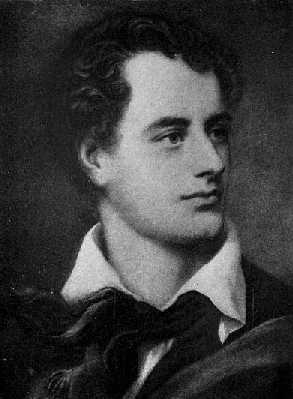 Thus, we can conclude: following Byron, the “man from the underground” (and then - schismatics, nihilists in the “demons” , and Arkady Dolgoruky) denies objective values; Following Byron , there is a myth about the “charm of the aristocrat going into democracy” (namely this thought sounds in the fragment of the article by the Fisher’s article) - who goes “freely, according to a noble instinctive motivation, as a generous king, and not as a zealous slave.”
It turns out that if an aristocrat-nihist is ready to serve the "case of freedom", then not in the name of the suffered beliefs, not in the name of ideals, but only according to the whim, in the form of the next statement of the self-will. Dostoevsky feels all the unnaturalness of this situation; Therefore, "from the Communist Kshashnev, his art double got almost nothing." 10 On the example of Stavrogin, the writer shows how false an aristocrat, "going into democracy" (the Stavrogin himself feels this, the reasons for which will be discussed later). There was nothing truly revolutionary in Byronism, the entire rebellion of Byronism is a riot from scratch; Only cosmopolitanism (in the negative, from the point of view of Dostoevsky, the sense), arrogance, disappointment in the whole in the world, brought with it.
But if, according to Dostoevsky, in the first decades of the century, there were real reasons for the “terrible longing of people, their disappointment and almost despair”, so that people with a strong mind and generous heart dropped, then the situation later changed significantly. The best people were able to believe in themselves, in the people, to Russia, they learned not to "swear" like Bazarov; Many of them nearly paid their own life for this, like Dostoevsky, Kashnev and their comrades. Therefore, later, during the period of great reforms , during the period of political and public awakening of Russia, there was no question for these people in what to do .

Notes:
 1 cit. by: Budanova N.F. Decree. Op. S.40-41.
2 Saraskina L.I. Fedor Dostoevsky: Downstream of demons. P. 360.
3 T.1O. P. 323-324.
4 cit. by: Report of the Auditorial General in the case of Petrashevtsev // Petrashevtsy: a collection of materials. T. 3. M.-L., 1928. S.52-53.
5 cit.po: Pirumova N.M. Destroyer // Homeland. 1990. #2. P. 82-83.
6 Fisher Vl. Byron and Byronism // Byron George Gordon. Works in 2 volumes. M., 1912. T.1. S.8.
7 Turgenev I.S. Fathers and children // Turgenev I.S. Decree. ed. T.3. P. 294.
8 Pisarev D.I. Bazarov // Pisarev D.I. Decree. T.2. S.9-11.
9 T.5. P.110.
10 Saraskina L.I. Decree. S. 360.