
Translated material
They flew to the owners
The Investigative Committee quite unexpectedly remembered the terrorist attack on the Domodedovo Airport on January 24, 2011. The Main Investigative Department of the Investigative Committee opened a criminal case against former top managers of the airport, and also transparently hinted that the owners of the airport could soon become the accused, they are supposedly Dmitry Kamenchik and Valery Kogan.
The case was initiated for “the performance of work or the provision of services that do not meet the safety requirements that entailed by negligence the death of two or more persons” (part 3 of article 238 of the Criminal Code). So far, three people are taking place for it: the former head of the Russian representative office of Airport Management Company Limited (controls Domodedovo Airport) Svetlana Trisina, former managing director of Domodedovo Erport Aviyeshen Sekuriti (provides air security in it) Andrei Danilov and former director of the airport complex Vyacheslav Nekrasov. In addition, the suspects are “unidentified persons from among the actual owners of enterprises of the airport complex of the Domodedovo International Airport”.
“In the framework of the criminal case, the investigation checks the information that the actual owners of the airport complex includes Dmitry Kamenchik and Valery Kogan, consisting of consultants,” the press release of the Investigative Committee emphasizes . Formally, they are consultants of Airport Management Company Limited registered on the island of Maine's island, but in fact, are probably the owners of the enterprise.
The Investigative Committee believes that the actions of the suspects led to an increase in the vulnerability of the airport, as a result of which it was not possible to ensure the safety of its passengers. “This led to the fact that in January 2011, Magomed Evloev freely went into the building of the airport complex of Domodedovo International Airport with an explosive device hidden under clothes and made it undermined. As a result, 37 people were killed, more than 170 were harmful to health of varying severity, ”the TFR said.
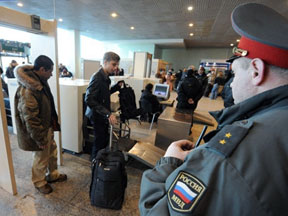 Springs at the entrance to the airport
The decision to initiate criminal proceedings, according to Kommersant, notes that back in 2007, the “inspection technology at the entrances to the airport complex” was introduced, according to which all the airports included in the airport building were supposed to go through the framework of metal detectors, and, if necessary, subjected to inspection using a hand -to -hand metal detector. Also, employees of the security service, according to the document, were supposed to identify passengers from the so -called risk group (including immigrants from Arab countries, natives of Central Asia and the North Caucasus) and conduct interviews with them in order to find out the goals of their arrival at the airport.
But the airport leadership, according to the investigation, was displeasedly formed by bursts and in 2009-2010 went along the path of simplifying passenger access to the airport building. In accordance with the new inspection technology, in Domodedovo, it will be approved, at each entrance to the airport there was only one aviation security officer who, using Introscope, inspected baggage and personal belongings of the incoming. At the same time, passengers were not missed through the framework of metal detectors, and even more so did not conduct conversations with those of them who belonged to the risk group.
It was the change in the rules for the inspection of passengers, they believe in the TFR, that led to the fact that on January 24, 2011, the suicide bomber was able to get into the airport building and undermine the bomb there.
It is characteristic that the federal government previously performed on the side of the owners and leadership of the airport. In response to the complaint of Elena Krivolutskaya to the European Court of Human Rights, which, as a result of the attack, became a wheelchair user, the White House indicated that “the actions of terrorists are generally unpredictable,” so the authorities cannot always effectively confront them. In a letter, representatives of the Russian government cited as an example a terrorist attack at Glasgow Airport in 2007 - then the attackers drove into the air terminal building by car with gas cylinders, after which they blew them up. From the actions of terrorists then, however, only one person died - in fact, the suicide bomber himself, five were injured. “Any preventive measures at the entrance become completely useless if the terrorists decided to carry out a terrorist act,” the Russian government says. The White House also indicated that in 2011 neither Russian nor international legislation provided for a total inspection at the entrance to the airports.
Previously, similar accusations of non-fulfillment of transport security requirements (part 3 of article 263-1 of the Criminal Code) were already presented to managers of Domodedovo, as well as the head of the Department of Transport of the Ministry of Internal Affairs of Russia in the Central Federal District, ex-head of the Domodedovo Lote and his deputies. However, the Investigative Committee terminated this investigation for the lack of a crime in the actions of the defendants.
The criminal case was terminated, including due to the decision of the Arbitration Court of the Moscow Region, which established that in January 2011 the legislation did not require a total inspection. The court decision is important in the framework of the prejudice, which was recently introduced into Russian legislation: this is an obligation for all courts to accept without verification of evidence the facts previously established by the court decision in another case, in which the same persons participate.
The emergence of a new criminal case will be less surprising if it is considered not in the context of the concern of the investigating authorities regarding the security of passenger aviation, but as part of the struggle for Domodedovo Airport.
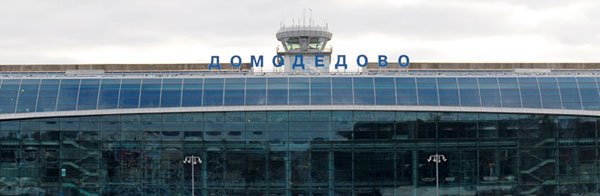 Domodedovo airport. Photo: fgupaad.ru
The fact is that Domodedovo has long been an annoying factor for so many - in fact, this is the only large private airport in Moscow.
The infrastructure of the Moscow aviation unit is under the jurisdiction of two FSUPs. First of all, this is the Federal State Unitary Enterprise of the Civil Airports (Aerodromes) (FSUE Aga), which was created in 2002, under the management of which is the airports of Sheremetyevo and Vnukovo, as well as dozens of objects throughout the country. Domodedovo Airport is under the control of the Federal State Unitary Enterprise "Administration of Domodedovo Airport" (FSUE AAD), which back in 1998 signed an Airport Domodedovo CJSC for 75 years. Sheremetyevo and Vnukovo are controlled by state structures.
Domodedovo became the first airport to provide passengers at least something similar to the service: a clean gym and departure, relatively small queues at passport control. At some point, the passenger traffic in Domodedovo was larger than in Sheremetyevo-a rather absurd situation, it was originally conceived that it was Sheremetyevo that should become the main airport of the capital.
In Domodedovo, for the first time in Russia, they tried to build a business scheme that was most like a western model, where airports receive only about half of the income from their main activity, and the rest due to rent and related sources of income.
FSUE AAD tried to challenge the contract with a commercial company in courts, as a result, an agreement was concluded according to which the rent for the airport should be reviewed every five years “by mutual agreement”. Back in 2012, the operator of the Domodedovo airport paid only 92 million rubles a year for renting property, however, then the rate was revised, and now for the rental of Domodedovo, FSUE AAD receives more than 410 million rubles a year. For comparison, for rent Sheremetyevo, FSUE, yeah, receives 210 million, Vnukovo brings about 120 million.
With such considerable income from rent, two FSUPs are deeply unprofitable enterprises - the federal government spends tens of billions of rubles to maintain the performance of airports and their development.
Over the past 25 years, the metropolitan airports have developed as independent enterprises, and the emergence of a competitive market has become a natural result, in which each airport is trying to offer the airlines the best conditions, and passengers are the most wide network of routes. This situation, according to the state, the owner of all three airports, although it has significantly improved the service at the airports, but leads to additional budget costs for maintaining and developing infrastructure.
Under the slogan of building a unified management scheme of the metropolitan air, some of the government agencies tries to regain control of Domodedovo airport by all means. So, for example, the owners of Domodedovo will not allow you to start building a third runway, under which the land has already been bought out-it must solve the problem of overloading the terminal. In Sheremetyevo, the third runway is planned to be built for budget money.
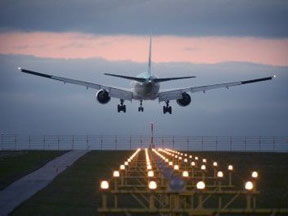
Now Domodedovo already has technically the most comfortable stripes: they are far enough from each other so that two aircraft can take up and landing. In Vnukovo, two stripes intersect, which, in principle, excludes their simultaneous use, and in Sheremetyevo, the stripes are too close to each other, so the dispatchers have to verify the schedule of take -off and landings up to a second. But still, 30 million passengers per year who use this airport now, this is actually the limit of a possible load on the terminal and two runways.
Criminal cases in Russia, as you know, often become a continuation of political or economic disputes - though, so far, the owners of Domodedovo were able to defend their own business.