
Translated material
South Africa: Change of President
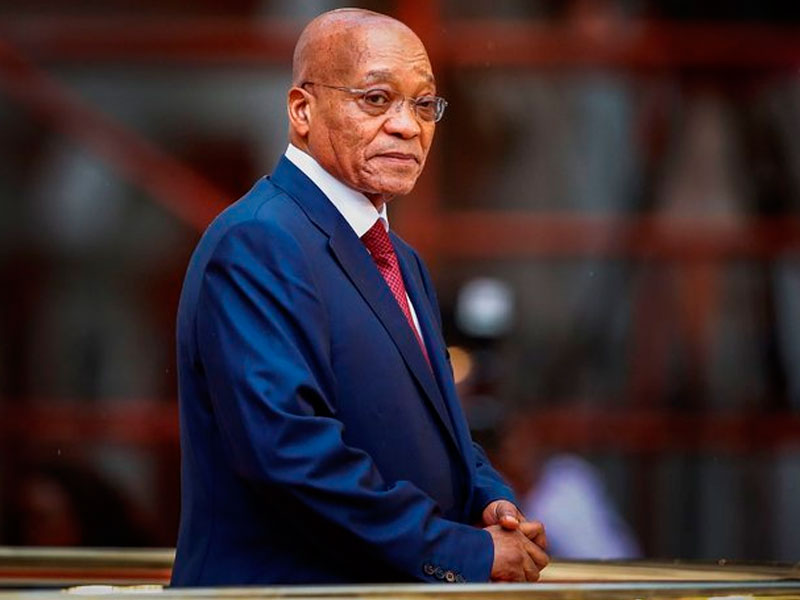
On Thursday, South Africa President Jaycob Zuma announced that he was resigned. Almost immediately after that, Siril Ramafos, a former vice president, was appointed to him to replace him. The media discuss the situation that has developed in the country following this story.
Zuma, writes The Economist , refused compromises to the very end. In general, for years he ignored the discontent of citizens who have long been tired of almost continuous corruption scandals. In recent days, Zuma also accurately ignored the calls of his one -party members to voluntarily resign. As a result, the case reached the threat of a vote of distrust of February 15. Only after such an ultimatum, Zuma agreed to voluntary resignation.
At the same time, he gave an interview in which he hinted that he was leaving under pressure and that he was a victim, innocently injured from evil intent. However, the issue of innocence will probably soon be developed in the form of a trial in numerous corruption cases. Actually, the police have already begun real estate raids belonging to the alleged corruption accomplices of Zuma.
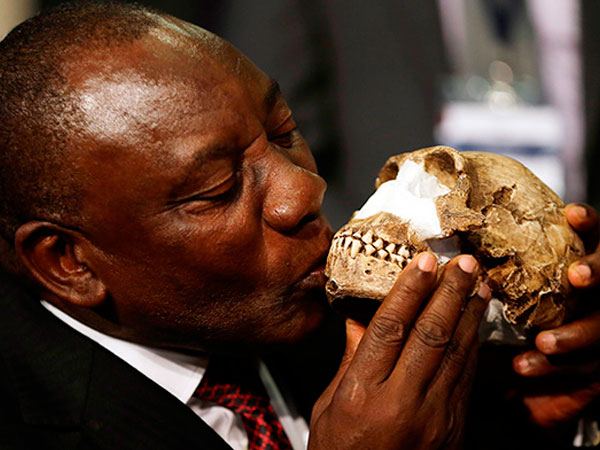 Cyril Ramafos with a monkey skull
The main winner in this story was now Ramafos, who was elected chairman of the ruling party “African National Congress” last December, and now took up the presidency. But this is unless a status victory, because in reality he was inherited from Zuma a huge mess remains him. In almost all indicators, the country is now in a worst position than ten years ago, when Zuma headed the party (and in 2009 he became president). Economic growth was almost measured, last year a short recession even took place. The unemployment rate reached 36%.
But before Ramafos can go to work on numerous structural problems that slow down the growth (including the problem of low qualification of workers), he will have to do reputation work - cleaning the government from personnel involved in corruption scandals. And this will be much more difficult to do than to shift the zoom from the presidential post.
Wall Street Journal also writes that Ramafos has to face difficult tasks, the solution of which he has little time. He has a year to convince voters that not the entire government has become mired in corruption and that the party is aware of the need to establish racial equality, which still after the end of the apartheid still remains in the country.
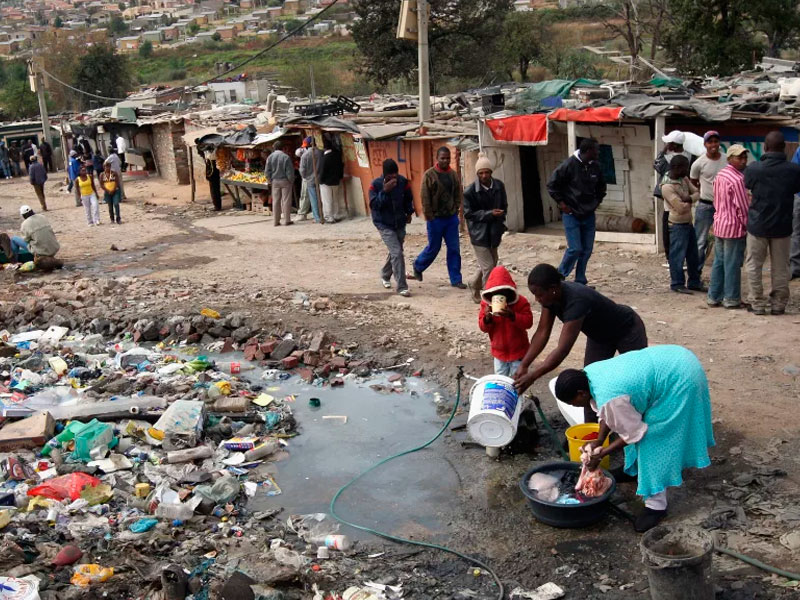 Captauna suburb
Signs of the soon Zuma removal from the authorities appeared in December, when Ramafos was made by the chairman of the party. In this regard, the South African currency increased in price, and banks began to adjust their economic forecasts taking into account the likely acceleration of growth. Some businessmen even started talking about some already visible symptoms of improving the situation.
According to the author, one of the most difficult tasks for Ramafos will be the conduct of labor reform, which promises to be extremely unpopular among citizens, because it should be directed towards liberalization of the labor market, that is, more freedom to employers in terms of dismissal of employees. Associations with odious zoom are added to the general unpopularity of such measures. All this should happen during the year. In 2019, in South Africa there should be elections where Ramafos will try to get a full -fledged presidential term. Meanwhile, there is a risk that the ruling party for the first time since Nelson Mandela (1994) will lose the absolute majority in parliament.