
Translated material
The price of referenda
What to expect and what are the risks
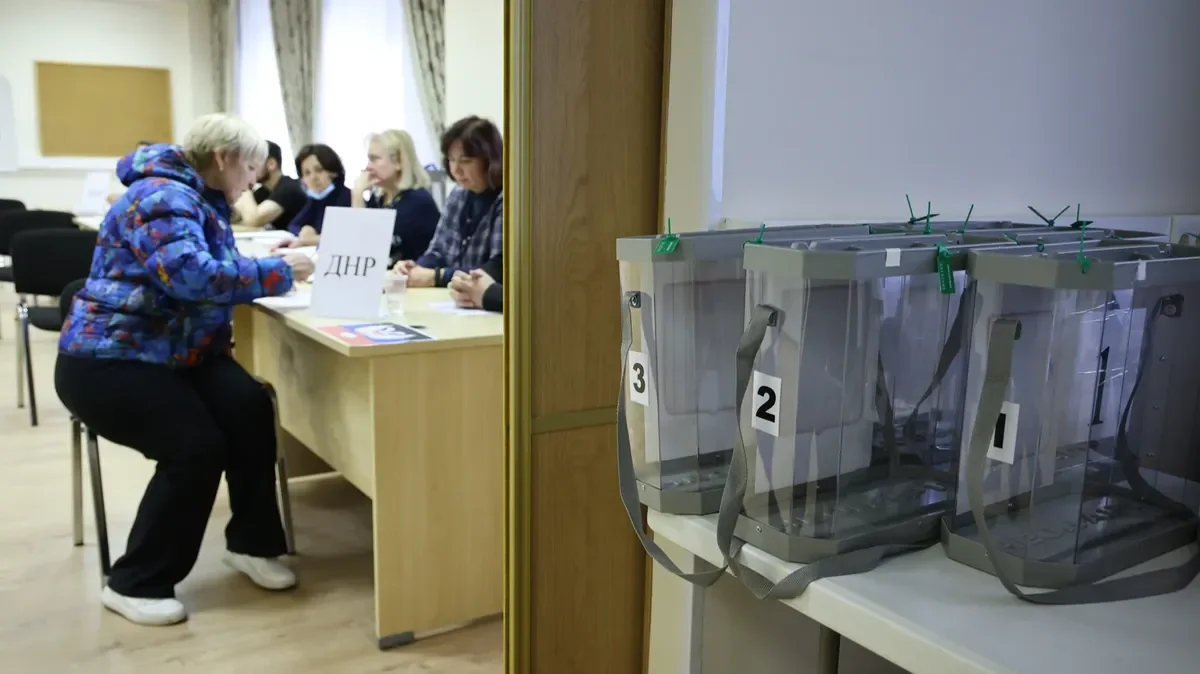
The international political consequences of referenda in the DPR, LPR and in the territories of the Kherson and Zaporizhzhya regions of Ukraine, controlled by Russian troops, are predictable. Since we are predicting their result, these territories may eventually become part of the Russian Federation. The reaction to this world community is equally obvious.
1.
There will be no universal international recognition of new territorial acquisitions.
An example of Crimea is enough - after eight years, only five countries have officially recognized its joining of the Russian Federation: Venezuela, Nicaragua, Syria, Afghanistan and DPRK (not counting the unrecognized Abkhazia and South Ossetia, as well as the independent DPR and LPR). About 20 countries recognize his “actual” joining the Russian Federation, but do not confirm this by official statements and the signing of international legal documents. Among them, in particular, Belarus, China, Cuba, Kazakhstan, Uzbekistan, Iran, India, South Africa. Moreover, new acquisitions can receive even less support for obvious reasons.
2.
The results of referenda will undoubtedly be convicted by most delegations on the vote within the UN General Assembly
(which, of course, will take place after the announcement of the results of the referenda and the consent of Russia to join these territories into its composition). Those who vote against will refrain or simply will not take part in the vote, will be in the minority - as it was in the case of Crimea. Thus, another UN resolution will appear, confirming the sovereignty and territorial integrity of Ukraine. Similar resolutions will be adopted within the framework of other international organizations (regardless of whether Russia is included in them or not) - the Council of Europe, the OSCE and further according to the list.
3.
Undoubtedly, additional sanctions can be imposed - personal (against the organizers of the referendums) and sectoral - from those who have already introduced them (these plans have already been announced).
Although, it would seem, their potential is almost exhausted. But namely - "almost." Moreover, there is still a reserve of tightening and expansion of secondary sanctions, which can additionally cross out plans for bypassing existing sanctions through countries that formally have not joined them, but do not want to become victims of secondary sanctions. This, in turn, will lead to an increase in problems with countries that the Kremlin considers almost allies or at least retaining “neutrality” or “balanced position” regarding the conflict in Ukraine. These countries will more and more emphasize the need for the negotiation completion of the conflict and is less and less willingness to “replace” the West in the economic and commodity needs of Russia.
4.
The danger of escalation in Ukraine will increase sharply.
The Russian Federation will consider the newly acquired territories part of the Russian state, and Ukraine, politically and supplies of weapons, supported by NATO countries, is not going to abandon them at all. Thus, the length of the declared Reds of the Red Red (non -proliferation of the conflict for Russian territory) and the number of territories located in this dangerous zone will increase sharply. So, this feature will inevitably be crossed. What will be the real consequences and the limit of the Russian response, including the use of nuclear weapons, is unknown. Russian statements in this regard are contradictory, it is very difficult to understand where, when, and under what conditions of warning can develop into a real threat of its application. Applications about the impossibility of using nuclear weapons, unfortunately, are depreciated in the conditions of a protracted military conflict, in which peacetime logic ceases to act under the pressure of reasons of military success and prevention of defeat. Whether the leaders of Russia and its opposing countries of understanding the inevitability of the world disaster in the case of nuclear escalation are enough when using one of the parties at least one tactical nuclear charge is unknown.
5.
The field of opportunities for negotiations between Russia and Ukraine on the cessation of hostilities will be sharply reduced.
The leaders of Ukraine (apparently no) will not go to such a large -scale loss of territory. Even one status of Crimea was enough for serious negotiations in the framework of Istanbul initiative in the spring of this year. What can I say when the vast regions of the East and South of Ukraine become controversial.
6.
Undoubtedly, the military strengthening of NATO eastern flank will intensify (especially under pressure from Russia adjacent to Russia).
7.
The prospects for the resumption of American-Russian negotiations on strategic stability and control over weapons will become even more ghostly.
The conclusion is disappointing: the fundamental interests of the security and development of Russia can be obvious damage.