
Translated material
Holeshot
Since 1993, in Russia, not a single federal referendum has been held - important decisions to citizens are in no hurry to trust citizens
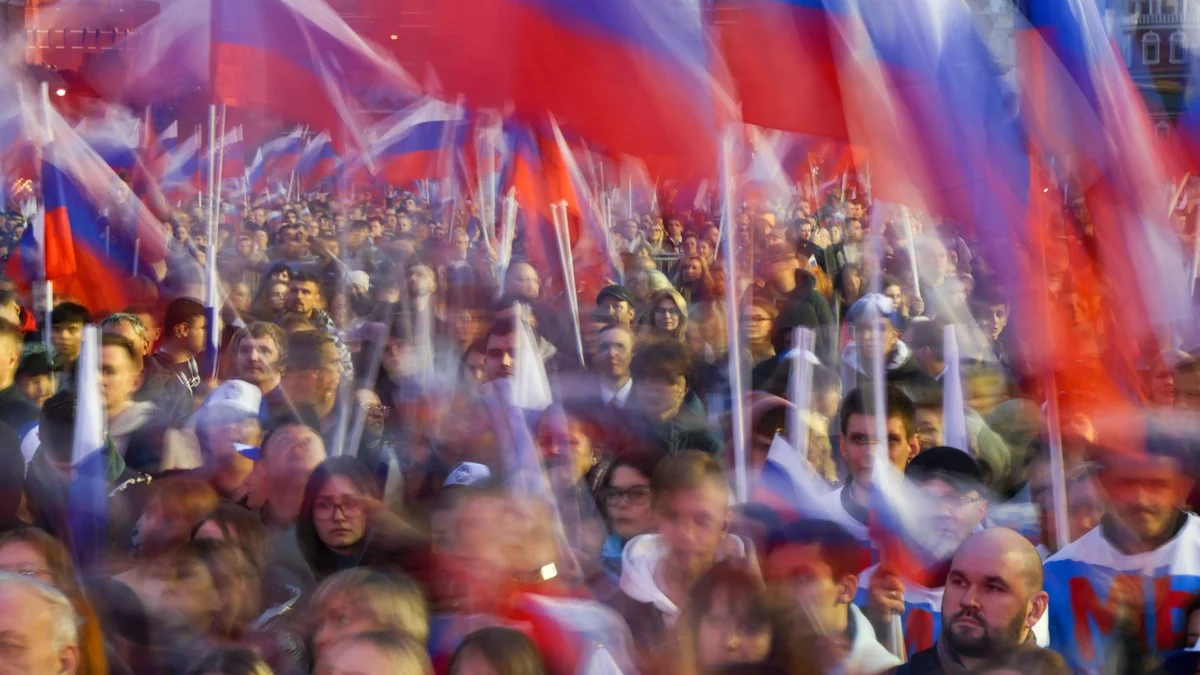
Photo: Alexander Shcherbak / TASS
Since 1993, no federal referendum has been held in Russia. And what was carried out? For 20 years - 4858 referendums: about the mowing of the hogweed, the installation of fences, the transfer of the shooter of the watch in one of the regions ... All attempts to bear the most important issues to the plebiscite were blocked.
On April 10 last year, a bill was introduced to the State Duma, simplifying the holding of all -Russian referenda. The current version of the law, according to the author of the amendments of the Communist Angelica Glazkova, contains "unreasonable restrictions." As the “new” found out, over the past 20 years, while this law has been in force, the direct will of citizens has come down to the collection of money for improvement, the struggle with the hogweed and the purchase of cemetery fences. Really important issues that citizens want to bring to the vote are blocked by deputies, prosecutors and courts.
The system of Russian referenda consists of federal, regional and local votes, for the organization of which it is necessary to pass often insurmountable procedures established by law. In order to vote throughout the country, it is necessary to create in more than half of all Russian regions the initiative groups of at least 100 people, hold meetings, observing numerous formal rules; After checking all the documents, regional election commissions must register initiative groups.
Then, all documents, including the wording of the referendum issue, must check and approve the CEC. Next
It is necessary to collect at least two million signatures of the referendum participants, which is given 45 days (or more than 44 thousand signatures per day), while one region should have no more than 50 thousand signatures, after which they are again checked by the CEC again.
If everything went successfully, the documents fall to the president who sends them for verification to the Constitutional Court, after which he appoints a referendum. The Communist Party in its bill offers to reduce the number of signatures required for the referendum from 2 million to 500 thousand and increase their collection period from 45 to 60 days.
Since 1993, not a single federal referendum has been held in Russia, and attempts to organize it, for example, in 2018, when initiative groups (communists and fair Russians) tried to bring the issue of raising the retirement age to the All -Russian vote, were suppressed at the stage of nomination. An attempt to initiate a similar federal referendum was undertaken in 2019 in the Altai Territory, but also unsuccessfully.
At the same time, the state, probably, in order to circumvent its own complex procedures, carried out in 2020 amendments to the Constitution not through the referendum, but in the form of "all -Russian voting". This made it possible not to register the initiative groups, not to collect signatures and avoid checks of documents and formulations of questions, as well as use, in addition to the usual, early and electronic voting.
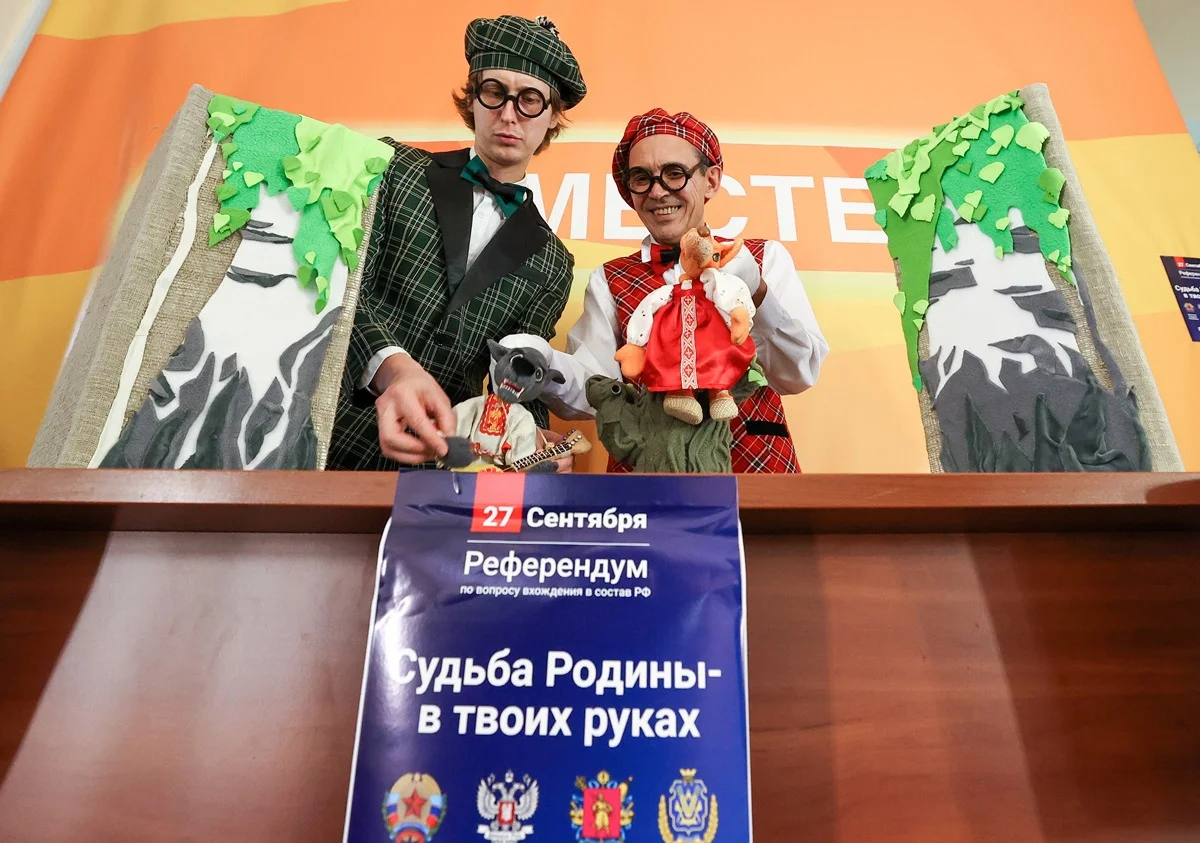
Despite almost impassable procedures, attempts to conduct regional referendums, having exhausted other ways to resist officials, undertook, for example, in the Arkhangelsk region and the Komi Republic, on the border of which they planned to build a landfill for Moscow garbage. Residents of these regions proposed prohibiting waste from other regions. The deputies of both parliaments, which, according to the law, must approve the application for a referendum, blocked the initiative.
In total, according to the CEC, since 2003, 4858 referendums have passed in the country, of which only 14 (less than 0.3%) have been regional - 11 referendums on the merger of the regions, two on amendments to the Constitution of the Chechen Republic and Tovy and one referendum to the Volgograd region on the transition from the Moscow time zone to local times. Residents of Sakhalin wanted to return the Soviet Time in 2015 at the regional referendum. In 2020, regional referendums on the association planned to hold the Arkhangelsk region and the Nenets Autonomous Okrug, but they did not take place.
The rest of the referendums took place at the local level and touched on the issues of individual regions, cities and villages.
Almost 90 percent of them concerned the “self -taxation of citizens” - the collection of money for the needs of their territories. People collected money for street lighting, asphalting of roads, improvement of cemeteries, mowing grass, struggle with hogweed, maintenance of fire brigades and other things.
The rest concerned changes in borders and the merger of municipalities, as well as all kinds of prohibitions. For example, in Yakutia, in 2019, two local referendum on the ban on the sale of alcohol in the villages of Belaya Gora and Zhigigansk were held. In the first case, residents did not support the ban, and in the second “dry law”, introduced according to the results of the vote, was canceled by the regional Supreme Court after a complaint of alcohol merchants.
At the same time, almost all referendums fell on only three regions out of 85: Tatarstan, where 3207 referendums were held, the Kirov region - 949 referendums and the Perm Territory - 306 votes. Tatarstan secured leadership by conducting referendums on the “self -taxation of citizens” in all municipalities of the republic. The largest number of referenda in Russia, according to the CEC, was carried out from 2016 to 2018 (1605, 1136, 1039 votes, respectively). In 2022 - 66 local referenda in the Kirov, Vladimir regions, Mordovia and the Altai Territory. At the same time, in the statistics of the CEC there are no data over the past months of 2023, as well as the mention of referenda in the annexed territories (in the "DPR", "LPR", Zaporizhzhya and Kherson regions).
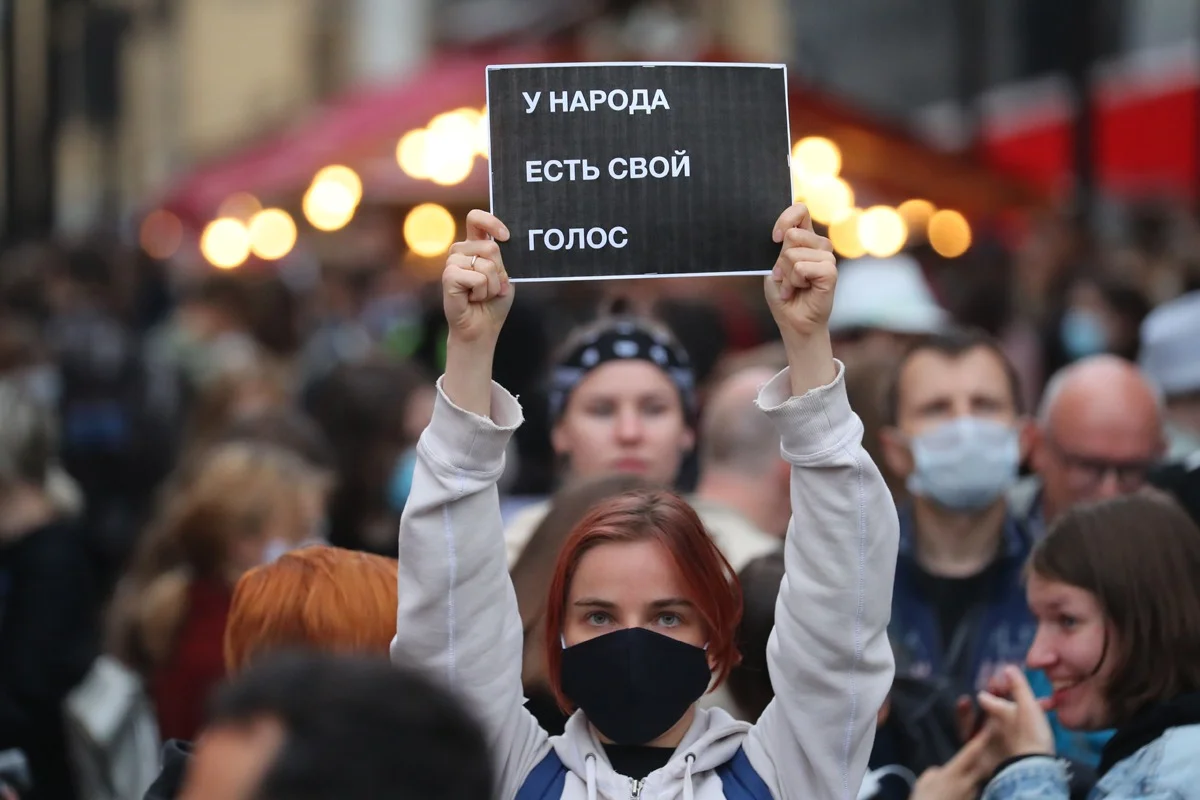
Despite thousands of renewal referendums, regional activists, politicians, parties and public organizations have been trying in recent years to organize voting in their regions on problems directly related to local authorities. Since 2014, attempts to hold referendums to return direct elections of mayors and heads of municipalities in Moscow and the Moscow Region, the Krasnodar Territory, the Astrakhan Region, Perm, Yekaterinburg, Chelyabinsk and Yaroslavl regions. In all cases, the authorities, under various pretexts, refused such votes. In April 2023, the deputy of the City Council of Novosibirsk Anton Kartavin submitted documents to the election commission of the Novosibirsk Region for a referendum to return direct elections of the mayor. The election man rejected the initiative.
Successful referendums initiated by residents, while literally constitute a statistical error from the total number of votes held. For example, in the Khabarovsk Territory, residents of the Ayano-May district organized and conducted a referendum at which they spoke out against the construction of a methanol factory. An agreement on the construction of the plant was concluded at the Eastern Economic Forum in the early September 2019 between the Chinese Sherwood Energy and the Investment Agency. According to the results of the vote, they decided to look for another site for the enterprise.
For the whole of 2023, according to the CEC of Russia, eight referenda passed in the country, for example, in the Chechen Republic - on the merger of two villages, or in the Trans -Baikal Territory, where the inhabitants of the village of Ikshitskoy decided whether to collect 500 rubles from each house for improvement. The rest of the referendums took place in the Kirov region, there they voted for raising money for street lighting, the fight against hogweed and the maintenance of cemeteries.
Thus,
The only national referendum in the country's history was held in 1993.
Since then, issues of federal significance, which really affect the life of citizens, have not been allowed before a popular discussion, and attempts to initiate it were blocked. The referendum on raising the retirement age did not take place, amendments to the Constitution were also introduced bypassing this procedure, inventing a new, special. When Russia accepted the new territories that were previously included in the boundaries of Ukraine, represented the results of the vote held in these regions, but the country's residents did not even ask about the desire or unwillingness to acquire new fellow citizens. Instead of the genuine possibility of a nationwide will, the referendum procedure was used as a decorative, suitable only for decisions on the repair of sidewalks or a saw of trees. Citizens are not allowed to a more serious agenda.