
Translated material
I am Jewish
Leonid Nevzlin's book “remaining in the minority” was published
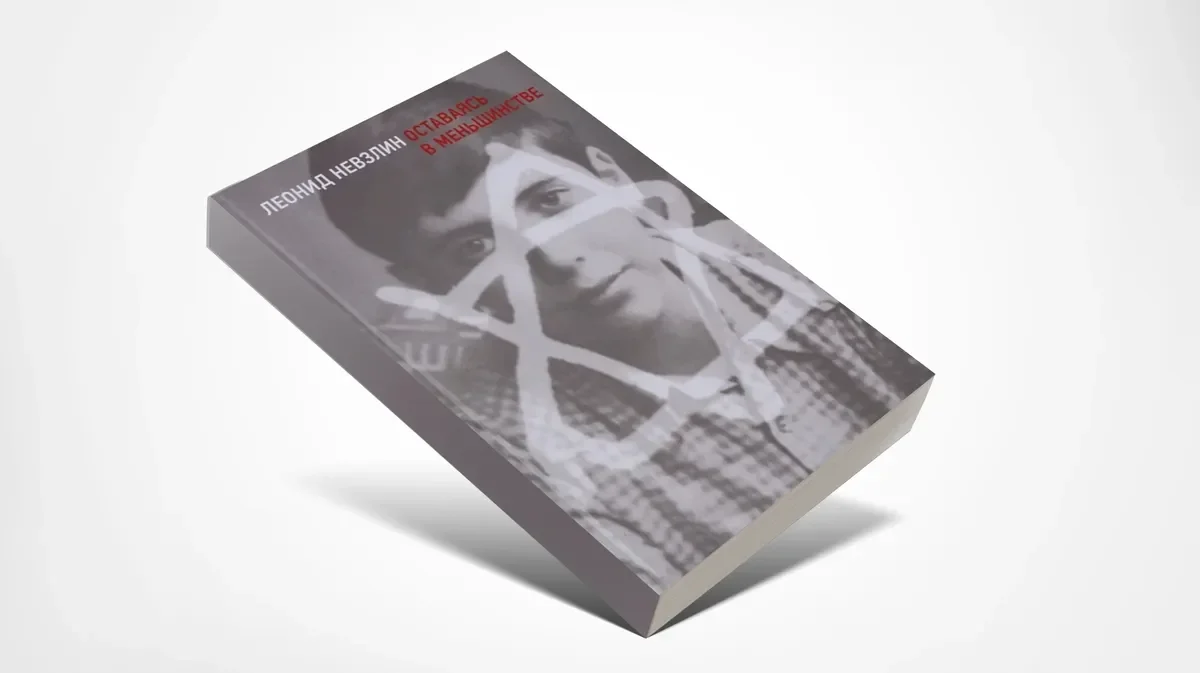
When you see the surname “Nevzlin” on the cover, there is immediately hope to hear the truth about what was happening behind the scenes of events around Menatep, Yukos, the arrest of Khodorkovsky*, his (non -zero) forced emigration to Israel - but there is never enough to tell a person who was angry with his business and broke his life. The author himself understands this, so he already warns the reader in the prologue:
“This is not a confession of a person summing up. I decided to write almost nothing about my personal life. In the most general terms, I touch on the story of Yukos. I mention little different political figures, although, of course, familiar with very many of those who created the history of Russia. ”
So, then, the book of a person who had fallen from those who once hated him, and those who connected his hope for a civilized future of Russia once, are interesting? True, the events of the last months that he is smart, balanced, informatively commenting on YouTube, again attracted an audience to him, but now it is unlikely to excite some person, unless it is Putin, who again attracted the attention of millions. Only now people are not interested in “who is mr. Putin? ”, And how and why this nondescript man managed to change our world beyond recognition. In his book, Leonid Nevzlin does not ask this question directly, but, comprehending his life, building his scale of values, he inevitably returns to the path that led him to emigration.
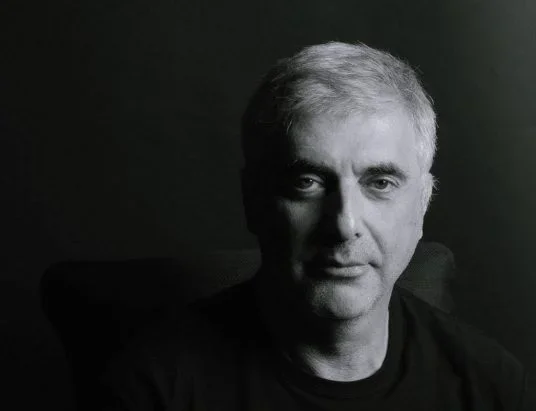
And it all started in a completely different country, in a small Belarusian place of Klimovichi, where the author’s grandfather, Mark Isaakovich Leikin, was born. Even now, showing people outstanding and even great, the author puts his grandfather on the top of the pyramid, illustrating his assessment of a person.
Talking the biography of his grandfather, he tells the history of towns in pre -revolutionary Russia, analyzes the motives of the stormy participation of Jews in the revolution, shows the drama of the life of Soviet Jews, whom his relatives did not realize for a long time.
More precisely, they understood how many now understand the current tragedy, but for various reasons they tried to ignore. The Bible, Mishna, Talmud Nevzlin read, when he was in fifty, already in Israel, but the issue of his identity, which a large extent was dedicated to the book, stood in front of him very early when he could not even formulate it:
"I am seven years old. I study in the first grade of the Moscow school. I already know how to read and write. At a break, the teacher left the office, leaving the magazine. ... I'm curious. I read. In the column “Nationality” everywhere - Russian, Russian, Russian, and suddenly, opposite “Nevzlin Leonid”, “Jew” is written. The first sensation is fright. It was as if it pierced me: I'm not like everyone else. ... I'm not just different, I am in the minority. ... to be in the minority is bad. "
The long way from this childhood fright to internal liberation, the feeling of independence from the majority is the metaphysical content of the life of the author and his book. It is not for nothing that she has two epigraphs: “Do not follow the majority in evil matters, do not retreat from the truth in court for the sake of the majority” (Exodus 23: 2) and “The minority is always not right - at first” (Herbert Prino), and one of the chapters is called “to be a Jew - there is nothing terrible in this.”
However
The author’s spiritual throwing of the author is not exhausted. It is full of realities at first of the Soviet era (the author was born in 1959), then Russian reality, then Israeli emigration.
Solid quotas in institutes, interest standards at work, shortage, communications, blat, communal services, construction teams and many, many other, understandable only to Soviet citizens, are described with accurate details and picturesque details. Not living in those years they will seem exotic, so there are many links in the book; Even the most famous names, for example, Vladimir Vysotsky, are accompanied by certificates. Perhaps this is not only a sign of respect for the young reader, but also a subconscious connection with Jewish culture, which began with the study and interpretation of texts.
As often happens in life, "there would be no happiness, but misfortune helped." Since the path to the coveted medical institute was closed, non -Zelezlin in the footsteps of his father went to Gubkinsky, in the colloquial of Kerosinka, which for many years determined his fate, which sharply changed along with the change of fate of the whole country. Without colossal shifts in the economy, in the entire way of life of perestroika years, it would hardly have been acquainted with Nevznin with Khodorkovsky, who then led the Center for the Scientific and Technical Creativity of Youth of the Frunze District of Moscow.
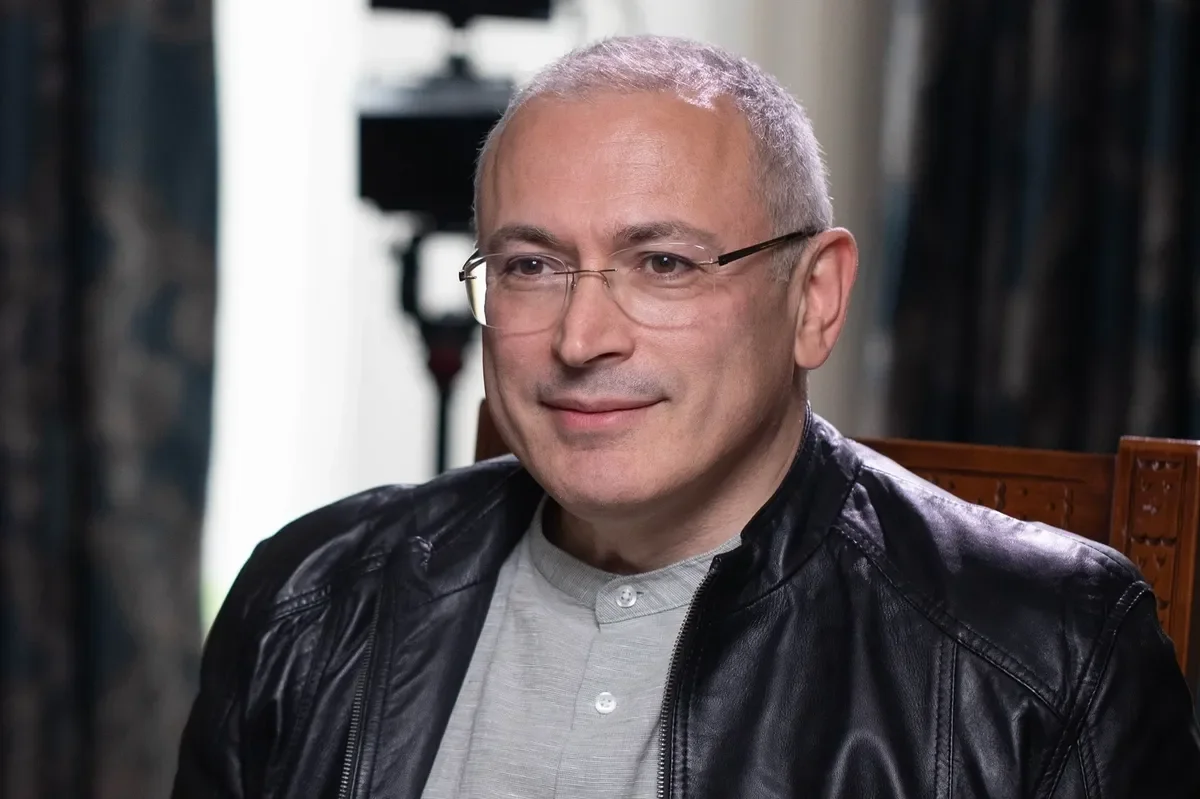
A restrained story about their long relations, in which there were probably difficult periods, will penetrate the unconditional recognition of its outstanding qualities. Describing the defeat of the Yukos that happened on the very take -off of the company, Nevzlin does not go beyond the framework of well -known facts, but this is enough to realize the damage caused by a giant company, and to the whole Russian business. The author does not bypass the accusations he had against Khodorkovsky, but here he is dealing with himself rather than with the authorities:
“The prison in Russia is something close, and sometimes inevitable, which should always be ready. ... Probably, even then Khodorkovsky internally prepared for a similar test. But for me, the prison was the embodiment of absolute evil, complete horror, hell on earth. ... I would prefer to accept poison than to spend at least a couple of days in prison ... That is why I with such passion discouraged Khodorkovsky from returning to Russia. "
And it all started optimistic. In 1989, on the basis of the Center for Scientific and Technical Creativity and the Nigma Cooperative, Nevzlin and Khodorkovsky created a menatep (“Intersectoral scientific and technical programs”) and were the first to focus on supplies to the institutes of computer complexes and software. The device of the business of those years is from the most interesting in the book. But it is also missed through personal sensations that have changed greatly after Nevzlin became rich. He was pleased with the capabilities that opened, but inspired another thing: he felt like a free person. As much as you like, you can scold the 90s (and there is, of course, for what), but it is difficult to forget their enthusiasm for the future, the confidence that the inertness and inertia of society can be overcome by personal initiative:
“Really, at a personal level, I felt the need for charitable activities in the late 1990s and early 2000s. And he began to engage in charity not at all, but Jewish. Tsdak - charity, philanthropy - is one of the foundations and main values of Judaism. ”
Excursions in history, thoughts about Jewish identity, communal life, portraits of famous figures, international ties - only in a cursory enumeration look boring, in fact it is from the most living pages in the book. There is a lot of pain in it, inevitable, when all your ideas go around the drain, things are erased into dust, and rainbow hopes collapse. For a person who is accustomed to achieving his goals, the defeat of the most important of them led to a serious revision of life. Much engaged in the revival of Jewish community life in Russia, he came to the understanding that any anti -libella and authoritarian regime leads to anti -Semitism:
“Orthodox and patriotic”, which has developed in Putin's Russia, is definitely no exception. And no personal ties of court Jews will be able to prevent the next wave of anti -Semitism in Russia. ”
Life in Israel and the life of Israel, incredibly multilayer, if you look at it from the inside, is described from the point of view of a person who, often remaining in the minority, fights for the good for the majority. To live in its current scale of values means remaking the world without direct selfish calculation, for higher considerations, and higher considerations are a specific good of specific people.
The author is aware of the importance of religion for Israel, but freedom remains the main value for him, for which he fights not only for himself. And, probably, there is no contradiction, if we recall that Judaism arose as a religion of those who were turned into slavery, but did not submit to the spirit. The book ends on a blessed note - a walk on the exhibition dedicated to the Beatles:
“I felt a feeling of amazing inner harmony and completeness. I am at home, in my land, with my people, and the Bitles music connects me with the whole vast world, with an endless universe. And this world is beautiful, it is kind and full of love. ”
Perhaps excessively solemnly - but it is precisely this harmony with ourselves and the world that we are now especially lacking. Therefore, this book, full of energy and faith in the future, is an excellent therapeutic remedy in our sick times.
Buy a book of Leonid Nevzlin "remaining in the minority." M., ANO "Reed" New Gazeta ", 2022. - 344 p. You can in our store.