
Translated material
Technology+carbon =?
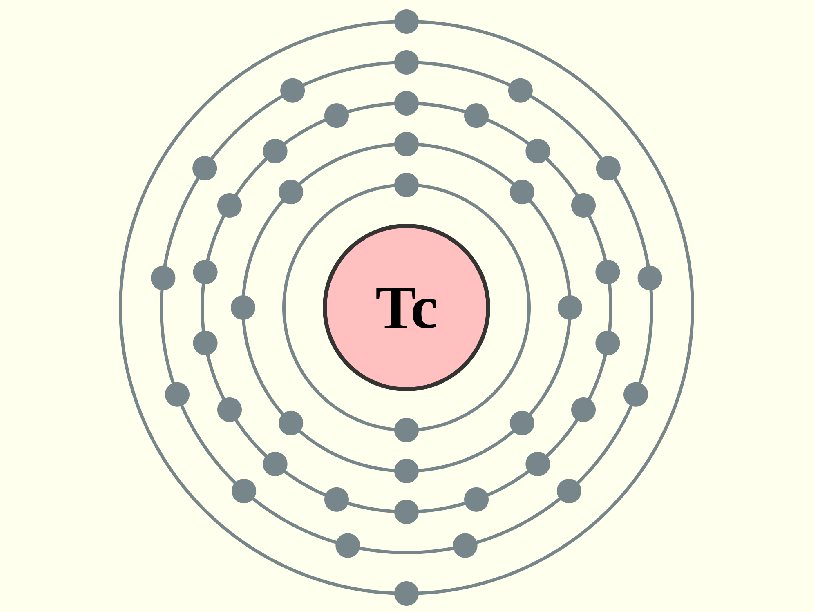
The team of physicists from Russia, the USA and China, led by Professor MFTi, Artem Oganov, put forwarda theory explaining the patterns in the formation of transition metals carbides.
The reader who monitors the news of science must already be used to - if the authors of Artem Oganov, and the text mentions the USPEX computer modeling method (Universal Structure Predictor: Evolutionary Xtallography) , as a rule, is about opening new compounds. For example, all of us are familiar with the sodium compound (Na) and chlorine (CL) - table salt, but, as the team of Oganov found out, under extreme conditions, under high pressure, Na 3 Cl, Na 2 Cl, Na 3 Cl 2 , and even NaCl 7 , are possible . The same time, the connection was “closed” - it turned out that there is no carbide technology with the TCC formula.
Transition metals.
For a more understandable explanation of the theory explaining the patterns of the formation of carbon compounds and transition elements briefly, we recall which elements are transitional, and what their features are. As you know, an accurate electron orbit in an atom or molecule cannot be calculated, but you can determine the area of space in which the electron is most likely (orbital). With the growth of the charge of the kernel, the electrons fill more higher orbital energy.
Fig. 1. Distribution of orbitals in terms of energy.
As you can see from the drawing, the 3D-fiddle is slightly higher in energy than 4s. Such “anomalies” occur due to the fact that electrons interact not only with the core, but also among themselves. In transitional elements, the outer S-shell is filled, and electrons begin to occupy D and F-sunset. Since the chemical and many physical properties of substances are determined by the type and energy of external electrons in relation to the nucleus, and the structures of external electronic shells are identical to all transitional elements, their chemical and physical properties are largely similar.
The compounds of transition metals and carbon are interesting in that they have high hardness and melting temperature, as well as good thermal and electrical conductivity. These compounds can be used not only as materials stable in extreme conditions, but also in the role of inexpensive catalysts, which is very important for the chemical industry and material construction. The purpose of the authors of the article was to understand the mechanism of forming compounds of the type TM X C C (TM - Transition Metal, transition metal, C - carbon, X and Y - the number of atoms of each element per molecule), that is, which of them are possible and why it is.
Why are some carbides stable and others?
To understand the processes occurring during the formation of carbide, physicists considered carbon atoms as inclusion in the crystalline structure of the transition metal. As a result of the introduction of a carbon of communication between the metal atoms, they become weaker, which is compensated by the formation of connections between the atoms of the metal and carbon. The nobility of transitional metals (their unwillingness to form chemical ties with other substances) grows when moving to the Mendeleev table, while the energy of the tm-C ties falls, and the smaller number of carbon atoms can penetrate the crystalline lattice of the transition metal. Consequently, the content C in the tm x c y compounds on one transition metal atom should fall as it moves to the right edge of the periodic table. The theory developed by the authors of the study takes into account the balance of these factors and explains why the transitional metal differs from each other in terms of the ability to form carbide and in the structure of educated compounds.
Fig. 2. Transition metals table.
To find out whether carbon carbon carbides will be stable (the metal atom is less than one carbon atom), scientists calculated the bond energy of atoms with each other (E COH ) and the energy of the carbon in transitional metal (E C-DIS )-that is, the energy necessary to place carbon in a crystal lattice. With a negative value of E C-DIS (this means that the carbon attachment is beneficial) carbon atoms are occupied by octahedron (Fig. 3) of the void (inter-eagle) in the metal grate.
If we consider atoms as rigid spheres, then the granecentrated cubic grate is one of the options for the location of the balls (atoms) of the same size, in which each ball of the third layer is located above the holes of the first layer. Between the balls there are voids (inter -nuisles) related to two types. Some voids are located between four contacting balls (in a hole formed by three balls of the same layer, there is a ball of the next layer, the hole is as if covered with a ball). The centers of these four balls form a tetrahedron. Therefore, the void is called tetrahedron (Fig. 3).
Rice. 3. Tetrahedron (1) and octahedron (2) voids in a two -layer dense packaging (a) and their position in the elementary cell of the GCC grate (b)
Other voids are located between six contacting balls: three balls in one layer are located above the three balls of the other layer so that the holes of two layers form one large void. The centers of these six balls are located according to the vertices of the octahedron, and therefore the void between them is called octahedron (Fig. 3).
To assess the stability of the compounds with a high carbon content, the Oganov team calculated the energy of the formation of monocarbide E TMC (a negative number means that monocarbide is stable) and ΔС CHG . The latter takes into account that when the connection is formed, the charge is redistributed. The larger this number, the more difficult the formation of the connection is difficult.
Based on the values of the parameters, the elements of the table (Fig. 2) can be divided into four groups. In the first group highlighted by the red frame, there are titanium, vanadium, zirconium, niobium, Gafnia and tantal. For them, the energy of the formation of monocarbide and the energy of the implementation of carbon are negative, that is, the processes are energetically beneficial. The crystalline grille of the stable TIC, VC, ZRC, NBC, HF and TAC refers to the same type as the NACL grille is cubic, carbon atoms are in octaedricular inter -navals.
In a group, entangled in the blue frame, there are molybdenum and tungsten - the energy of the formation of their monocarbides is negative, and therefore the MOC and WC are stable , but the energy of the implementation of carbon is positive, and therefore carbon is in the tetrahedral between natives of the lattice - this is how it is surrounded by four atoms of metal, and not six, as in the octahedral case, and a loss in energy is minimal.
In iron, chromium, magnesium and technology, assigned to the green group, the energy of the formation of FEC, CRC, MNC and TCC is positive, therefore, the connection is unstable. In addition, the energy of the implementation of carbon is also more than zero - its presence in the lattice is energetically unprofitable. But, nevertheless, carbon carbides are stable , since the distortions of the crystal lattice that occur at the same time are not so large. Similarly , low -carbon carbides of red and blue groups are stable, for example, HF 3 C 2 and HF 6 C 5 , although monocarbides are stable for these metals.
Ruthenius and Osmius have an almost filled D- hug, due to this they are quite inert and reluctantly form compounds with other substances. We see confirmation of this in the table- E TMC and E C-DIS are positive and quite large, therefore, unstable both carbon carbon carbides and low. Despite the fact that iron is located in the same group of the Mendeleev table, in its case, the formation of carbides with a high metal content is possible due to the lower energy of the bonds of atoms (5.03 electron-volts against 7.86 ruthenia and 8.50 osmium). Learing in the same group with ruthenium and osmium, rhenium has a lower energy of the relationship of atoms and, it would seem, is able to form compounds with carbon. But the modeling carried out using the USPEX algorithm did not reveal possible stable structures. Total, rhenium, nevertheless, is too inert, and the entire group RU, OS, Re is not formed.
And technology?
According to the table (Fig. 2) - technology refers to the green group, in which only low -carbon carbides are possible. Modeling using the USPEX algorithm confirmed this conclusion-in the Uglerod Technician system, TC 10 C, TC 8 C and TC 6 C were stable. The modeling result is consistent with the results of researchers who received these compounds experimentally. But how then to explain the messages about the stable TSS with a cubic grate with carbon atoms located in octahedron through intersections? It spoils the whole beautiful theory!
Fortunately, in science, any statement lends itself to verification. The error should be sought either in theory or in the experiment. Could it happen that TCC took another connection? For example, in a mixture containing 50% carbon and technology, low -carbon carbides of the TC Y C form could form, and the remaining carbon remained “out of work”. In order to find out, a number of experiments were conducted. Including, the results of X -ray analysis of elementary technology in and the alleged TSS (Fig. 4) were simulated
The method of X-ray-phase analysis is based on the fact that different substances have different interpermose distance (balls of different substances differ in diameter, and, therefore, the thickness of the layers that they form). Therefore, on the X -ray, each substance forms an so -the picture of the location of the lines. Analyzing the location and intensity of the lines, we can conclude that there is how much substance is contained in the sample.
Fig. 4. Simulation of the X -ray of cubic grilles of technology and monocarbide technology. On the left is an experimental radiograph from the article “TC Carbide and New Ortorhommic TC Metal Phase” the authors of which claims to receive TSS.
It can be seen that the location of the peak on the experimentally obtained radiograph (40º) coincides with the peak of the cubic phase of technology (40º), not TSS (36ºС). That is, most likely, an error was made in the interpretation of the experiment.
So, as they say, "the myth is destroyed." Monocarbide TCC technology does not exist , and all pieces of our puzzle (Fig. 2, resembles a puzzle, isn't it?) They fell into place. And it is doubly pleasant that we know not only as , but also why .