
Translated material
Gref is authorized to declare
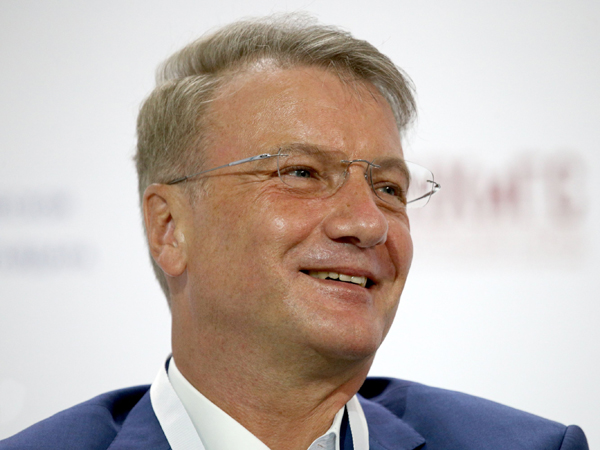
On Thursday, May 24, the St. Petersburg International Economic Forum begins. By tradition, during its holding, the leaders of the largest Russian companies and officials of the economic block of government are most open to the press. It is preceded by all this great interview, which was given by the head of Sberbank German Gref to the channel "Russia 24".
Gref spoke about some extremely important trends that are noticed in Sberbank. So, for example, the bank of deposits, primarily large ones, is fixed in the bank. “We cannot determine the grounds for this tributary, but, it seems to us, this is the beginning of the influx of amnested money,” Gref said. “The adopted amnesty law, as it seems to us, will also lead to the fact that some of the Russian capital will come to Russia from abroad.”
Recall that on March 1, 2018 the second stage of the amnesty of capital began, it will last until the end of February 2019. According to the law, entrepreneurs who voluntarily repatriate their capital to Russia will have the opportunity not to pay income tax and even personal income tax. Income tax will not have to be paid when eliminating controlled foreign companies.
The first amnesty of capital took place in 2015-2016, but it did not lead to success. The Ministry of Finance reported that 7200 declarations were filed. The new amnesty is more profitable than the previous one: this time it is possible to declare not only open, but also closed by March 1, if they were opened before the beginning of 2018. As a result, they cannot be brought to tax and currency liability.
Sberbank experts expect to strengthen the flow of money in the III-IV quarters of this year and, perhaps, at the end of the amnesty in the first quarter of 2019, Gref said.
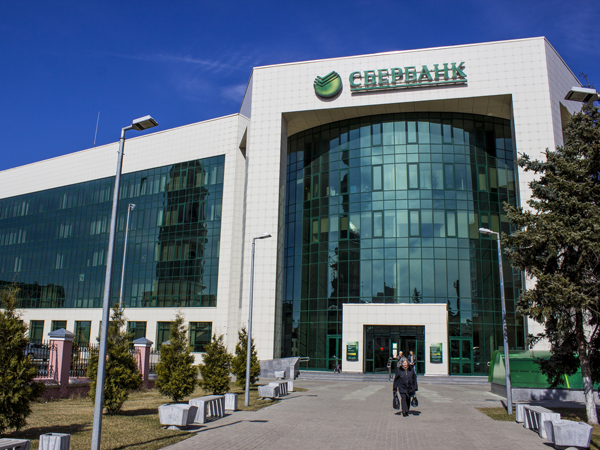 Sberbank in Kaluga Talam0NAL/Flickr.com
It should be noted that on Wednesday, the euro exchange rate on the Moscow Exchange for the first time in a month and a half dropped below 72 rubles, and the dollar rate at the same time approached 61 rubles. This happens against the background of high demand for rubles from the exporters, as well as, according to analysts, reducing the risks of the outbreak of the trade war between the United States and China.
Herman Gref also drew attention to a decrease in mortgage rates in Russia, he is sure that the process will continue in 2018 and in 2019.
“Of course, if inflation decreases - and all the prerequisites for the fact that inflation will decrease, there is, then, of course, the mortgage rates will fall automatically. Therefore, based on the situation that we see today, most likely, by the end of this year and next year we will see a decrease in bets, ”he said.
It should be noted that on Tuesday, May 22, the first deputy chairman of the Central Bank of Ksenia Yudaev, speaking at a meeting of the working group on the regulator report in the State Duma, said that in the spring of this year the mortgage rates reached a historical minimum and fell to 9.64%. In December last year, the average rate on ruble mortgage loans was 9.79%.
Herman Gref also said that Sberbank will continue to reduce his presence in Europe and reorient to the post -Soviet space, Belarus and Kazakhstan. According to him, Sberbank is forced to curtail the strategy of international expansion.
The day before, it became known that Sberbank was selling his Turkish subsidiary Denizbank, the buyer will be the Dubai group Emirates NBD Bank. The transaction value amounted to $ 3.2 billion.