
Translated material
Kit-whale
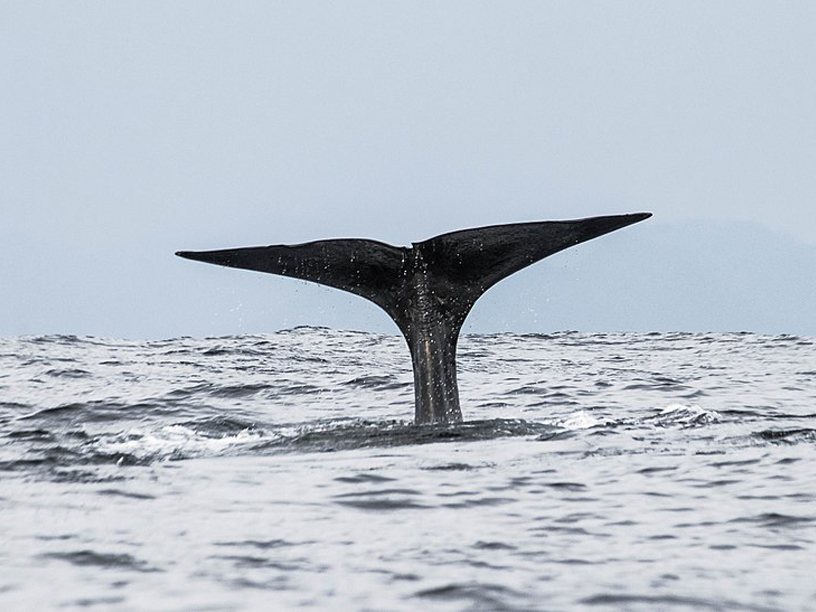
For many centuries, a man has caused the sperm whales of trouble. Active whale hunt began in the XVIII century. The sperm whales, unlike mustachioed whales, were capable of active defense. Using their powerful head as a ram, they overturned whaling can. But the forces were still unequal. In the postwar years, when the priority of the sperm whales reached the maximum, their number was about a third of the historical number of one million hundred thousand animals. Only in the 20th century was there at least 770,000 sperm whales. Whales were powerless in front of the ships on diesel engines, harpoons and harpoons with explosives.
After the ban on the Providence of the whales in 1985, the number of sperm whales began to slowly recover, but still has not reached the level of the 18th century. However, now it turns out that some sperm whales have learned to benefit from people's activities.
This happened off the Pacific coast of Alaska. Fishermen are hunting coal fish ( Anoplopoma Fimbria ), which in these places is called “black cod” (Black Cod). This deep -sea fish in an adult state reaches a weight of 14 kilograms, its meat is tasty, contains a lot of fats and is in stable demand. They catch this fish with a tier - very long, a few kilometers of gear equipped with thousands of hooks. On the fishing vessel, a bait is caused on these hooks - small fish. This is a special machine, which fishermen serve one after another of these fish. The machine puts them on hooks and gradually lowers the tier from the side of a slowly walking ship into the water. By the end of the tier, a buoy is attached, which is well noticeable on the surface of the sea. Returning to this place, the fishing vessel begins to slowly stretch the tier from under the water, and the fishermen at this moment remove the caught fish from the hooks.
And what about sperm whales? Podimally also loves the "black cod." But instead of working, diving behind it to the depths, they have mastered an easier way to prey. The sperm whale with his powerful jaws simply breaks the caught fish from the hooks of the tier. “I don’t know how to quantify their intelligence, but their effectiveness is almost perfect,” Skipers of the fishing vessel, Stephen Roads, tells the BBC reporters, who has been fishing in these places for twenty years. - They are being improved in this from year to year. For them, it makes up much less work to stir around us and take our fish, and not plunge and get it below. There is no doubt that these creatures are very smart. ”
An empty and bent hook - evidence that the sperm whales have learned to steal a catch (Jane Atkins/BBC)
The first messages of the fishermen of Alaska about sperm whales, stealing fish from tiered tackle, entered in the 1970s. Then the season of fishing of coal fish lasted only two weeks, now it increased to eight months, so that the sperm whales had a lot of time to get sung to get fish from hooks. He played a role and a ban on whaling. Cases of kidnapping sperm whales have become more frequent since the mid-1990s. Soon, the damage caused by them annually is already calculated by hundreds of thousands of dollars, so Alaska fishermen turned to scientists for help.
Back in 2003, Southeast Alaska Sperm Whale Avoidance Project was founded, whose employees are designed to study the behavior of sperm whales and understand how to prevent their robbery raids on fishing gear. The observations of scientists and fishermen helped establish a more accurate picture of the life of the Alaskan sperm whale. The project staff tracked 120 whales in the local waters, exclusively males, and the total population, in their opinion, can be 325 individuals. Fishing vessels accompany up to a dozen sperm whales, which is uncharacteristic for these animals, since usually sperm whales hunt alone. Whales are monitored, supplying them with GPS tags. One of the whales that removes fish from hooks for nine years is so familiar to scientists and fishermen that they received the nickname of the Jack the Stripper.
SEASWAP scientists even suspect that the skill of robbery of fishing tiers is transmitted among the sperm whales socially. On the existence of whaling cultural traditions, that is, the transfer of any skills within the group, they spoke several years ago, when in the study of Luke Rendell ( Luke Rendell ) and his colleagues was shown how the improved way of hunting fish using the tails on the water spread among the hunchbacked whales (probably, the whales make fishing into more dense packs). This method, first marked in 1980, quickly became popular. According to 2013, it was used by 37% of hunchbacked whales in the Stellvagen-Bank naval reserve off the Atlantic coast of the United States. At the same time, for 87% of them it was proved that they adopted this technique from their counterparts. Perhaps the same story happens with the raids of sperm whales on the fishing catch.
Scientists have also found that the sperm whales in their raids actively use their ability to echolocation. For several sea miles, they discover the movement of fishing vessels when they put or extract their tiers. “They think over everything in advance,” Steven Roads is sure. “But they feel when we leave for fishing, they find out that there are already fish tackles at a depth, in half a mile under the surface of water on hooks, and whales understand the sounds of our engines that the fish rises.”
At the moment, the most effective way of preventing whale theft from Seaswap considers the monitoring of sperm whales. Satellite tags on whales allow you to determine their location, and fishermen, using a special site or turning to Seaswap employees, find out where the sperm whales are now, and go to fishing to another place. Particular attention is paid to surveillance of a dozen sperm whales that most often ruin fishing gear.