
Translated material
Put it here
On the roads of Moscow, from February 1, it will be possible to meet MADI foot inspectors - the Moscow Administrative Road Inspectorate. At first, only about ten inspectors will patrol the city, but in the near future the staff will increase to 500 people. In the meantime, the recruits study and experience.
Up to this point, the Moscow authorities had only 70 foot inspectors of the Moscow parking space administrator (AMPP) at their disposal, but they are engaged only in cars whose owners decided not to pay for the parking lot. MADI inspectors will be able to engage in all cars that violate certain Moscow establishments. First of all, the inspectors of the new service will monitor stopping and parking in the wrong places, but they will also control the work of taxi and compliance with the rules for traveling in the city. The AMPP will remain its own staff.
The new MADI inspectors, unlike their colleagues from the AMPP, will have similar to a police uniform. It is expected that inspectors will wear a classic form of dark blue with a reflective patch of MADI. Inspectors will even have epaulets, but not police, but civilians.
How civilian shoulder straps differ from the police, the transport department was not explained. However, there are hardly any problems here: in Russia, the richest tradition of vestiges of civil servants in their uniforms-even the escalators of escalators in the subway wear epaulets, for which they were jokingly nicknamed the fighters of the escalator troops.
The presence of two structures with similar powers - the Moscow parking space administrator and the Moscow Administrative Road Inspectorate - only at first glance looks too much. From an administrative point of view, the logic of the Moscow authorities is very clear.
AMPP is engaged in maintenance of paid parking lots, which are created in accordance with Moscow Law. AMPP inspectors also write fines in accordance with the Decree of the Moscow Government.
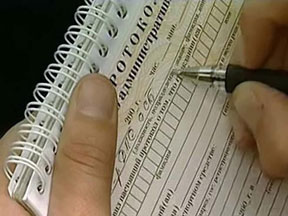 Photo: Vestiregion.ru
Madi's task is somewhat different. This inspection appeared as a result of the conclusion of an agreement between the Federal Ministry of the Interior and the Moscow Government on the transfer of part of the federal powers to consider some cases of administrative offenses to the capital. In fact, Madi will perform the functions of the traffic police, only it will not be subordinate to the President of Russia through the Federal Minister of the Interior, but to the mayor of Moscow, which means that he will be able to more flexibly and quickly respond to the situation in the metropolis.
So far, before the appearance of foot inspectors, created by the Moscow government, Madi showed a rather effective work. In the first month of its work (November), using the parking lots, the inspection wrote out about 40 thousand fines for violating parking rules. The traffic police, using the same parking records, wrote an average of 12.7 thousand fines per month - that is, three times less.
Foot inspectors have every chance of surpassing their colleagues who are analyzing the notes of parques. They will receive special mobile devices at their disposal, thanks to which it will be possible to fix illegal parking on sidewalks, pedestrian crossings and public transport stops.
Thus, a full -fledged parking police will appear at the disposal of the Moscow City Hall - similar structures exist in almost all large megacities and almost always they obey the municipality, and not the central government.
Perhaps a almost identical to the police form of civil servants is called to remind motorists that they are dealing with those who perform the functions of the Ministry of Internal Affairs.
Given the number of cars that Muscovites are parking incorrectly in the most unexpected places daily, the new inspection will be able to quickly recoup their existence.
In some ways, similar experience, oddly enough, is already available in Russia. He was introduced in Tyumen by Yevgeny Kuyvashev, who has since been increased from the post of mayor of Tyumen to the post of governor of the Sverdlovsk region.
Kuyvashev divided Tyumen into fairly small quarters in such a way that they could be bypassed in a leisurely step in an hour. A special employee of the district council, quarterly, was put on each such site. His duties are bypassing the wire territory twice a day and the identification of violations of the content of the territory.
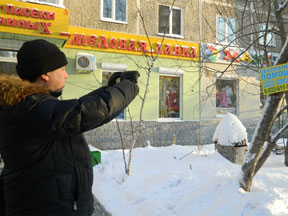 The work of the quarterly. Photo: Sergey Dianov/Oblgazeta.ru
The quarterly in Tyumen, for example, is obliged to fix the uncleaned garbage, an uncleaned road from snow, a container not exported, etc. Each such violation is punishable by a fine for the relevant legal entities, and often large enough, in several tens of thousands of rubles.
All quarterly photographs are used not only to make fines, they are also sent to the city administration, so that the mayor and his deputies can control the city’s cleaning in real time.
In the first year, the organization of the quarterly city budget spent 27 million rubles, and in the form of fines the treasury received more than 40 million - the benefit is evident. Yes, and the result was not long in coming: Tyumen today is one of the cleanest cities of the country in which a taxi order is a simple and a matter for any resident of Tyumen.
In order for Moscow roads and sidewalks to be the same order as in the courtyards of Tyumen houses, Muscovites and the capital's city hall will have to try very hard.
So far, a rare motorist does not consider it his duty if necessary to park at a pedestrian crossing, on a pedestrian path, at the exit from the entrance, on tram tracks and even at the intersections, which complicates the movement of his collectors of motorists.
Throwing their cars anywhere, their owners care about their convenience and do not think at all that one incorrectly parked car can complicate the life of hundreds of pedestrians.
The traffic police traditionally did not react too much to citizens' reports about the wrong parking - you never know how they parked, especially since the car owner can leave without waiting for the arrival of the outfit. The new structure of the city hall, in theory, is designed to rectify the situation, because to engage in improper parking is its first and direct duty.