
Translated material
Sanctions against Trump
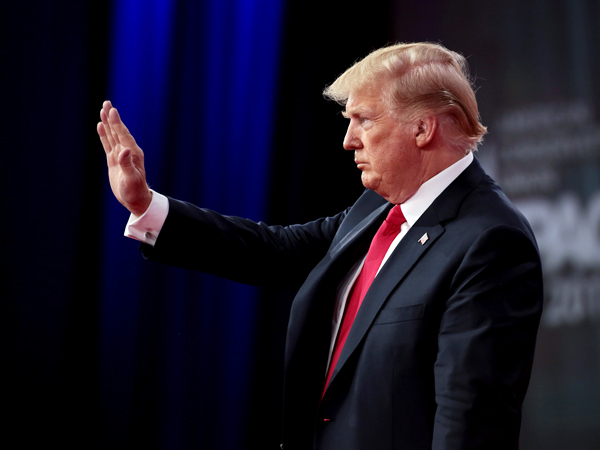
The bill on new sanctions against Russia, prepared by the American Republican Senator Lindsay Graham and three of his colleagues, was at the disposal of Kommersant. A significant part of the document, as the publication writes, primarily applies to President Donald Trump. If the document is adopted, then its administration will be obliged to reduce all previously imposed sanctions against Russia, from Caatsa to the “Magnitsky Act”, create a “sanctions coordination office” for agreements with the EU on the support of sanctions, block the dollar calculations of Russian banks, and prohibit the operations of the US residents with the new Russian public debt, and create the National Center for Combating the Control of the Russian threat, look for assets of Vladimir Putin around the world. Interestingly, the bill should also prevent the president with the President to withdraw the United States from NATO.
 Lindsay Gram Gage Skidmore/Flickr.com
The “Act on the Protection of American Security from the Aggression of the Kremlin 2018” was submitted to the Senate in the past Wednesday. Although usually such documents are published within one or two days, this bill is still not posted on the Senate website. As a result, Kommersant was the first to publish it
The bill begins with an appeal to President Donald Trump. In particular, he is called upon to support efforts to counteract the intervention "by the Russian government or other foreign players in the activities of US government agencies, as well as in democratic processes in the country." The second wish is to “publicly call the Russian government to return Crimea to the control of the Ukrainian government, as well as to call to abandon the support of violence in eastern Ukraine by separatists.” Senators also remind of the "occupation and support of separatists" in the territories of Georgia and Moldova. In addition, Trump is required to call Moscow to abandon the support of Syria President Bashar al -Assad, who, the senators are sure, commit war crimes.
 Vladimir Putin with Bashar Assad Kremlin.ru
In general, the bill unites all anti -Russian sanctions introduced earlier by individual acts, from “Ukrainian” to “cyber -terrorism”, into a single mechanism.
To coordinate this process in the US government, it is proposed to create a “sanctions coordination office”, which will be transferred to some functions of the State Department and the US Ministry of Finance. Also, the duties of the “sanctions office” will include coordination of actions with the European Union.
In addition, the bill refers to the creation of the “National United Center for response to hybrid threats”, the task of which will be a systemic struggle with attempts to influence Russia in the world and in the United States.
Finally, since the 2020 financial year, it is proposed to open access to the US budget fund in the amount of $ 250 million for states vulnerable to Russian influence.
Senators are clearly preoccupied with the possibility that Donald Trump will decide to withdraw the United States from NATO. If two -thirds of the senators vote for the bill, financing of steps directed - directly or indirectly - to support the attempts of the “any representative of the US government” to the country's withdrawal from NATO. The document also obliges the State Department and the Ministry of Defense to regularly report to the Senate about the likely threats that are facing NATO, as well as to transfer the weapons to members, which the United States is no longer needed.
 Donald Trump during a visit to Europe The White House/Flickr.com
But, perhaps, the most dangerous part of the bill is the requirement to ban on operations in the United States seven Russian banking structures, including Sberbank, VTB, VEB and Promsvyazbank. If the ban is adopted, then the largest Russian banks will not be able to conduct standard dollar calculations through the Corgs accounts in US banks. In addition, the text contains an actual ban on operations with the Russian public debt with a circulation period of more than two weeks - but only with new releases.
Finally, the document contains an extremely stringent proposal to consider the United States the issue of recognition of Russia "by the state sponsored terrorism." It is likely that such a wording in the future can be used, for example, to exclude Russia from among the permanent members of the UN Security Council, where it has the right to veto.
 Vera Yurov EU2016 NL/Flickr.com
The issue of restricting Russian influence is now considered not only in the United States. The European Commission called on the EU countries to reduce the volume of issuance to citizens of Russia, the republics of the former USSR and China of Golden Passports, that is, citizenship and residence permit, which are issued after the purchase of real estate or investment in the country's economy.
As the European Commissioner for Justice Vera Yurov (represents the Czech Republic), already in the fall Brussels will publish new guidelines on this problem. The European Commission, according to her, "with great alertness monitors the development of the situation with the so -called gold passports."