
Translated material
Money for Iran
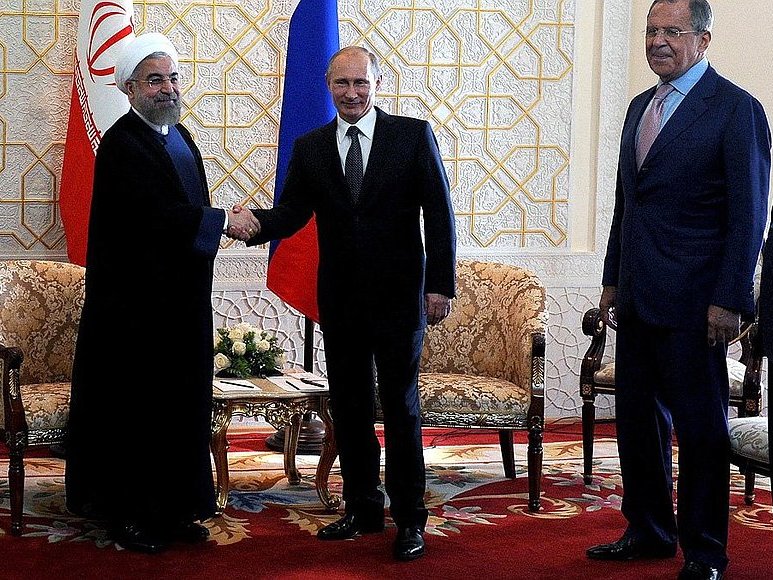
On Monday, Moscow will visit Moscow Deputy Minister of Economy Iran. During the working trip, he will negotiate with representatives of the Russian Ministry of Finance in the hope of signing contracts on a credit line opened by Russia for joint projects. This was announced yesterday by the Iranian ambassador in Moscow Mehdi Sanai. The deputy minister must take a guarantee of a loan from the capital to five billion dollars, but for Moscow this issue is still open.
According to Sanai, the parties have already para) of contracts for $ 40 billion, now documents are waiting for security for loans and finance. The funds received from Moscow should go to the construction of thermal power plants and the electrification of the railway network. These projects will implement “Technopromesport” and Russian Railways.
“This is very important, because there are 40 billion dollars of paraapid projects, and there are contracts worth more than two billion dollars signed during the visit of the President of Russia. Therefore, it is necessary to complete this process and sign a contract. I hope that in 2016, Russia will open those loans that were previously promised - five billion dollars of state and also from Vnesheconombank for two billion dollars, ”Sanai said.
Assistant Minister of Finance Svetlana Nikitina said that the government has not yet made a decision to provide a loan of the Islamic Republic, and there is hardly any money in the budget for these purposes. According to the adviser to the Supreme Leader of Iran Ayatollah Khamenei Ali Akbar Velayati, during his recent visit to Moscow, he received guarantees for financing joint infrastructure projects in the amount of $ 40 billion, Kommersant reports. “At a meeting with Vladimir Putin, we made promises that this would be done,” Velayati said.
Speaking at the Moscow-Iranian cooperation in modern geopolitical conditions at the Moscow conference, he proposed to move from trade and economic relations to investment. He also noted the prospects for cooperation with Moscow in the field of energy, including in an expanded format with the participation of Venezuela and Iraq. After a visit to Iran, Russian President Vladimir Putin, 35 priority projects in different areas of the economy were selected.
In the limbo, the question remains whether Iran received an interstate loan worth five billion dollars. Another participant in the forum - the head of the Department of Eurasian Integration and Development of the SCO of the Institute of CIS countries Vladimir Evseev - noted that in the current situation, Russia cannot propose much in the economy, therefore it is forced to offer Iran military -political cooperation.
Tehran, in turn, in addition to two main loans along the VEB lines and the Ministry of Finance, expects to receive additional funds from Moscow. “If we want to have an extensive relationship, then this amount will not end, we must go further,” Velayati said in a conversation with Kommersant. As an example of possible joint projects, he cited an agreement reached the other day between the companies of Iran and France, according to which Total will buy about 200 thousand barrels of oil per day from Tehran, and the Islamic Republic will spend the proceeds on Airbus airliners.
In addition, Iran expects at the expense of the Russian loan to build new blocks of nuclear power plants in the Bushera. The contract with Rosatom for the construction of the second stage of the nuclear power plant was concluded at the end of 2014. Its estimated cost is $ 10 billion. According to the head of Rosatom, Sergei Kiriyenko, the construction will be carried out at the expense of Iran, and Russia will act in the role of a boss contractor. The start of construction is scheduled for the spring of 2016.
Within six months, KamAZ plans to start the sale of cars in Iran. The company noted that in mind there are already partners for the sale of cars. To start sales, it is necessary to carry out certification of cars and a number of tests. The sales volume is expected at two and a half to three thousand cars per year. The assembly production in Iran, suspended five years ago due to sanctions in the banking sector, plans to organize next year.