
Translated material
Day of Europe
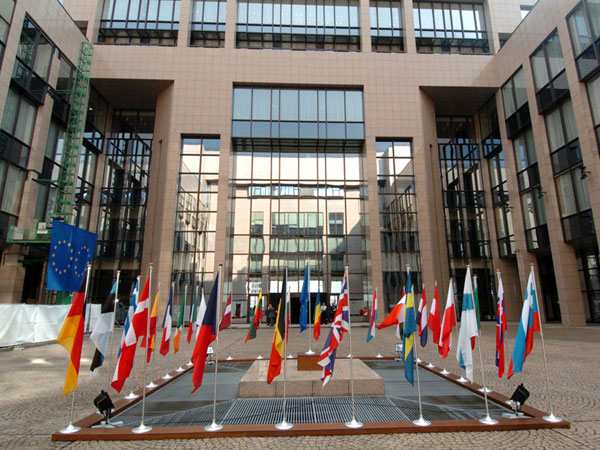
The hopes of some Russians that the European Union will most likely not be justified in the near future in the near future. Some influential countries, including the presiding in the European Council of Italy, are supporters of the softening of sanctions, but the decision -making procedure in the EU is built in this way, Kommersant writes that Moscow will have to wait at least until March.
The European Union, recall, starting on March 17, introduced nine packages of sanctions against Russia. Initially, they were a response to the accession of the Crimean Peninsula to Russia, then to Moscow’s policy in eastern Ukraine (it was believed that the Kremlin supports separatists in the Donetsk and Lugansk regions).
In total, restrictions were introduced against 119 individuals and 23 legal entities. In addition, the so -called “sector sanctions” were adopted, which affected energy, financial and defense enterprises. Russia, in turn, also imposed sanctions - an embargo for the purchase of certain categories of food in the EU countries.
Mutual sanctions caused damage not only to the Russian economy. The neighboring countries - Finland, Baltic states, Poland, were injured from Russian counter -sanctions, but many manufacturers in Western Europe were also affected. European sanctions affected, for example, to Germany, one of the largest trading partners of Russia. In Russia, German exports in Russia can be reduced by 20%, and the greatest damage will suffer mechanical engineering. This, of course, will not affect the economy as a whole too much: according to the calculations of the Committee on Economic Relations with Eastern Europe, about 300 thousand jobs in Germany depend on trade with Russia, and the share of Russia in Germany’s foreign trade does not exceed 4%. But supporters of cancellation of restrictions on trade with Russia are in almost every country affected by sanctions.
One of the problems of the abolition of European sanctions is that this procedure is not described in any way - that is, it is assumed that the cancellation procedure should be similar to the adoption procedure. In order to impose sanctions against Russia, a consensus of all European states was needed. On March 17, the first package of sanctions was introduced for six months, until September. All subsequent packages were adopted as an addition to the first decision - that is, from a formal point of view, they should have lost the force of September 17.
In September, however, the EU Council not only decided to extend the sanctions for another six months, until March 15, but also introduced additional restrictions for state banks (Sberbank, VTB, Gazprombank, VEB and Rosselkhozbank), the three largest fuel and energy complexes (Rosneft, Gazprom Neft and Transneft) and for a significant number of defense enterprises and Russian citizens.
Even then, many EU members were dissatisfied with Taim's decision: on September 5, an agreement was signed in Minsk on a ceasefire and, despite the fact that the battles were still ongoing, it was obvious that their intensity was reduced. Many believed that Moscow should be encouraged at least by the universal of new restrictions, but in the end, another decision was made. The new sanctions, however, Brussels managed to coordinate only on the third attempt. Even an attempt to postpone the publication of the decision to impose sanctions did not give anything.
According to some reports, the main opponent of strengthening the sanctions was Finland: this country is highly dependent on trade with Russia, the counter -sanctions introduced by Moscow hit the food industry of Finland, whose economy is already worried about the best of times. According to Kommersant, the Foreign Minister of Finland even stated the European Commission for a written protest on this occasion.
Since in addition to supporters of mitigating the regime of sanctions in relation to Moscow, there are opponents of such a decision-first of all, these are the Baltic countries, Poland and some states of Western Europe, for example, Great Britain-it is unlikely that the sanctions regime will be at least somehow softened until March.
This, however, does not mean that supporters of the cancellation or softening of sanctions cannot prepare the ground for the implementation of their ideas. In addition to building relationships with lobbyists, preparing public opinion, it is also necessary to work with the European bureaucracy.
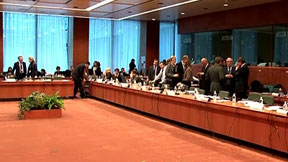 Committee Coreper
So, on Tuesday, a meeting of the Committee of Permanent Representatives of the EU Member States in Brussels (Coreper) should take place. This body, as a rule, is preparing a summons for a meeting of the EU Council, which includes, depending on the issue under discussion, the relevant ministers of 28 member states of the Union. The EU Council, in fact, is the upper house of the European Legislative Assembly and is responsible for foreign policy and security - that is, for questions where decision -making takes place at the intergovernmental level.
Italy is now presiding in the EU Council. Prior to the introduction of the post of President of the Union, this was a much more significant function, but even now the representative of Rome in Coreper has the opportunity to put up questions of interest to him for discussion. So, today the ambassadors of EU member states will evaluate the development of events in Ukraine and consider the rationality of further maintenance of the sanctions.
Since the introduction of new sanctions in September, Russia has done a lot in order to reduce the tension of relations with Ukraine. Putin stopped the exercises in the Rostov region, in other words, took the army from the border. Moscow actually recognized the parliamentary elections in Ukraine legitimate, so now the president and the Verkhovna Rada and the future of the Ukrainian government, from the point of view of Russia, act on absolutely legal grounds.
According to some analysts, these steps of Moscow are not enough: last week, German Foreign Minister Frank-Walter Steinmeier called three conditions to mitigate sanctions. Firstly, the creation of a real buffer zone between the separatists and the forces of the central government, from where troops and heavy weapons should be withdrawn, secondly, ensuring reliable control over the Russian-Ukrainian border, so that there are no confidence that volunteers and military cargoes and, thirdly, on November 2, the Parliaments should be safely taken, on which parliaments should be elected. and presidents of self -proclaimed states.
Of course, Coreper on Tuesday will not offer the EU advice to cancel sanctions against Russia, but, by extreme, it will be obvious that Moscow has supporters among European states.