
Translated material
All regions in the red zone
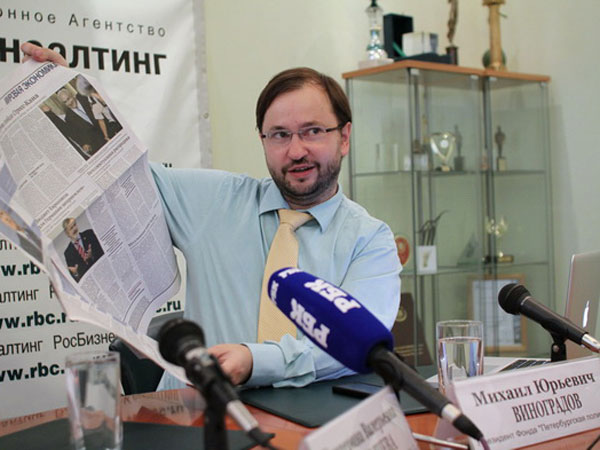
The St. Petersburg Politics Foundation published the December rating of the socio-political stability of the Russian regions. As in November, the main factor in the life of the regions was the fall of the ruble and the socio-economic consequences arising from it. The main result of December can be called that for the first time since the fall of 2012 (when this rating was first compiled), not one of the regions improved its indicators. The average score turned out to be the lowest since April 2014, and the decline in average significance in the country is the strongest since June 2013.
In fact, the devaluation of the ruble has implemented those scenarios that previously beat only during the stress tests of regional administrations and economies. Events in the market, experts of “St. Petersburg politics” write, became a powerful cold shower for the regions. If the rich regions are dependent on the economic situation and therefore fell into a zone of increased risks, then the population of the poor regions, like no one else, tangled the consequences of raising prices, primarily for food.
Many local budgets were also under the blow - the first sign of the crisis was the abolition of suburban trains in many regions of the country, this happened as a result of the fact that local administrations could not agree with Russian Railways and the federal government the issue of financing this transport.
As an example of negative information, experts of the St. Petersburg Politics Foundation provide several messages. For example, the head of Ingushetia Yunus-Bek Evkurov proposed selling potatoes only to residents of the republic to stabilize the food market. The Federal Ministry of Health refused to finance until 2018 the construction of the Oncology Center in Yakutia, and Rosavtodor delayed at least until 2020 the question of building a bridge across the Lena. In the Volgograd Region, an electric stale -melting workshop was preserved and plans for the closure of two more workshops at the Red October plant were published in connection with the decline in market demand and fluctuations in foreign exchange rates. In the Moscow region, they talked about the delay in the construction of two sections of the central ring road due to lack of funds.
At the same time, the flow of negative economic news, especially if we exclude the topic of railway transportation, which can be attributed to the difficulties of the relationship between budgets of at different levels, in December has become less than in November. So, experts of the St. Petersburg Politics Foundation prefer not to speak about the global collapse of socio-political sustainability.
In December, the activity of citizens was aimed rather to the purchase of household appliances, which went up after the dollar and the euro, and not to expression of its discontent on the streets and squares. Exceptions only confirm the rule: Tomsk citizens held several rallies in support of the TV-2 channel that stopped broadcasting, and in Moscow a demonstration was held in support of the Navalny brothers, whom the court found guilty of the Yves Rocher case.
According to the compilers of the rating, in general, the regions withstood the blow, although it is too early to talk about whether they can resist new challenges. Regional elites have not made serious mistakes in public opinion and business elites.
However, experts notice, "you can rather talk about paralysis before natural disasters in the market than about the system program of measures." This is especially noticeable, given that regional administrations do not have the tasks of maintaining economic attractiveness and social stability too clearly.
Meanwhile, so far everything indicates that in the near future the situation in the economy is not stabilized. “The probability of a wide variety of scenarios - devaluation shock, involveing inertia reserves in the economy, and the use of the effect of import substitution. But on the self -esteem of the regional authorities in terms of the ability to maintain control in their territories, the events of December will most likely be negative, ”the report says.
The most significant non -economic event of December is the appearance of Chechnya in federal news. “At the same time, experts have no consensus on which the activity of the republican authorities in general Federal and international issues strengthens or, conversely, weakens their control over the situation in the region,” the report says.
At the same time, it was Chechnya, according to the rating, lost more than other Russian regions in socio-political stability. Instead of 6.5 points, in December, she has 6.2 points in December, she was the only one lost 0.3 points. This is not surprising, because it was in December that the militants attacked Grozny, as a result of which 14 police officers died. After that, the confrontation of Ramzan Kadyrov and human rights activists began: the head of Chechnya decided to introduce the principle of collective responsibility for participating in illegal armed groups and punishing relatives of terrorists, far from everyone considered this idea to relevant to Russian laws and the Constitution. Chechnya also steadily occupies the last lines in various socio-economic ratings, which also does not give a reason for optimism. At the same time, in general, the rating of the republic (6.2 out of 10) looks quite good: Moscow experts of “St. Petersburg Policy” assessed 6.1, and 6.3 St. Petersburg.
Six more regions worsened their rating by 0.2 points. These are Tomsk, Irkutsk, Vologda, Volgograd and Bryansk regions, as well as Kabardino-Balkaria. The KBR is especially distinguished: it is in the penultimate position with a rating of 3.3 (was 3.5). Below - only in Dagestan (1.6, fall by 0.1). Judging by the rating of “St. Petersburg politics”, the main problem of Kabardino-Balkaria is corruption and terrorism. Here is the detention upon receipt of a bribe by the military commissar of the republic, and the arrest of the former chairman of the board of the Spartak-Nalchik football club, and a conviction against the ex-head of the local department of Rospotrebnadzor. Attention is also drawn to the elimination of four militants in Nalchik.
However, the authors of the rating are reassured by the fact that often negative events, such as personnel permutations, in the medium term lead to positive results, but in this rating the positions of the corresponding regions are drawn down. “In the medium term, such steps can bring a positive effect, but at the time of adoption they often destroy the rules of the game that are familiar to players and increase the general level of uncertainty in the region,” the report says.
The average value of the level of socio-political stability of the regions in December 2014 in the country is 6.51. This is not so bad, in the terminology of the rating compilers this is “average stability”. So there is a certain safety margin of safety even given that this time none of the regions could improve its position.