
Translated material
The border by the Constitution
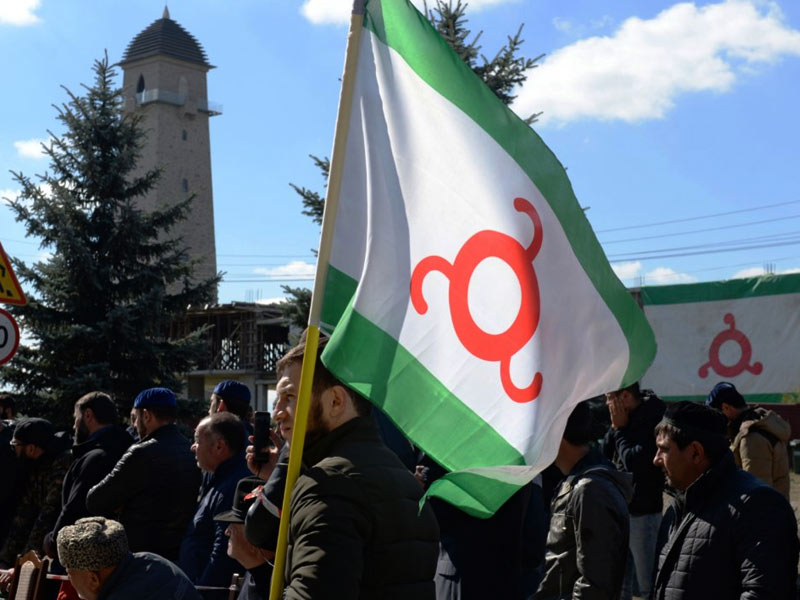
The Constitutional Court of Ingushetia, on Tuesday, recognized the agreement on the border with Chechnya, signed by the heads of the republics, Yunus-Buck Evkurov and Ramzan Kadyrov, as well as approved by the parliaments of the two regions. The message about this is already posted on the court website.
According to the court decision, the agreement concluded on September 26 had to be issued to the referendum, otherwise it “does not give rise to legal consequences for state authorities, local authorities, organizations and citizens in the Republic of Ingushetia.” The judges also recognized the agreement not to be relevant to the Constitution of the republic “in the order of adoption”.
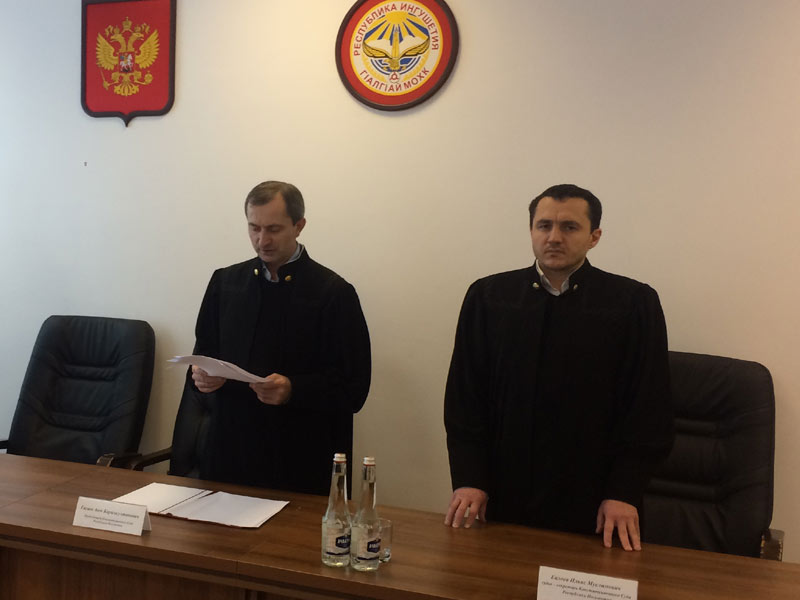 The Constitutional Court of Ingushetia/ ks-ri.ru
Recall that Chechnya and Ingushetia were a single republic until 1992. Then the leadership of Chechnya headed for independence, and Ingushetia decided to remain in Russia. But the border between the regions was never drawn - although in fact, of course, it existed.
On September 26, in the capital of Ingushetia Magas, an agreement was signed on the consolidation of the administrative border. The document stated that the republics were exchanged "equivalent territories." But for example, the analysis of the “Caucasian node” shows that a significantly larger area is departing Chechnya than Ingushetia (although the territories are still not populated).
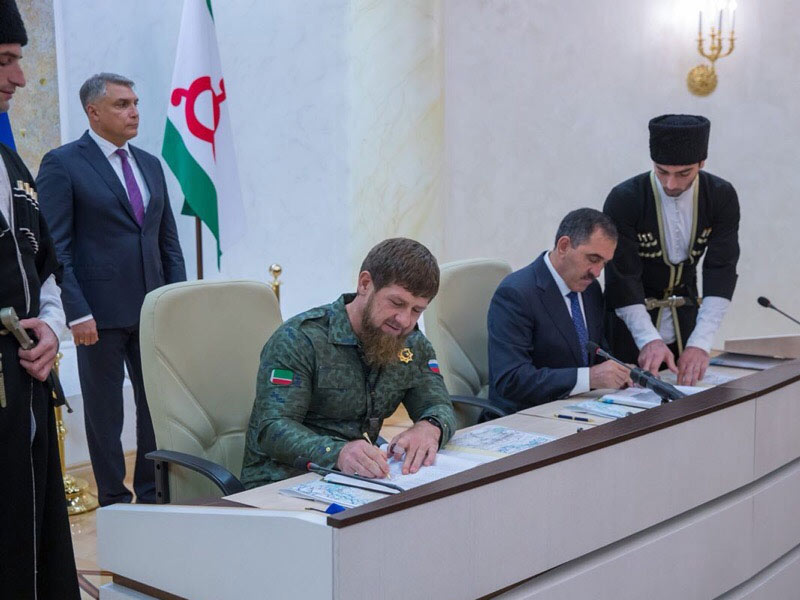 Kadyrov River and Yu.vkurov / 50.rodina.news
After the heads of the republics signed the agreement, regional parliaments were supposed to approve it. If the Chechen parliament approved the Agreement unanimously, then it was unknown that it happened in the Ingush parliament - and serious folk unrest became an important factor.
In the People’s Assembly of Ingushetia there are 32 deputies, respectively, 17 votes are needed to make a decision. Initially, it was reported that the parliamentarians voted for ratification of the agreement, but later a group of deputies said that 15 deputies out of 24 were voted against. That is, for "for" only 9 votes were presented. And on the website of the head of the republic it was stated that out of 25 deputies present at the meeting, the throne was voted “for”, the throne was “against”, five more abstained.
After the vote, the deputies complained about the falsification of its results to the prosecutor's office and the Investigative Committee. At the same time, an appeal was submitted to the Constitutional Court of the Republic. The statement stated that the law actually changes the territory of the republic, “in connection with which its adoption is possible only based on the results of the referendum and after the opinion of the population of the population of municipalities, the borders of which are changing”, and also complained of violations during the vote under the border law.
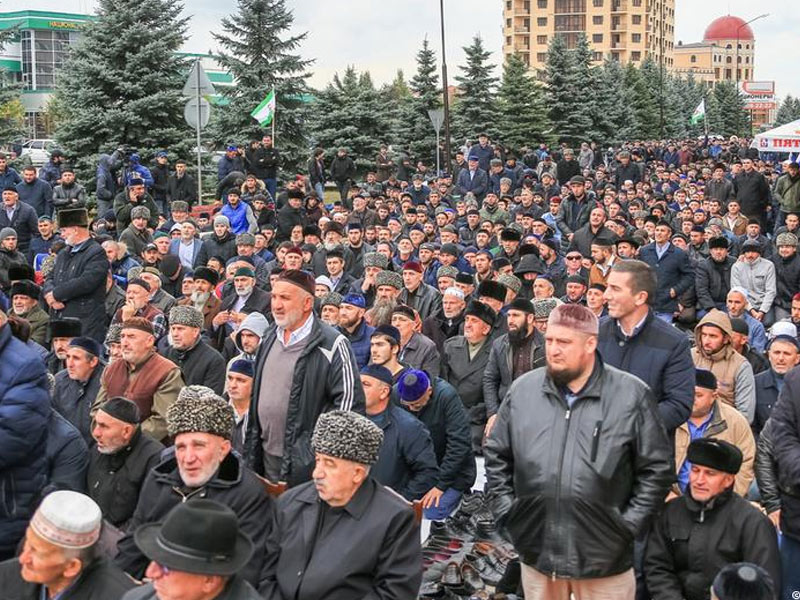 A rally against new boundaries between Ingushetia and Chechnya / dw.com
The Constitutional Court also drew attention to the fact that the People’s Assembly should adopt laws in three readings, and before each of them it is necessary to consider amendments - but the document was adopted in one day, which means that the procedure was violated. The judges also believe that the deputies could not hold a secret vote, but not only did they conduct him, also violated the rules for counting votes. “Therefore, the decision was not made in the prescribed manner,” the resolution says, but nothing is said about falsifying the voting results.
The Constitutional Court of Ingushetia is an independent body that is not included in the federal “judicial vertical”. So it is not subject to appeal, comes into force immediately after the proclamation, acts directly and does not require confirmation by other bodies and officials.
The deputy of the People’s Assembly of Ingushetia Chuke Mamilov told Interfax that the deputies will gather “in the coming days” to discuss the decision of the Constitutional Court.
Earlier it was reported that two deputies of the Ingush parliament recalled their statements to the Constitutional Court of the Republic, which is why it became invalid (it is necessary that the application submit at least a third of the members of the parliament). Constitutional judges, however, apparently did not stop.