
Translated material
Where is the district police officer?
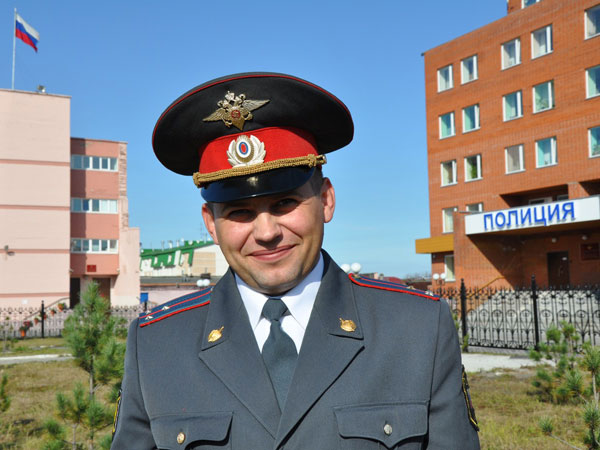
On July 2, 2013, the Committee of Civil Initiatives summed up the results of the application competition under the Open Police project. “In my opinion,” said the director of the project, Ivan Flytin, “the most interesting design decision that we made is to make it not to create a huge number of applications and services based on open data, but to make the environment of developers who would be interested in their creation.” Applications, in turn, are created so that any user can with their help receive the information he needs from the open databases published on the network.
To conduct this competition, the project organizers created the API for programmers and collected a large number of databases. “All the data that we have,” explained Beatin, “this, unfortunately, is the unofficial data that we have extracted from various sources. For us as the organizers, the main problem was to carry out preparatory work. It was necessary to collect the data with which programmers could work, and bring them into a decent look. ” He also noted that the project completed the main task: people became interested and began to submit applications for the competition. Then the applications were stiff filtration. Only such projects were accepted that worked on open data, and also represented the application, that is, a technical solution to a particular problem.
In total, the competition had two nominations: “Web project” and “Mobile application”. The second place of the nomination "Web project" was taken by the project " Find the district police officer ", created by Dmitry Baryshnikov, Maxim Dubinin and Ivan Kovalev. The site is an interactive map of Moscow, on which you can look at which district police officer is responsible for a particular house. To find a specific house, the site provides for a search at the address. When clicking the mouse ideally displays information (photography, name, position, title, phone, address, link to the data source) about the district police officer, which is in charge of the house. However, in some cases, information is not available. “The base that was used,” said Maxim Dubinin, “only in Moscow, there are 41,000 addresses. But the base is very incomplete. Many houses are simply not there. And it is impossible to understand whether this means that the house is not serviced by the precinct or that the district police officer is simply not indicated. This is already a question for the police. Even a series of questions. "
The first place in the nomination was taken by Anna Manaenkova and Anna Pereverzeva, who created the project “ Where is the Ministry of Internal Affairs ”. “On the site you can see the location of the departments of the Ministry of Internal Affairs,” explained Anna Manaenkova. - From open data it was possible to get an address, phone and schedule. It is clear that somewhere there is no phone, somewhere there is no schedule. We manually processed each address. It took us the most time. And we are still processing - there are 20 percent left there. Well, by clicking on each department, you can get accessible information. ” One of the notable features of this project is that it is made on the basis of data throughout Russia. Anna Manaenkova also said that in the future they plan to develop the project "where the accident".
In the nomination "Mobile Appendix", the second place was taken by the project " Where is the district police officer? ", Which was created by Anton Lenev. This is a mobile application for Windows Phone, which was developed as part of a two -day hackathon (programmers' competition), where it also turned out to be a laureate. Finally, the first place in the same nomination was taken by the mobile application for Android “ find the precinct ” - they will correlate the aforementioned web project of the same name - developed, again, Dmitry Baryshnikov, Maxim Dubinin and Ivan Kovalev.
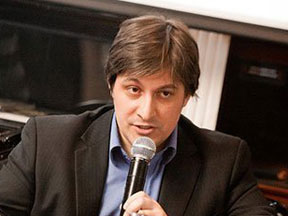 Ivan Belytin
“For us, this is a very positive experience,” summed up Ivan Flying. - In the end, we held a competition, that is, a kind of competition. When we convince officials to hold a competition, they are always afraid that the competition will be announced, no one will come there, and the money will spend. We had more space for experiments, we took a chance, and it turned out very successfully. ” He also expressed the hope that further such projects according to open data would use the same model to develop applications. In particular, projects for open justice and open budget have already been launched in KGI, as well as the project on state payrings began.
In this sense, the Open Police Competition turned out to be a successful pilot version. On the other hand, precedents were already in a wider context. Since 2011, an apps of Apps4russia open data has been held in Russia annually.
Ivan Flytin emphasized that this format for creating applications would be convenient for officials, because it is inexplicable in terms of time and in terms of financing. The bottom line is that the official departments simply disclose their data in the proper machine -readable format, and then an application development competition in which everyone can participate is announced. Thus, officials do not need to look for developers, give them tasks and pay for the work. Money goes only for the reward to the winners.
However, officials have yet to realize the advantages of such a scheme. In particular, Maxim Dubinin said the following story: “Two years ago there was an Apps4russia contest, which we also won by developing a mobile application for sending reports on fires. Many then said that it was necessary to share this with the Ministry of Emergencies, that it must probably be interested in ensuring that such things are moving, but everything is realized in a rather strange way. Namely, the forest guard launched its own application under Windows 8 a year and a half, and since then it has not been used anywhere. ”