
Translated material
Referendum of collapse
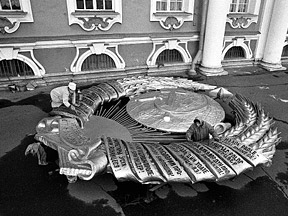
Twenty years ago, March 17, 1991, the first and last Soviet referendum was held. In recent history, it is Russian to find an event that would be so significant is surrounded by legal entities and myths.
On that March day, twenty years ago, citizens of the SSR union that existed de-Jure was proposed to the intricate question “Do you consider the preservation of the Soyza-Council Socialist Republics as an updated federation of equal-basive republics, in which the rights of human branching of any nationality will be fully ensured?” As we see, the formulation of the issue itself (including several complex legal concepts) could be at a dead end not that of the layman, but also a professional lawyer. In fact, volumes of literature are written about federalisms of sovereignty. The interpretation of these concepts was the subject of serious academic discussions and “applied” disputes. The 1991 lumber of these legal concepts were turned into catchy political stakes, which everyone interpreted, as he wanted, without bothering his acquaintance with stores of state law. For some, the “sovereignty” was identified by a complete national independence from the Union Center, and someone saw in a deterioration the opportunity to obtain a higher status or special business. We add to this there was a shortage of legal awareness in Soviet society, accustomed to the fact that the “party and government” themselves know what kind of state system and what laws are necessary.
However, in the post -Soviet countries, this deficit has not been eliminated from the moment of the historical referendum for two decades. On the contrary, in some cases the problem has aggravated. In this connection, a simple question arises: “Why did the power that contrary to Rhetorricen resorted to the recommendations of its own people, suddenly decided to apply for advice?” Yes, and with such a wise formulation.
According to the results of the popularity, the following figures were obtained. Of the 185.6 million Soviet degrees who had the right to vote, 148.5 million (or 79.5%) took part in the referendum. In turn, of those who came to the polling stations, 113.5 million people (or 76.43%) were responsible for yes, that is, they spoke out for the implementation of the complex legal formulation [1] . These Lucid numbers (about the relativity of the Soviet “victorious statistics”, we talk more in more a year later) have been given the foundation for many politicians to be Journalists to say that twenty years ago a single community “Soviet people” was vilely deceived by the organizers of the “Blovezhsky conspiracy”, spitting on the results of popular voting, correcting the rights of citizens and the rights of citizens the republics of the former USSR for separate independence.
Within the framework of this logic, the current Russian Federation (not to mention other 14 Union republics) is originally origin. However, if you move away from “statistical deminism” and consider the first and last Soviet referendum not as a “thing in itself”, but as part of a complex and conflicting ethno -political process, then many unambiguous and single -line conclusions will have to be correctly adjusted.
According to the former Chairman of the Russian Council of Russia Ruslan Khasbulatov, “the biggest danger when the idea of concluding a new allied agreement appeared. The idea of a permanent detrimental. The first union agreement uniting the Russian Federation, Ukraine, Transcaucasia was concluded in 1922. It served as the basis of the first Soviet constitution in 1924. In 1936, the second was adopted, and in 1978, the third constitution [2] . And the union treaty in nih -finally dissolved, only historians remembered it. And suddenly he arises. With his appearance, he questioned all the previous constitutions, as if the USSR recognized the USSR illegitimate. From this moment, disintegration began to recruit ” [3] . In an in -distance assessment (in a concentrated form of incorporating the opinions of those who sincerely read the collapse of the Soviet Union with the work of the last Soviet and first -time Soviet leadership), the causes and investigation of the process of the process of processesintegration are clearly mixed up.
Meanwhile, the numerous facts will say that it was not the idea of a new union agreement that spurred disintegration, but on the contrary, disintegration, which turned literally in a couple of years into a collapse, forced the USSR leadership, led by Gorbachev, to turn to the timerganization of a single state. Recall that on December 3, 1990, the Supreme Council of the USSR supported the concept of the draft of a new union agreement proposed by Moil Sergeyevich. Three weeks later, on December 24, the deputies of the IV congress of the SSR Union held a singing vote, deciding to keep a single state in an “updated form”. Then the Jeydeus of the popular referendum was adopted (it was supported by 1677 deputies against 32). It was precisely in December 1990, that a sophisticated wording appeared, which in March191, in the form of a question, is addressed to Soviet citizens.
Meanwhile, the discussions on the IV were congraged by a catastrophically delayed political reaction to Roster -nationalist movements and ethnopolitical conflicts everywhere in the USSR. The 1986 was a youth performances in Kazakhstan. In August 1987, the beginning of the Karabakh petition campaign, which leads to the escalation of the Army-Azerbaijani conflict (the milestones of this path became tragedy in Sumgaiti in Baku, respectively in February 1988 and January 1990). By the moment of the next deputy forum between Armenia and Azerbaijan, “population transfer” (or, more simply, exchange) is already being carried out. The citizens of one country have already been put de facto in the conditions of apartheids. In 1989, a series of tragic events was held in the territory of the Georgian SSR, which launched the Georgian-Ossetian, Georgian-Abkhazian and awards of Georgian-Russian conflicts. In June 1989, they had a lot of place in the New Uzen (known as the Novouzensky massacre) between the Kazakhs of the Ivrekhods from the Caucasus. In the same year, clashes occur between the Uzbeks of the Iturki -Meskhetians in Ferghana, which leads to the outcome of the latter from Uzbekistan. 1990 - collisions in Dushanbe, Andijan, “Osh massacre”, and an increase in the increase in Moldova.
And all these are not just attacks, clashes, ethnic purges. Attempts to create parallel political and legal realities are actively undertaken, which in no way fit the illegal framework of the SSR union and even directly contradict them. On March 9, 1990, the Supreme Council of the Georgian SSR adopted a resolution “On Guarantees for the Protection of the State Savernitus of Georgia”, qualifying the introduction of units of the Red Army into Georgia in 1921 as an occupation. On June 20, 1990, the Supreme Council of Georgia is recognized as all agreements and legal acts concluded after the “occupation of the country in 1921” (which put the status of South Ossetia, which was absent from the Former Law of the First Georgian Republic of 1921). On March 31, 1991, Georgia will appoint its special referendum on the “restoration of state -dependence”.
On the night of March 11, the Supreme Council of Lithuania, headed by the current European Parliament, Vitautas Landsbergis, proclaimed Lithuania (this was the first of the Union republics to take the same co -combination). In May 1990, in a milder form, the movement towards independence is made of pronounced, whose Supreme Council announces the “transition” from the status of allied resources to independent statehood. On June 23, 1990, Moldova claims to converge, and Ukraine on July 16, 1990 [4] .
But the most important link in this chain of events is the declaration of the state sovereignty of the RSFSR, the education with which the National Employment movements, as well as foreign politicians, identified the Union of the SSR, thus, became difficult for the central authority to be difficult to unreliable. It turns into almost the main opponent. We add to the formation of the Russian Communist Party (the only republic where the perestroika doereda did not have its own national Central Committee), which is beginning to be start -up to the CPSU (unlike the Russian Supreme Council, from the “protective” positions). The political struggle between the allied leadership of the foreign authorities of the RSFSR (who were established after the elections of the Russian Supreme Soviet and the adoption of the declaration of state sovereignty of the RSFSR on June 12, 1990) pushed autonomous formations as part of the RSFSR to more activity. They considered the struggle of the RSFSR as a precedent for themselves.
According to the fair remark of the Finnish researcher, Soyly Nisten-Haaralai, his Russian colleague Dmitry Furman, “the problem of the right to separate the settlement, the secession, is more important and relevant for Russia than for many-handed countries. In its modern form, Russia itself arose relatively recently, in 1991, as a result of the struggle and victory of the movement, headed by former President B. Yeltsin, who achieved the revolutionary (not constitutional, or “fictitious -constitutional”) through the realization of “the right to self -determination up to the compartment (secession)” from the USSR. The fact that the word “separatism” in relation to the codes that created modern Russia was not used (as because the players avoided talking directly about the separation, so because the department of the USSR of its Central Republic did not mean a decrease in the state of the “state-owned state”, but simply its liquidation), and fundamental knowledge did not. In legal terms, the anti -union movement of the Russian democrats was as separatist as the movements for the separation in other republics that were part of the USSR ” [5] .
In December 1990, our dictionary includes the phrase "paradesuverniti." It is proposed at an extraordinary congress of people's deputies of the RSFSRPETRA Zerin: “At the present time, in connection with the aggravation of interethnicities in our country, as well as the processes of the collapse of the USSR, only all the healthy forces of our country, but also the European community. Paradesuveitis turns out to the war, from which everyone suffers, including its owners. The collapse of economic ties, the strengthening of separatism, the mismatch of the allied and republican laws ... and, as a result, the pervadial paralysis of power and universal confusion ” [6] . 30 August 1990, a declaration of the sovereignty of Tatarstan was adopted (according to the CCTOR he was the subject of either the USSR or the RSFSR). On November 27, 1990, the Supreme Council of the Chechen-Ingush Autonomous Soviet Socialist Republic adopted the “Declaration on State Sovereignty of the Chechen-Ingush Republic”. Takimobraz, by December 1990, not only allied, but also autonomous republican “rules of the game” are being political and legal. Republics appear in which perestroika was not provided for by the Constitution of the USSR and the Basic Law Republics (Transnistria, Gagauzia). In this situation, the idea of a “New Union Agreement” becomes a desperate attempt by the Center to keep in an equilibrium already broken boat without a steering wheel and windbreak. Not from a good life “Party of the I government” (at that time a new “Time President for the USSR joined the USSR)“ The Time of Decline ”was joined by the popular consulting with an embarrassed issue.
Other numbers were said about the same that this measure of Gorbachevi of his team was fatally late, which were non -fiction in official recovery statistics according to the results of the vote on March 17, 1991. What are you talking about? The fact that out of 15 constituent entities of the USSR in the popular referendum 6 republics did not take part. In the March referendum, Armenia, Georgia, Latvia, Lithuania, Moldova and Estonia refused to participate. We have already written about the preparation of the load for our own referendum. However, this preparation was conducted with demonstrative ignoring of union legislation. A different kind was observed with Armenia. The first post -communist enlighteners of the republic refused to participate in the March referendum in February 1991. However, the date of their own referendum on independence was predicted in accordance with the Union legislation (the Law of the USSR “On the Procedure for Cracing of issues related to the withdrawal of the Union Republic from the USSR” of April 3, 1990). The will in the republic was scheduled for September 1991 (that is, six months later). Looking ahead, let's say that on September 21, 1991, 95% of voters will take part in the vote and 99% will speak for independence republics. The authorities of Lithuania and Latvia boycotted a referendum by holding on February 9 and March 3, 1991, respectively, the “election consultation” on the issue of One -dependence. In Estonia, March 3, 1991, it was a referendum on the dependence, in which only “successive citizens” took part, as well as the owners of the “green cards” of the Estonian Congress (persons who declared the outposts of the national statehood of the republic).
That is, more than a third of the SSR subjects union did not take part in a popular vote, which, under such arasclad, was no longer quite popular. And although by the absolute indicators the absorption of small -number population (the population of such a “refuser” as Georgia, the WTO time was comparable to the Krasnodar Territory), the general picture of their departure Nedell, he seriously contributed to the delegation of the entire structure of the “updated union”.
Not all citizens lived in the territory of the “refuseniks” republics, wished to go expensive to national nationality in the form in which it was proposed by the post-communist worships of these formations. The March referendum was supported by Abkhazians and South Otino (Georgians in the same Abkhazia did not participate in the will, organized by Moscow, but supported the national Georgian statehood on March 31), residents of the northeastern regions of Estonia, the Transnistria and Gagauzia. Idage in mono -ethnic Armenia (where consolidation against the central government was less difficult) about 4 thousand voters wished to participate in the vote of the “updated union”. In fact, the process of ethno -political "determination of the former Soviet republics cannot be reduced to the universal model of the" struggle of colonies against the metropolis. " In the case of the Republics of Central Asia in Kazakhstan, we can talk about the long resistance of the national elites of the processor of a single union state. In the situation with Belarus, it is impossible to talk about the presence of a powerful National Separatist movement. There were numerous movements in the same self -revolutionary within the Union Republics, which did not oppose the central government, but against the republican political -political self -determination. These can include the Abkhazian Josetian movement in Georgia, the movement of the Armenians of the Nagorno -Karabakh (formal in the Azerbaijan SSR, which supported the referendum on the “renewed union”), the Gagauz and Transnistrian (inter -ethnic) movement of the omoldavia, the Polish movement of the Shalchininka district of Lithuania, the “interpretation” The Baltic States Similar Republics. At the same time, some of the mentioned outputs used in the process of the collapse of the USSR and after it the slogans of the fight against “small empires”.
An additional dissonance in the end of the preparation and conduct of the All -Union referendum was also “editing additions”, which were accepted in various republics that agreed to vote. "Do you consider it necessary to preserve the USSR as a all -law -propelled sovereign states?" Such a wording was issued on March 17 to the vurifications of Kazakhstan, removing the word about the “updated federation” and “sovereign republics” from the question. In Ukraine, the “main issue” was added to the “main issue”, explaining the special status of the republic: “Do you agree that Ukraine is in the Union of Soviet sovereign states on the main sovereignty of Ukraine?” The Declaration itself (we wrote above) was adopted in July 1990 and included in itself, a full -fledged statehood, in particular Neblokokoystatus, which in itself was a claim for independent political activity. And the “nucleus of the Union” - Russia - March 17, 1991, the question of the need to establish the Institute of the PresidentialsFSR in the ballot, which also promoted it on the way to state independence. Any everyday life, and in March 1991, the Union leadership had neither political, nor ideological, nor military (power) resources to change the situation in their pools. Even without taking into account the “refuseniks”, the central government was not able to deliver a single “questionnaire” for all republics. The failed attempt by revenge -official forces (August council of the State Emergency Committee) only accelerated the denouement. The series of referendums, followed after the “Council of shaking hands” (September 21, 1991 by Armenia, on December 1, 1991 in Ukraine) was the last nail in the Crushbrus of the “Updated Union”. Even the Communist Parties of the once fraternal republics actively included in the process of “nationalization”, competing with anti -communist dominants. Thus, the declarations of state sovereignty of Ukraine of the 16th July of 1990 was preceded by the resolution of the XXVIII Congress of the Communist Party of Ukraine "City Sovereignty of the Ukrainian SSR." Стало ясно, что советская властьне может противостоять проблемам, созданным задолго до «обновленного Союза» еюже самой.
Сегодня в отечественнойоколоисторической публицистие чрезвычайно моден тезис о некоем континууме междуРоссийской империей и СССР. В действительности же в декабре 1922 года натерритории бывшего СССР не победила имперская идея — напротив, эта идея быларазгромлена с Врангелем в Крыму и с Деникиным в Новороссийске. С помощьюразного рода этнонационалистических и откровенно этнократических движений, атакже ценой огромных уступок национал-коммунистам российские большевики смоглисобрать воедино СССР из разных частей уничтоженной ими империи, предложивбольшевизм в качестве надэтнической интеграционной идеологии. Как только этаидеология перестала удовлетворять потребности масс, как только она вступила впротиворечие с националистическим дискурсом, набравшим силу в союзныхреспубликах (благодаря опять же действиям «партии и правительства»), ееотбросили за ненадобностью.
В 1991 году слова, сказанныеизвестным диссидентом Андреем Амальриком еще в 1969 году в его пророческом эссе«Просуществует ли СССР до 1984 года?», оказались, актуальными как никогда:«По-видимому, демократическое движение, которому режим постоянными репрессиямине даст окрепнуть, будет не в состоянии взять контроль в свои руки, во всякомслучае на столь долгий срок, чтобы решить стоящие перед страной проблемы. Втаком случае неизбежная “дезимперизация” пойдет крайне болезненным путем.Власть перейдет к экстремистским группам и элементам, и страна начнетрасползаться на части в обстановке анархии, насилия и крайней национальной вражды.В этом случае границы между молодыми национальными государствами, которыеначнут возникать на территории бывшего Советского Союза, будут определятьсякрайне тяжело, с возможными военными столкновениями, чем воспользуются соседиСССР и, конечно, в первую очередь - Китай». Кроме безудержного алармизмаотносительно КНР (понятного, впрочем, в условиях исторического контекста 1969года) практически все жесткие прогнозы Амальрика подтвердились [7] .
В 1991 году граждане Союза ССРделали выбор не между демократией и коммунизмом, а между одряхлевшей инедееспособной советской державой и энергичным, набирающим оборотынационализмом (который ситуативно использовал демократическую риторику). Вместообщей борьбы за правовой порядок, частную собственность, законность исменяемость власти был сделан выбор в пользу «коллективных прав» и «этническойсобственности» на землю. В результате в значительной степени неизбежный распадСССР (вопрос только в тех или иных территориальных конфирурациях) пошел не поправовому пути, а путем политической целесообразности, сопровождаемойрадикализацией этничности, конфликтами, ксенофобией, взаимным отчуждением. А вряде случаев - жесткой диктатурой или, напротив, государственнойнесостоятельностью.
Что мы имеем в «сухом остатке»? 8этнополитических и гражданских конфликтов, миллионы беженцев, неразрешенныетерриториальные споры и отсутствие дипломатических отношений как между бывшимиреспубликами СССР, так и между новыми независимыми образованиями и их соседями(Армения-Турция, Армения-Азербайджан, Россия-Грузия). На смену провалившемуся«реальному социализму» пришли реальный этнонационализм и религиознаянетерпимость, разрушительный потенциал которых еще не раскрыт в полной мере.
В 1990 году в своем эссе сговорящим заголовком «Национализм: чудовище пробуждается» известныйпольский диссидент, журналист, политический мыслитель Адам Михник сформулировалпринципиально важный тезис: «Национализм – это последняя фаза коммунизма». Под«национализмом» Адам Михник понимал не его гражданскую, а этническуюразновидность, апеллирующую к социально-биологическим принципам. С его точкизрения, «национализм – это определенная концепция мира, согласно которой народыявляются конкурентами в борьбе за выживание» [8] . Вэтой конкуренции права человека и гражданина отодвигаются на второй, если не натретий план. Зато идеи «третьего срока» или «пожизненного президентства»пользуются большой популярностью, так как в «борьбе за выживание» нет места настоящейсвободе.
Таким образом, и сегодня, спустя20 лет, мы еще не прошли последнюю фазу коммунизма и не стали более свободными.Чтобы окончательно выйти из тисков прошлого, нам следует критическипересмотреть наследие «пробудившегося чудовища», приведшего нас не только и нестолько к «крупнейшей геополитической катастрофе», сколько к многочисленнымчеловеческим лишениям и потерям. Развод с радикальным этнонационализмом помогбы нам скорее завершить преодоление последней коммунистической фазы.
Автор - приглашенный научный сотрудник Центра стратегических имеждународных исследований (Вашингтон, США).
Notes
[1] Данные взяты из публикации «Выборы в Советском Союзе в 1989-1991 гг.» //http://www.agitclub.ru/vybory/result3.htm
[2] Вцитируемом фрагменте содержится фактическая ошибка. Конституция СССР былапринята 7 октября 1977 года. 12 апреля 1978 года была введена в действиеКонституция РСФСР.
[3] Цит.по: Так разбивали Советский Союз : беседа с Русланом Хасбулатовым //http://www.voskres.ru/interview/hasbulat.htm
[4] Подробнее о борьбе национальных и автономных республик за выход из состава СССРи за повышение политико-правового статуса - см. нашу работу: Маркедонов С.М.Турбулентная Евразия. М. : Academia.2010.
[5] Нистен-ХааралаС., Фурман Д. Е. Право на отделение// Бьюкенен А. Сецессия. Право на отделение,права человека и территориальная целостность государства. М.: Рудомино. 2001.С. 204.
[6] Cit. по: Российскаягазета. 1990. 11 декабря.
[7] Cit. по: Амальрик А.А.Просуществует ли СССР до 1984 года? //http://www.vehi.net/politika/amalrik.html
[8] Цит.по: Михник А. Национализм: чудовище пробуждается // Век ХХ и мир. 1990. №. 10 //http://old.russ.ru/antolog/vek/1990/10/mihnik.htm