
Translated material
Ruble prospects
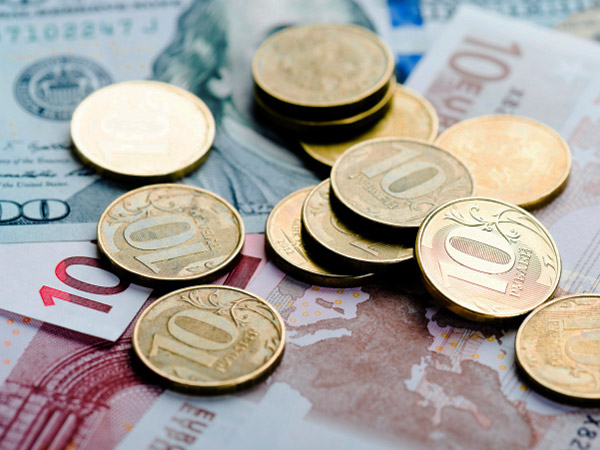
The Russian Ministry of Finance prepared the forecast of the ruble course until 2035. The document was submitted to the State Duma of the Russian Federation along with the budget, RBC reports. The department believes that in 2017–2020 the average dollar exchange rate will be 61.9 rubles, in 2021–2025-66.4 rubles, in 2026–2030-71.1 rubles, and in 2031–2035-73.9 rubles.
In last year's forecast, the Ministry of the Ministry spoke of a weaker Russian currency. It was assumed that in the first five -year plan per dollar would be given 64.8 rubles, 71.5 rubles in the next, in 2026–2030 - 77.1 rubles, and in 2031–2035 - 82.5 rubles.
“The Ministry of Finance emphasizes that the real effective course of the ruble (an indicator taking into account the changes in the exchange rates of countries - the main trading partners of Russia) will be relatively stable,“ in connection with which nominal weakening will be largely due to the inflationary differential ” - the difference in prices in Russia and the USA,” the publication said.
At the same time, the ministry believes that the outerpost from oil should ensure the “stability of public finances in the medium term”, although the average oil prices of Urals brand will gradually decline. In the first of four periods to 2035, it will cost 61.4 dollars, and to the latter will fall in price up to $ 54.9.
Economists evaluate the prospects of the ruble differently, but many agree that the Ministry of Finance is right and the Russian currency will become cheaper. And quickly.
“Reducing the ruble - there is no getting away from this trend. By November, I would wait for 80 rubles, it seems to me a real forecast. Of course, there will be no landslide at one and a half to two times, there is only increasing pressure. As for the euro, I assume that we will receive about 90 rubles before the end of the year, ”said the doctor of economic sciences, professor of HSE Igor Nikolaev, Moscow Komsomolets .
Former Deputy Chairman of the Central Bank of Russia, Konstantin Korishchenko, believes that the Russian government has terminated the policy of a strong ruble.
“Now the policy of the floating course has begun. More precisely, we are talking about a low -subject change in the ruble course with a weakening trend. For the budget, a weak ruble is beneficial, for exporters, too, the Central Bank is neutral. Here's the question: who is interested in a strong ruble? Only the population. However, this is not a strong player. Therefore, there are no social shocks and unrest caused by the races of the course, the ruble can weaken. The authorities have understanding and powers: how to make the ruble stabilize. The only question is at what level these measures will be taken, ”he said“ MK ”.
Other experts, on the contrary, believe that nothing threatens to fundamentally ruble positions.
“If it were not for the actions of speculators and not the policy of the government, which buys foreign currency to replenish reserves, we would see the course not at 60 and not 65, but at 45 or, perhaps, even less. 55 rubles is a fair value of the dollar today. Because all the sanctions that are discussed today do not limit Russian foreign trade, ”said Alexei Zubets, vice -rector of the RF Government, on the air of the Sputnik radio.
According to the analyst of the social network for Etoro investors in Russia and the CIS of Mikhail Mishchenko, the Russian ruble looks better than other currencies that depend on the export of raw materials.
“As the main reason, the resumption of demand for domestic public debt from non -residents can be called as the main reason,” he explained to Rossiyskaya Gazeta .
The RANEPA and the Gaidar Institute published the article “Payment Balance in the II quarter of 2018: in the positive zone”, which claim that the ruble exchange rate to the dollar will be enchanted by the end of the year, “if there is no significant drop in energy prices or aggravation of geopolitical risks”.
“Traditionally, in a situation of strong payment balance, the ruble was strengthened. So it was at the end of last year and at the beginning of 2018 until the imposition of sanctions. Subject to strong payment balance and the absence of additional negative factors, even despite the interventions of the Ministry of Finance, the dollar exchange rate may return to the pre-April range of 55-59 rubles per dollar, ” Forbes explained one of the authors of the article, the head of the scientific direction“ Macroeconomics and Finance ”of the Gaidar Institute and the Director of the Central Banks Central Banks of the IPEI Ranks Pavel Trunin.
Other experts are more restrained in forecasts. Including-because of the foreign policy situation.
“Investors want to invest in dollars, not a ruble. They move their interests in the direction of more reliable tools and currencies, ”added Denis Davydov, chief analyst at Nordea Bank.