
Translated material
One hundred days of President Trump
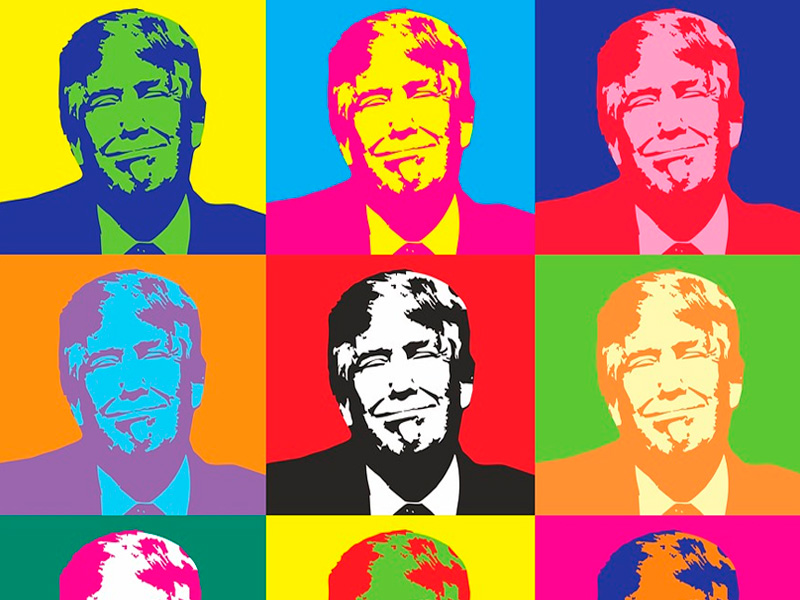
On Monday, the elected US President Donald Trump said that he gave his transition team an order to draw up a draft plan of paramount tasks, writes Wall Street Journal . The authors note that this is Trump's first attempt after election to directly inform the citizens about their intentions for the first time after the inauguration. It is also noted in the material that before Trump, the elected presidents George Bush Jr. and Barack Obama, during the transition period, regularly made public statements and gave press conferences about their immediate plans and the process of forming the administration.
In his speech, which took less than three minutes, Trump mentioned six directions of the agenda: trade, immigration, energy, changes associated with the state apparatus, national security and changes in the field of ethics. One way or another, he touched on all these topics during the presidential race. At the same time, he did not say anything about medical insurance, the wall on the Mexican border, the Tax Code and the Iranian nuclear transaction, which were also important topics of his election rhetoric.
CNN clarifies that Trump promised to refuse negotiations on the project of Trans-Tikhoocaan Partnership and cancel the environmental restrictions introduced by President Obama. He also said that he would instruct a national security team to develop protection against cyber attacks. In general, the choice of six stated points, comments CNN, is due, apparently, by the fact that these promises are easily fulfilled by simply signing the relevant decrees that do not require the approval of the congress.
 Demonstrators protesters against the transatlantic trading agreement. / Stop Ttip/ Flickr
The material also speaks of eloquent silence about the most scandalous theses of Trump's election campaign. This default is explained by the fact that just on these points it is necessary to interact with the congress. The time and speed of execution, the author notes, will probably at first be the main factors for Trump in building priorities. Despite the fact that the Republicans are dominated by the Congress, there are enough democrats to block some initiatives.
Washington Post focused on Trump's plans regarding civil servants. According to the author, they will not like civil servants. The idea is to reduce the state bureaucracy, which the Republicans have criticized for so long. This reduction in bureaucracy, the author believes, will actually consist in the destruction of guarantees to preserve jobs and cutting bonuses that federal workers received generations.
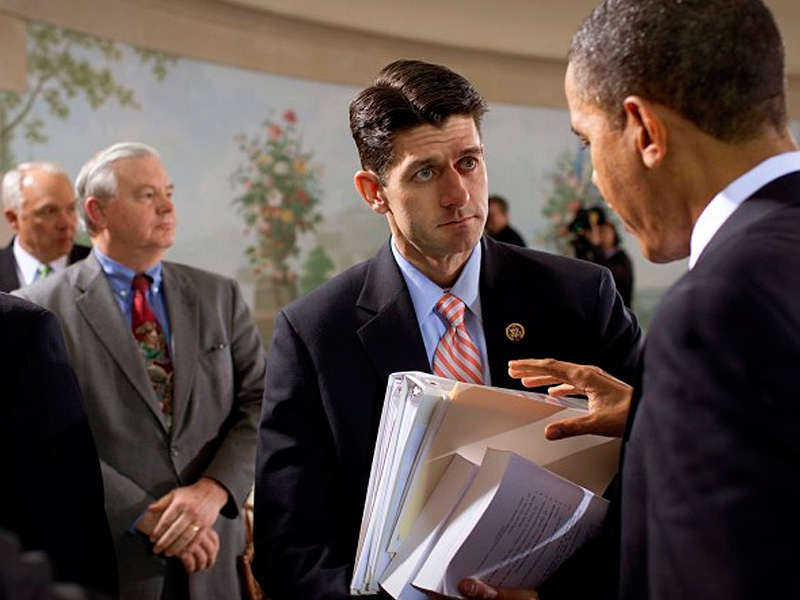 President of B. Obama with civil servants. / White House
In the first 100 days, notes WP, Trump is going to freeze the reception of new civil servants to the places of those that leave their posts. Thus, it is planned to reduce the device. Military, as well as healthcare employees, will be excluded from this scheme. As for the military, there may be, on the contrary, an increase in the number of personnel. Thus, the reduction of the state apparatus is planned to be selective and, apparently, the principle should be reduced by departments that the Republicans do not like, and expand those that they consider necessary.