
Translated material
Following the euro
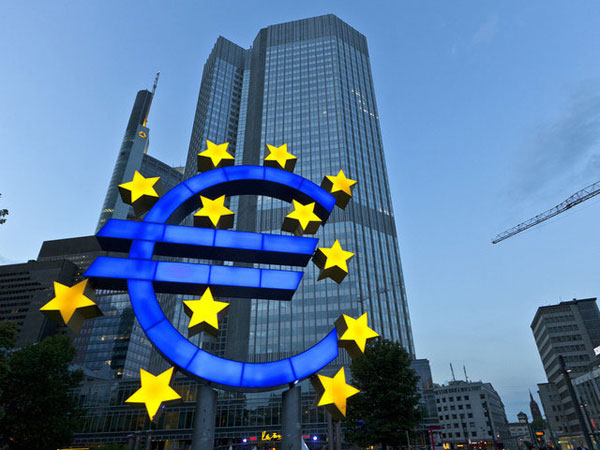
The bad news for Russians who still want to spend New Year's vacation in Europe: the euro has risen in price. Good news for those who like to relax in the "dollar zone": the American currency is still stable towards the ruble. However, this is the news of only the last few days, at the end of last week the trends looked completely different.
The fact is that on Thursday, December 3, the European Central Bank decided to reduce the deposit rate from minus 0.2% to minus 0.3% per annum. At the same time, the basic key rate was preserved at 0.05%. That is, European banks put their money in the ECB at a negative percentage, and receive loans from it at a percentage, although positive, but close to zero. Such a policy of actually forced pumping up the economy is called “quantitative softening”.
In some ways, “quantitative softening” is similar to what the Glazyev Group offers. Indeed, a cheap loan naturally leads to an increase in production. However, the European monetary authorities are unlikely to allow hyperinflation, since they work very subtly and neatly-and if the Russian Central Bank followed the advice of Glazyev, then it is unlikely that something can stop the increase in prices in the ruble zone.
It is interesting that a decrease in the interest rate, in theory, should lead to a fall in the exchange rate, because the proposal is increasing. But here with the euro, the expectations of the participants in foreign exchange trading were played with the euro: they were waiting for more bold actions of the ECB, and in the aftermar of the official message about reducing the rate by 0.1 percentage points (instead, for example, 0.2 percentage points) began to buy up the euro.
So the euro exchange rate in a few minutes increased by 1.9%to the dollar, reaching $ 1.08 per euro at the maximum. In relation to the Russian currency, the euro completely went up by 3 rubles, by more than 4%.
Analysts predict that "in the medium term, the euro will be weakened." What to do to citizens who have a ticket in Turin, Riga or Helsinki in their pockets, it is not clear - the concept of “medium -term perspective” is extensible, the fall of the course can be postponed until mid -January, and can begin in the coming week.
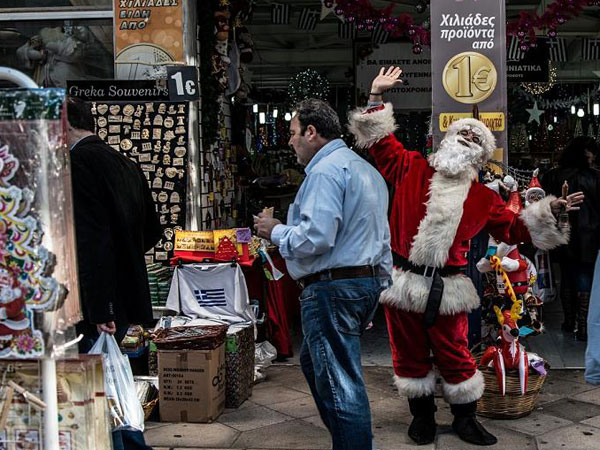 Photo: Focus.de
Against this background, the Fed has long been waiting for a long time, on the contrary, an increase in the discount rate, which since 2008 has been at 0-0.25%, that is, also actually rejoiced. The head of the Fed, Janet Yellen, speaking on Wednesday, said that the discount rate should be started to gradually raise it soon. “To postpone the beginning of a policy of normalization for too long means that we, most likely, will be forced, ultimately, to tighten the policy relatively sharply in order to maintain the economy. Such a sharp tightening risks violating financial markets and, perhaps, even unintentional to push the economy into a recession, ”said Yellen.
Thus, we can say that the monetary policy of the Fed and the ECB is if not in antiphase, then it is close to: and this really means that the dollar in relation to the euro will grow and, in the foreseeable future, will reach parity.
So for May holidays it is really worth taking tickets to Europe - there is at least a small chance to get about 5% due to a reduction in the cost of staying in the Eurozone countries. The Russians have no other reasons too closely to follow the course of foreign currencies.