
Translated material
Anti -regional sanctions
The United States on August 8 announced the intention to impose sanctions against the Russian Federation in connection with the Skripals business. It is also expected that one package of sanctions will come into force on August 22. After the State Department’s message about the new possible sanctions, the ruble updated at least two years ago in relation to the dollar.
As for the package of anti -Russian sanctions, which will begin to operate on August 22, then we are talking about the ban on export to Russia that may be related to national security. This package actually partially duplicates existing restrictions. However, they will not touch the supply of equipment for civil aviation and cooperation in the space sphere.
Washington also made it clear that then the second package of sanctions could be put into action, the bill of which is now prepared for consideration in the congress. These sanctions can come into force if Moscow does not provide guarantees of the non -use of chemical and biological weapons. In addition, Moscow is also proposed to allow UN inspectors and international observers.
Among the planned sanctions were not only a noticeable decrease in exports and imports and suspension of flights in the United States of Aeroflot, but also a decrease in the level of diplomatic relations. At the same time, according tothe RBC news agency, the State Department representative during a telephone briefing for journalists said that the United States is expecting to not apply the second package of sanctions. To fulfill the conditions that will avoid its application, Russia is allotted for three months.
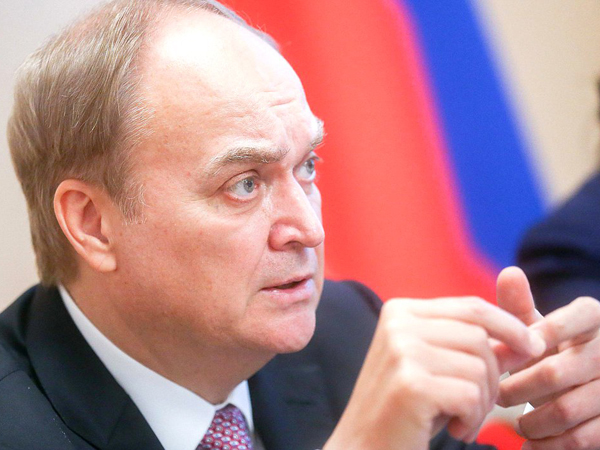 Russian Ambassador to the United States Anatoly Antonov Duma.gov.ru
At the Russian Embassy in the United States, new sanctions were called "dragon." So these restrictive measures are characterized in a statement by the Russian diplomatic mission. Diplomats emphasized that the request of Russia's guilt in the poisoning of the Skripals of the United States refused, referring to the confidentiality of the information.
It was the reaction to the sanctions preparing sanctions that Russian financial analysts explained the decrease in the ruble. Indeed, within one day, the Russian national currency fell into the dollar more than a ruble. According to the tenders of the Moscow Exchange , on August 9, the ruble rate reached the level of 65.5 rubles per dollar and 76 rubles per euro.
Later it became known that the Bank of Russia sharply raised the official exchange rates on August 10. The euro grew by three rubles immediately - from 73.8211 to 76.8250 rubles. The dollar went up by 2.7 rubles - from 63.5950 to 66.2856 rubles.
At the same time, shares of the largest Russian banks fell in the price: Sberbank shares fell by 4.26%, VTB shares lost 2.37% of the value.
The analysts surveyed by Znak.com noted that if the sanctions are adopted in the form in which the costs of Russian state banks will increase. It is possible that in connection with this, banks will be forced to raise prices for services and increase loan rates.
This news caused citizens fears that the ruble could continue to decrease. The media recalled the August traditionally difficult for Russia and especially the August of the year, ending in the number 8; Against this background, there were suggestions that new American sanctions could have serious consequences for the Russian economy.
 Sergey Hestanov
A number of experts surveyed by Polit.ru refused to evaluate its prospects, including the Russian currency, referring to a significant uncertainty of the situation. The same thing that had happened so affected the ruble, with Polit.ru was talked by Sergey Khestanov, associate professor of the Department of Stock Markets and Financial Engineering of the Faculty of Finance and Banking (FFBD) of the RANEPA, adviser to the macroeconomics general director of the Otkritie Broker company.
“What is happening with the ruble is a completely typical psychological effect on the market. The restrictions themselves have not yet been introduced, and according to the bill published yesterday, it is not not clear when it will be, but there is already an impact.
It must be understood that it is not yet clear when they can be introduced and in what form. The bill will still be discussed, they will still amend. But, nevertheless, purely psychologically the markets react to this. Moreover, there is a rather specific fad there - most likely, it was he who most of all that frightened the markets. This is a ban on transactions of Russian banks in dollars.
If this is realized in the form as it is written, then this will pose under the big question the existence of foreign currency accounts and currency deposits. Moreover, what will happen to the existing accounts of deposits is completely unknown. They can be "frozen" at all, they can be exchanged for rubles at an unknown rate. Since many understood this, yesterday many began to actively buy cash currency. That's what the market has shifted in this way.
 Dollars in Pixabay.com
But it is important to understand that this threat is so far abstract in nature. In any case, the American Congress has a vacation now. They will only return to this discussion in the fall; Plus, it is customary to discuss everything quite carefully there, and for sure the document will have their own supporters and opponents who will amend their amendments. In a word, in any case, there is still enough time before. But we have many, taught by bitter experience (and everyone remembers 1991 and 1998), they prefer to buy currency and put it in a glass jar. Because it makes no sense to put it in a bank under such conditions.
But I think that this item is softened because it sounds too severe. Even during the Cold War, some concessions were made for some Soviet banks - just in order not to interfere with some types of cooperation. Therefore - who knows if they will come now. Now is a time when there are a lot of high -profile statements, but by no means all loud statements are realized. So let's hope for the best.
But it is important to understand that if everything goes in the most bad way, according to the pessimistic scenario, then the introduction of some tough currency restrictions is possible-up to the restoration of the situation that was in the USSR. Then citizens did not have the right to have currency. Even those who received the currency were supposed to change it at the state rate. At the same time, they received the so -called forwards of Vnesheconombank; They could be made in stores that were called "birches".
This is an approximate example of what happens when quite hard currency restrictions act. Another question is that I consider unlikely to introduce such tough restrictions now or in the near future. But, again, the fact that this is unlikely does not mean that this does not need to know.
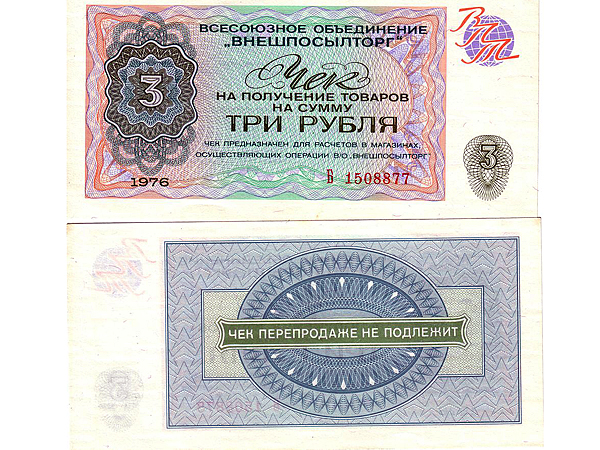 The check "Oshposyltorg" for calculations in special stores "Birch" Wikimedia Commons
As for the sanctions that should come into force on August 22, this is a completely different package of restrictions. We just talked about the bill, the existence of which was officially reported on August 8. This is precisely the bill, a document that has not yet been discussed, and the amendments to which have not yet been proposed. When it becomes a law, then it will become mandatory for execution. And the sanctions that will begin to act on August 22 are the work of Mr. Trump.
Both that and the other are sanctions, they are similar to each other, but they differ. Sanctions are offended, ”said Sergey Khestanov.