
Translated material
Two squares
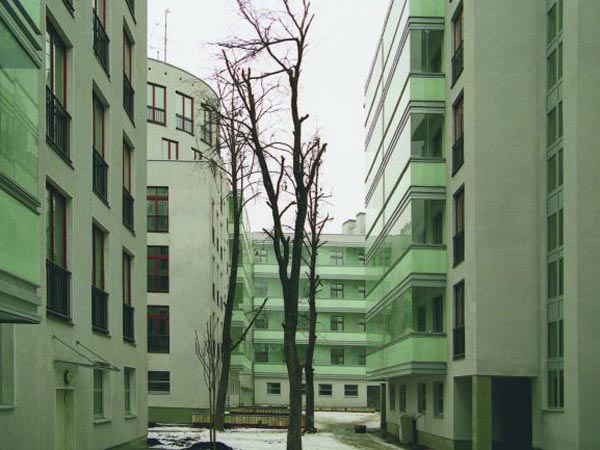
When we ourselves are small, everything around us seems big. Original thought, right?
When I was small, it seemed to me that the square near our house in one of the lane overheads branches from Ostozhenka. Lilac rang in it, pigeons were almost like San Marco in Venice, and grandmothers in hats, gloves sat on benches and in what was previously called a summer coat. Grandmothers walked in a square and in the sandbox on the playground who was grandchildren, and who - dogs, and fed pigeons with crumbs from the rolls of “calories with raisins”, and someone is running out to buy spare parts for strollers . The “high -risers” buns were bought warm, nine kopecks, right there, in the bakery on the corner of the Ostozhenka, opposite the “pig” store. No, it was really called “meat”, but in a glass window there was a huge pink pig for many years, which gave the home name to the store.
High poplar grew under the windows of our house. It was great to collect huge champignons under their powerful roots: two or three were enough for soup. The fact that there are mushrooms that grew up in the center of the city is not worth it, then they did not think. Or maybe there was nothing to think about: on our courtyard, surrounded around the perimeter, like a fence, four houses, there was only one car of the Zaporozhets brand with manual control, belonging to a one -year -old war disabled person.
The first to disappear were grandmothers. They began to resettle "to new individual apartments with all amenities." There was really more amenities in them, which, in general, was not difficult: almost no one in our area had neither a bath nor hot water, so the residents ran to the bathhouse nearby. Young people preferred the shower pool "Moscow". There were no elevators in the houses either, but there were long corridors and signs on the calls with the listing of surnames. But, apparently, the grandmother preferred something else, albeit less material elevator and hot water: they left with tears, absolutely confident in the fact that the university metro area is the edge of the world, and there is no life there. True, only the very first immigrants got there, the next certainly left to the ends of the world. Together with the grandmothers, hats, gloves and the very concept of “summer coats” disappeared.
Then the pigeons disappeared. Either they flew away after grandmothers to the ends of the world, or simply died out, no longer fed by them.
Then the lilac disappeared somewhere. Without it, the square turned out to be small and somehow naked. At this stage, we were also postponed, saying that our three -story house with a spiral stone staircase and forged railing is in emergency condition, and the roof can fall on our heads right tomorrow. Residents, without hesitation, grabbed the order into apartments in a warm camp. In the new apartments, the newcomers massively redid the interior doors to sliding, since after the double sofa was brought into the room, the native door could no longer open. A ring road was visible from the window, and behind it - the vast expanses of the Moscow Region. The first asphalt at the entrances appeared a year and a half later, and we did not wait for the launch of the metro line to us, changing back to the city center.
The next time I saw my yard in twenty -five years. I brought my son to school to Volkhonka: "The first time - to the first grade!". Three lessons of the first school day were just enough for coffee with newly -made colleagues in the workshop, also waiting for their children, and on an excursion to the old courtyard.
The first shock was strong: our house did not disappear. He still stood, withstanding the severity of two new floors built on top, double-glazed windows glittered in place of our windows, and the Topolev branches were beaten through air conditioners. But the square, benches and the sandbox, along with the playground, disappeared (the children around me, however, did not notice either). On the doors of the house hung a plate with a long name of some bank, a guard stood at the spike. I asked him to let me go into the porch. Reasonable answers to the question - why do I need to go there? - I could not give the guard, and unreasonable - to smell, whether it smells like a wet stone there and whether it was the same cool in the heat - I could not make an impression on a person with a gun. Then the door opened, a woman came out of the entrance, and in the door that formed the gap I saw the same staircases of the color of the old ivory. But someone invented openwork forged railing, someone invented to repaint the color of the walls - in blue.
For ten years of the daily route to school and from school, my son and I, as in slow -ized cinema, observed from the window of the machine the disappearance of houses and entire quarters, the construction of elite housing in their place, in abundance equipped with video surveillance chambers and a porrodenok, the death of the Genetzvale restaurant in its place of the Genetzvale restaurant. (VIP) ”, the rebirth of the gastronomer into the casino, the demolition of the Moscow basin (which in the morning and evenings I asked in a whisper in the prayers, my great -grandmother, who at one time saw the old Cathedral of Christ the Savior at one time, but did not live to the demolition of the pool, or until the construction of a new toy temple, nor before the elaboration right in front of our former former windows. The master of the ceremony - otherwise her prayers would become even longer) and other irreversible processes that characterized the renewal of Moscow.
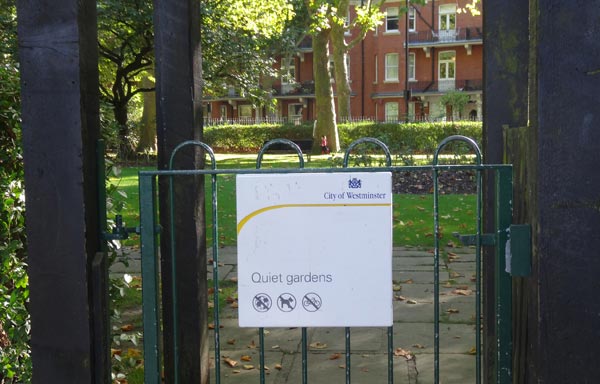 London square
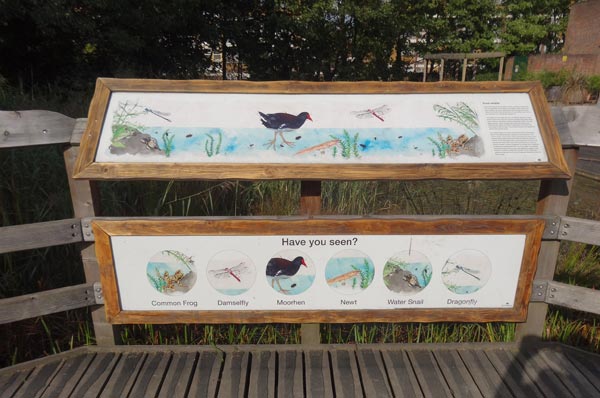
Now we are observing the other square. Like my children's square, it is surrounded by houses built in the century before last, when this place was still the outskirts of London. Now it's almost the center. Despite their respectable age, it does not occur to anyone to name these majestic red Victorian mansions with “emergency housing” (though there are no elevators in them either). In 1860, the inhabitants of these houses defeated the square, and, apparently, they cut the lawn so qualitatively that neither the children, nor dogs, nor even players in cricket, can still trample it, still trunked it. In shady alleys, something blooms all year round; There is a lilac. For lovers to work in the fresh air, the "Park of Silence" is fenced off. You can’t play the ball there, talk loudly and use a mobile phone. There are a “pink garden” for flowers lovers. For athletes - twelve tennis courts and two football fields. For fond of biology - a tiny biostation in the corner of the park. There, for local children, students lead excursions on plants growing on the beds and talk about animals and birds living in the park.
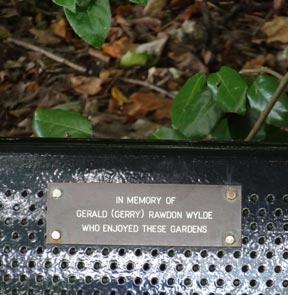 A plate on a bench
About forty years ago, a local resident who repeatedly became the champion of something, in his next championship fee built a sports pavilion in the park - in memory of the time when he was very young and trained here, near the house. For those who are not affordable for the gym, there is an open stadium, treadmills and simple anti -vandal simulators right on the street. There are enough people who want to practice in the fresh air. The park has a huge number of benches. They are ordered in the local municipality the inhabitants themselves. On benches are bronze signs, for example: “In memory of our grandfather, John Smith, who lived nearby and loved this square very much,” or “My wife Mary, who loved the rose and often read books in this pink garden.” When you sit on these benches, thoughts come completely bright and not about the cemetery.
Recently, our park cafe closed for repairs. The cafe was surrounded by a construction fence. On the fence, they hung an announcement that the inspector for the roots of the trees of the Westminster City Council must conduct an appropriate examination of the roots and evaluate their condition, for which the stone paving slabs will be raised. After the roots are inspected and carried out with them all the necessary procedures, the cleaned stone will be laid again. In the meantime, cafe visitors are offered to accommodate on tables in the picnic zone.
And six months ago I was again in Moscow, went on business to Ostozhenka and decided to look into the courtyard of childhood. Old poplars disappeared in it. Apparently, their roots were so large and deep that in their place it was possible to build an underground garage, but even from such an unceremonious dig, our house did not fall. All free spaces in the alley are densely built up with houses such as “monolithic -brick”, generously lined with granite and demonstrating - in a reduced form - the path of architecture from a typical one -story lurular estate of the eighteenth century to projects in the style of Norman Foster, but without the talent of the latter. At the place where the lawns with flower beds should have been gaping into the underground garages. Many houses are surrounded by a fence of metal rods. I did not immediately understand that I reminded me of the general view of the alley: so - in an enlarged form - a new Khovansky cemetery looked twenty years ago when my grandmother was buried there. Only there is much more greens now.