
Translated material
A special way
No matter how we imagine a historical path-as a movement along a separate railway branch (by analogy with M. Weber metaphor) or as a sharp stop in a state of deep freezing (after K.N. Leontyev)-in the case of Russia, there is a temptation to introduce it to a special one, somehow not like the whole of Europe. “Where is Rus-Trushka, who is catching up or distillaring-a question that with the persistence of a sisyphus stone each time is at the foot of the mountain, although it seems that only yesterday it finally managed to roll it to the top. This does not happen because in Russia they do not know how to do anything properly . The path of the “Special Way”, in fact, is not a Russian patent: Germany, Japan, and even Great Britain have it.
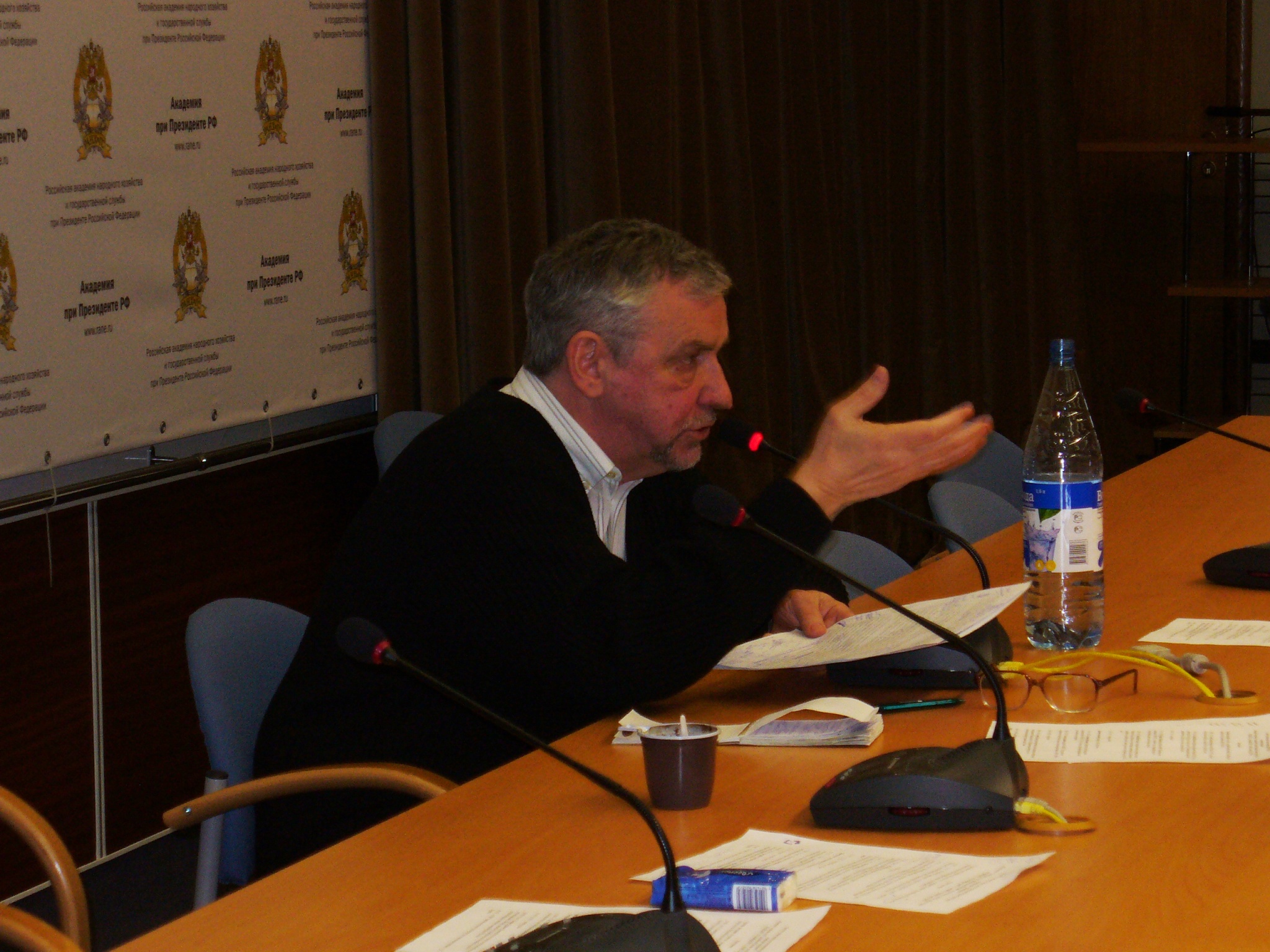
The reasons for the amazing survivability of the concept of a special path can be hidden in the variety of its functions, which were discussed at the seminar at the Center for Humanitarian Research of the RANEPA. It is closely related to ideological implications, with the rooted historiographic tradition of the 'autonomously' acting nations, with psychological tricks covering frustration or desire to believe in their exclusivity. The concept of particularity is connected with the possibility of its desire to turn the history, like rivers, back - even if it has on its basis a paranoid Stalinist consciousness, which Alexander Nikulin spoke about in his report.
At the same time, as Andrei Zorin noted, the concept of a special path has sufficient guttability: it may mean - we are a sample, do everything like us, or maybe we are special and go road, intended only for us. The change in the semantic register of this concept can be traced in various language logic. For example, in the perestroika period of 1987-89, as Timur Atnashev showed in his report, a special Soviet path was interpreted as a deviation from the path of civilization, in the 1990s it grew barely not to the level of a “national idea”. In subsequent years, as Boris Dubin showed in his report, the concept of a special path continued to gain momentum, turning into the symbolic capital of the authorities, which used this idea as a 'alibi', thereby keeping any changes within the framework of convenient for power and tolerant for the mass.
However, no concept would have resisted the collective consciousness for so long, it did not have historical roots. As Viktor Zhivov showed in the report “Special Path and Route of Russia”, this romantic category is based on the basis of quite rationally explained features of the Russian life structure that distinguished it from similar Western phenomena. Strict observance of confession among Catholics contributed to the perception of their own life path as a narrative, rooting a high degree of reflection and, as a result, individualization of consciousness. In the Orthodox world, the smaller severity of the repentant discipline gave rise to a fuzzy personality, a person who is inherent in community.
The seemingly deeply rooted “eternal” conflict between the Russian authorities and society, acquires new connotations under the historical microscope. The case of Peter Chaadaev, upon careful examination, is directly related to the rivalry of society and the authorities for the formation of ideological schemes. In this section, the concept of a special path becomes part of a larger object of research - the public sphere. Having descended from the ideological peaks of the 1830s, at the end of the 19th century, the path became part of the professional historical science: both Sergey Solovyov and Vasily Klyuchevsky recognized the “identity” of Russian history. Among professional historians, the function of a “special path” was no longer in the substantiation of national characteristics, but in the search for the laws of historical development. As an instrument of historical research, in the report of the author of this article, the concept of a special path refuses to theoretical viability even on the grounds that the postulation of a normal , some ideal path, deprives the history of its individuality and, for example, turns Russian history in an ideal West in an ever -catching some ideal West.