
Translated material
Past Crimea
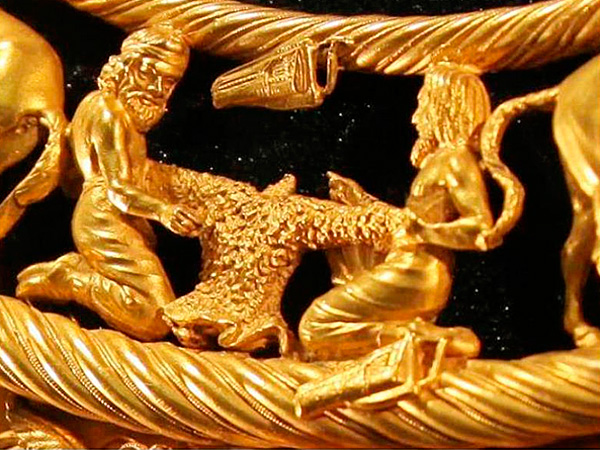
The Exhibition "Scythian Gold" should be returned to Ukraine, and not the Crimean museums, where exhibits of the exhibition were previously located. This decision was made by the Amsterdam district court on December 14.
Recall that archaeological finds from the collections of the Museums of Crimea were brought to the exhibition in Amsterdam to the referendum in 2014, as a result of which Crimea decided to become part of Russia.
Users of social networks are discussing the court decision, expressing who is outraged by the fact that the Amsterdam court does not dispose of its property and intervenes in the sovereign rights of another state, who is the joy that the Crimea is still considered Ukrainian in the world, and who is the fears that after the transfer of Ukraine the exhibition will be dispersed by private collections. In addition, many believe that the point in history has not yet been set.
“Not a fairy tale affects. I can imagine how much more trials there will be for this gold, ” says Alexander Skrypnikov, the head of the club of the Odessa EMERCOM sanatorium. “How can you give Ukraine what does not belong to it? This was still found in Soviet times, ” said Tatyana Vikulina, a corrector of the Moscow company Colins. “The contract was with the museum. So, they are obliged to return the museum, ” says the user Marina Borissovna Milkina from Moscow.
According to the historian Lyudmila Noskova, the head of the department of the history of material culture and ancient art of the peoples of the East of the Museum of the East Peoples in Moscow, where a collection of Scythian gold was once exhibited, problems with the storage of exhibits or the arrangement of exhibition in Ukraine, if the collection is not returned to the Crimean museums.
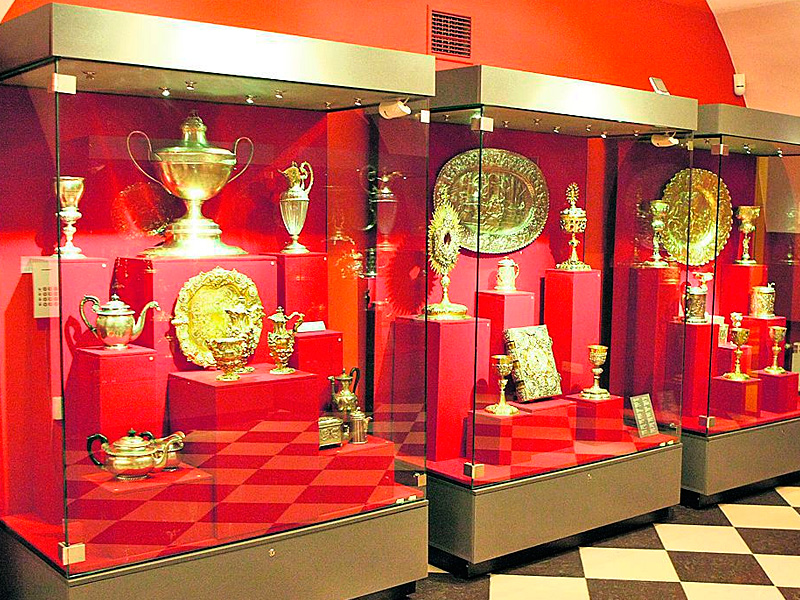 Museum of Historical Treasures of Kyiv.
“There is a separate and beautiful gold museum in Kyiv, there are all conditions to exhibit a gold collection. I don’t know if they will determine her there, but where else? Gold, of course, as I think, will go to this museum. And it will be exhibited - you can not even worry about storage, this is not the case to store without putting it, ”the expert said.
“I will now not say the exact address at which it is in memory, but the gold museum in Kyiv really exists and is acting, we somehow contacted it on business. And if in the Scythian collection it is gold, then in this museum it can be exhibited.
And the fact that it was decided to return it to Ukraine is not surprising. It would not have happened differently: the Crimean museums that provided exhibits for the exhibition in Europe first transferred them to the museum (just Kyiv), which created the main exhibition fund. And already this museum transferred the exposition to Europe from itself. That is, Ukraine was transferred to Europe by Ukraine, and now Europe returns it to Ukraine. But whether Ukraine is ready to return the exhibits to the Crimean museums, this is another question. I think she will not return them, ”explained Lyudmila Noskova in an interview with Polit.ru.
With the opinion that the exhibition was supposed to be returned to Ukraine, Georgy Chizhov, vice-president, head of the Ukrainian bureau of the Center for Political Technology Foundation, agree.
“The question, in fact, is not quite in my profile, but it seems to me that this court decision is simply natural and it was unlikely that another could be made.
It is clear that without a trial the situation, if a dispute arose, is not solved. But it seems to me that here the decision was obvious in two planes at once. On the one hand, the Netherlands, like most countries, do not recognize the accession of Crimea to Russia (therefore, the transition of any property of Crimea to Russia); And on the other hand, if even the annexation of Crimea to Russia was recognized, the court decision would still be the same, because the Crimean museums do not have autonomous subjectivity - these are still structural units of the Ministry of Culture of Ukraine. Therefore, even if the transition of Crimea to Russia was recognized by the Netherlands, it would still be strange if, taking something for a while from the Ministry of Culture of Ukraine, the Dutch side would have returned it to someone else.
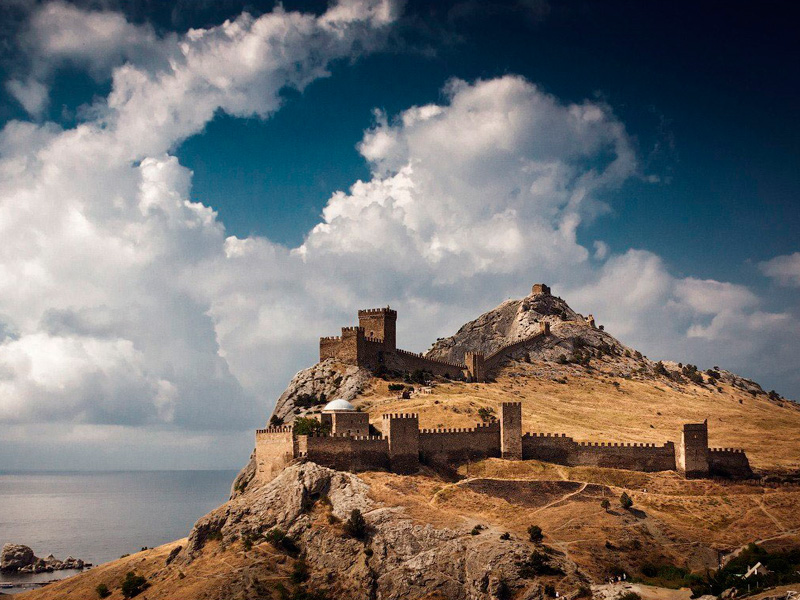 Genoese fortress in Crimea. / vkrym.su
So here, in my opinion, two iron grounds for such a decision at once. And the fact that the process dragged on for so long, I think, is not connected with the complexity of the issue, but simply with the fact that the judicial procedure is arranged. The Russian side is going to challenge the court decision - Aksenov has already stated this. I think the Russian position lies in the fact that these artifacts should return to where they come from. There is some logic in this, but I think that I said before, it interrupts, ”said Georgy Chizhov.
Commenting on the arguments of the Russian Ministry of Culture that the decision of the Dutch court violates the “principles of international inter -museum exchange and the right of the people of Crimea to access their own cultural heritage,” the expert expressed the opinion that such arguments could not help but be decisive.
“I think that in the legal plane this is reduced and will still be reduced to an attempt to prove some rights of Crimea to the cultural values that were in it. But, in my opinion, this is still not so, since Crimea was not a territory that would have a separate right to all this from all of Ukraine. In the end, it was the Ukrainian Ministry of Culture that decided which exhibits to leave in the Crimean museums, and which to pick up. No Crimean bodies have never independently disposed of a cultural heritage
By the way, I saw a good wording: "The exhibits will be returned to the sovereign state, which provided them for a temporary exposition." Here is the key point - the “sovereign state”: from whom they took, and returned. They took from Ukraine - and returned to her, and they should have decided so if the transition of Crimea to Russia was even recognized. And since it is believed that everything that Russia got in the Crimea got illegally, they believe that it was essentially stolen, there could be no other decision, ”said Georgy Chizhov.
From a legal point of view, the situation was not quite unambiguous, however, Kyiv’s rights to the collection look more significant, says Fyodor Kozlov, managing partner of the Chicago Law Company Law Office of Fedor Kozlov & Associates.
“With the view of Dutch law, Ukraine has a large volume of rights to the“ gold of the Scythians ”, first of all, due to the fact that the official Gaaga does not recognize the accession of Crimea to Russia,” he said in a commentary for Polit.ru. - The collection was sent to the Netherlands as part of the cultural heritage from the State Museum Fund of Ukraine, under contracts concluded with the Ministry of Culture of Ukraine and museums, which at that time wore a different legal status. At the same time, it must be borne in mind that the UNESCO Convention of 1970, the Unidruis Convention of 1994 and the museum ethics code of IKOM from 2001 do not contain norms that clearly regulate the solution of such conflicts. ”
We add that Ukraine will have to pay the Allard Pirson Museum in Amsterdam, where the exhibition was located all this time, about 111 thousand euros for storage and insurance of Scythian gold - exhibits of four Crimean museums taken to Holland shortly before the Crimea from Ukraine.