
Translated material
Craudfunding under control
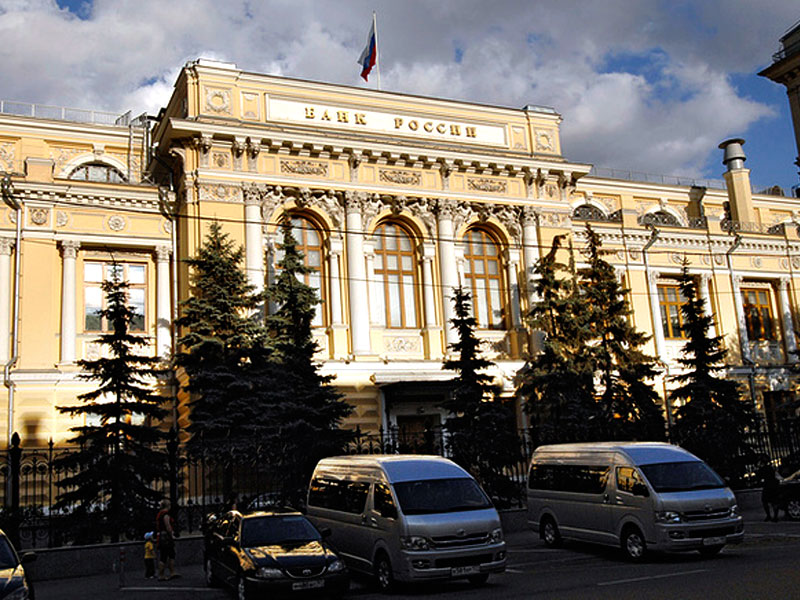
The central bank wrote a “road map” on the development of the rules of online sites that provide services for organizing mutual financing (crowdfunding), including mutual lending (P2P). On Monday writes Kommersant on Monday.
During the year, new rules must undergo testing, and according to the results, the regulator will prepare a specialized bill. The sites that will want to participate in testing will have to open the beneficiaries, increase capital, also identify investors. In many countries where such schemes are popular, including in Britain and the United States, there are already such regulation.
In March 2017, the Central Bank estimated the Russian crowdfunding market at 1-2 billion rubles, and the review said that in the near future this sector could grow at times. However, the need to control the “mutual financing” services in the Central Bank was spoke back in early 2016 - then it was said that strict regulation would be introduced in the event of the formation of “negative practices”.
To submit proposals for the development of “alternative financing mechanisms - crowdfunding, crowdinvesting and crowding” - by October 15, Prime Minister Dmitry Medvedev instructed the Ministry of Economics and Finance with the participation of the Central Bank and the working group to create an international financial center.
 Internet payments / pixabay.com
The Central Bank defines crowdfunding as a mechanism for attracting borrowed funds or collective financing of companies or projects using Internet platforms. One of the varieties is P2R-Zaym (Peer-to-Peer Loans), where individuals act as investors and borrowers, and the platform only leads them with each other and gives a minimal assessment of the creditworthiness of the borrower, collecting, with the commission. Other types of crowdfunding are Crowdinvesting (joint financing of projects), P2B (Person to Business), crowdfunding with non -financial reward and charity crowdfunding. According to the Central Bank, the P2P-music for 2015 was occupied by about 75% of the market.
According to the results of the experiment, which will end in June 2018, its participants will have to meet the designed Central Bank standards. Including form capital in the amount of at least 10 million rubles, to disclose beneficiaries with shares of more than 10%, to analyze the financial condition of borrowers and identify investors, place software in Russia, etc.
The list of testing participants in the “Roadmap” is not given, however, according to Kommersant, these are almost all major market participants from different segments, including Planeta.ru, BoomStarter.ru, Alfa-Stock, City of Money, Loanberry, FinTeca.
Apparently, participation in the experiment of the Central Bank is beneficial for large sites, since the regulation will be introduced in one way or another, but it will be possible to not only prepare for it, but also begin to interact with the central bank in advance.
 Donation collection / Pixabay.com
The P2P-music market is the first contender for the introduction of regulation. The fact is that citizens are investors and they are practically not protected from fraud - both from the platform and from the recipients of loans. It is also possible that such a platform can be used to create financial pyramids, since investors there promise a percentage significantly larger than commercial banks offer. It is also profitable for creditors to understand how much the borrower is for the credit, and now it is impossible to do this within the framework of existing platforms.
Julian Lazovsky, deputy chairman of the board of directors of the P2P Sand, in a conversation with Kommersant, said that Russian platforms are much less successful in terms of collecting funds than international ones. It may well be that the regulation of the Central Bank will change this situation: so far many who tried to invest through the P2P platforms have not received the return of the first loan and, of course, are in no hurry to invest further.