
Translated material
Erdogan: Won or lost?
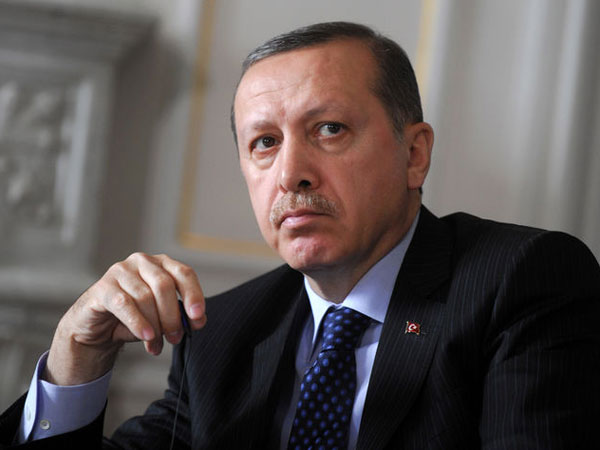
The opinions of analysts about the results of the parliamentary elections in Turkey, which took place on Sunday on June 7, 2015, dispersed. The party of power (the party of justice and development, AKP) gained a majority of votes (40%), as in all previous elections from the moment of its coming to power in 2002. However, this did not provide her with the majority in parliament. This means that the plans of Turkish President Recep Erdogan by radical change in the Constitution in favor of the expansion of presidential power will now be difficult to realize. Some commentators consider this a victory of democracy over the autocrat. Others, on the contrary, believe that Erdogan in any case remains in winning. Finally, there is a category of analysts who refrain from judgments and forecasts and are waiting for the development of events.
Lost
Analyst Karl Vic ( Karl Vick ) in Time magazine It expresses the opinion that "the Turks on Sunday inflicted a crushing blow in the only language that he understands: voting." However, the same blow marked the success of Erdogan as a politician who, during his stay in power, managed to achieve significant civil development in Turkish society. Actually, the paradox, according to the author, is that Erdogan underestimated the degree and quality of metamorphosis.
“The great historical success of the Erdogan Party of Justice and Development, in Turkish called the abbreviation AKP,” Vic explains, “consisted in the fact that they inspired and strengthened ordinary voters, whom the ruling elite of the country had never trusted before. Being in the form of a parliamentary democracy, Türkiye for the first time in almost eight decades of its existence suffered from a paradoxical reluctance of people in power to obey the desires of its electorate. ”
The fact is that at the head of the country, starting with Kemal Ataturk, a military elite was standing, which was inclined in all difficult situations to make decisions alone, regardless of the opinion of the public. This paternalism was present throughout the history of Turkey until AKP coming to power in 2002. The first ten years AKP consistently conducted a democratic policy, which instilled confidence in democracy in principle. This explains the moment that in each subsequent elections the number of votes cast for the party grew, which, in turn, gave her a good political base, which allowed her to squeeze the secular military elite. At the same time, Islamic rhetoric was used by AKP as part of the moral image of the party, but not to motivate power arbitrariness.
As a result, Erdogan achieved that people really began to make a choice, and this choice was important. However, outside the election process, his power was far from democratic. This was manifested both in the suppression of protests and in the arrests of journalists. “Erdogan,” Vic comments, “acted on the basis of the same prerequisites that the Muslim brothers' failure, the Islamist party, which he loves - in Egypt, where the military could not finally push off. In Turkey, Erdogan continued the same line, ignoring mass protests against his unceremonious style of government and corruption scandals ... Last year, 52% of Turkish voters nominated him in the presidency. Thus, he took by and large a symbolic position, but made it clear that he plans to expand its possibilities. Erdogan decided to rebuild the entire system of government in Turkey so that it meets its conceit - to turn it into a presidential system. ”
And here the problem arose. To change the constitution, AKP had to become superbolstain based on the results of the parliamentary elections, having received 550 mandates. Erdogan during his election campaign asked voters to give the party 400 seats. As a result, AKP did not even become a simple majority (she got only 256 mandates). For the first time since 2002, AKP will have to be blocked with other parties in order to be able to manage, and none of the parties will want to become pocket.
Won
Political scientist from Georgetown University Michael Koplow (Michael Koplow) in Foreign Affairs published a comment in which the outcome of the Turkish elections as the victory of Erdogan. He stipulates that Turkish voters protested against Erdogan’s presidential ambitions, and the election result can be considered the victory of healthy and stable democratic institutions in Turkey, which reacted to an attempt by the authorities to leave the system of retrains and counterweights. “But the fact that the AKP is likely to not be able to redraw the Turkish constitution as Erdogan wants,” continues Kolod, “does not mean that Türkiye is now insured from the risks of strengthening the presidential authority. Over the past year, Erdogan has gradually pulled the powers that the Prime Minister is usually vested with, including now he presides on regular meetings of the office and can form at least part of the list of parties that will participate in the parliamentary elections. He actually appointed himself a shadow cabinet of advisers who act outside the presidency, and the Turks now call Erdogan in everyday life with his entire company Palace.
The result of past elections, the author believes, will only strengthen this trend. Erdogan has already weakened the office of the prime minister and the parliamentary system in the country. In other words, the fact that the AKP has not received the majority in parliament and will be forced to form a coalition will no longer be able to become a restraining factor for the president to the extent that Erdogan secretly re -proportioned power. If before the opposition in parliament could be a serious counterweight to the head of state, now it has turned into a symbolic opponent. If the coalition, in principle, does not fall apart, then AKP will have great opportunities to implement their political decisions.
It is incomprehensible
The anonymous author in The Economist refrains from far from far -reaching conclusions. So far, one can only judge with certainty that it led to a reduction in AKP in parliament. The main reasons, in his opinion, were the destabilization of the economy, the progressive authoritarianism of Erdogan and the amazing success of the People's Republican Party ( HDP ). The last point, in turn, was due to the fact that the party, formed from the movement for Kurdish autonomy, created an alliance that attracted Turkish liberals, left, Christians and LGBT. In addition, the charisma of the Chairman of the Selahattin Demirtash party played a large role here, due to which he seems to many the first in the last twenty years by the impressive competitor of Erdogan. As a result, voters who began to alarming the authoritarian ambitions of Erdogan concentrated on it.
But what will happen next is not yet clear. “Usually the president invites the winner to form the government. The right nationalist party MHP, which took third place in the elections, having received 16% of the vote, ideologically closest to A K P and seems to be the most obvious choice for partnership. But the leader of the MHP, Devlet Bakhcheli, flatly refused to support the idea of strengthening the president, which means that any transaction with him will lead to restriction of Erdogan's actions. Mr. Bakhcheli will also most likely want to resume the investigation on corruption accusations against former ministers from AKP-these cases were launched in 2013, but last year they were furious. This situation may turn out to be slippery, as there will be cases in which Erdogan and some members of his family are allegedly involved. ”
On the other hand, if Erdogan refuses his ambitious plans, then the struggle for power may erupt in his own party. The author refers to experts, who believe that in this case, some AKP participants will try to put on the post of Prime Minister of the former president Abdullah Gulia. This will require early elections, because Gul is now outside the parliament. As an option, AKP can still create a coalition with MHP on the condition that MHP provides support, but does not try to determine the policy. An attempt to unite with CHP, according to most analysts, is doomed to failure.
“If the government is not formed within 45 days,” the author concludes, “Erdogan will be forced to hold new elections. But the result, most likely, will be about the same. Turkish voters blocked Erdogan’s attempt to reign in the political system of the country, but instead of a sound alternative, they seem to have generated an incompetent parliament. ”