
Translated material
There are no indifferent
On the editorials of the media of the United Kingdom today there is a murmur of Margaret Thatcher.
The necrologist on the BBC website begins with a remark that Margaret Thatcher "was one of the most influential political figures of the 20th century." The following is a thorough text that structurally and meaningfully resembles the article “ Margaret Thatcher ” on Wikipedia. The first proposal, in essence, postulates the purpose of the Tatcher image in the British mainstream media markup, in which, in the wake of an informational occasion, its posthumous existence will be honed. Speaking reductionist, the purpose is to be a contradictory figure, a personified politician (in contrast to the usual gray mass) and, most importantly, the next British brand of a global scale. In essence, about the same as in the still lifetime version, but with the difference that it is always more reliable and convincing to summarize and draw conclusions on inanimate material.
And there is no less general morality in the edification of contemporaries: “But due to the fact that she rejected the considerative policy, she became a figure that sowing discord, and disagreement with her strategies and the style of government led to the rebellion inside her own party and to the riots on the streets.”
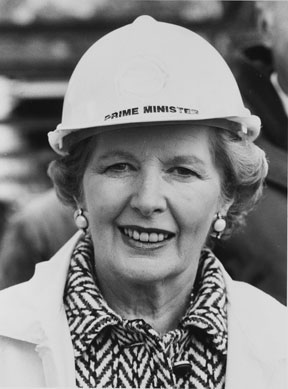 Margaret Thatcher. Photo: Rutlo/Flickr.com
In addition to generalizations and biographies, such popular posthumous practice as quoting the statements of significant statesmen is also abundant on the pages of the British media. The difference is only in the set and nature of the quoted statements. Few people did not quote the current Prime Minister David Cameron, who called Thatcher a “patriotic prime minister” and said that “she got a country on his knees, and she made her again stand up at full growth.” They quote Barack Obama, who said that "the world has lost one of the great champions of freedom," and "America is a true friend." Angel Merkel is also quoted : "I will never forget what role she played in overcoming the strife in Europe and how she acted at the outcome of the Cold War."
The statement of the deputy prime minister, the liberal democrat Nick Klegg, who called Tatcher, one of the “defining figures of modern British politics”, and added to this: “Let the opinions about her were contradictory during her reign, today everyone unanimously recognize the power of her personality and the radicality of her policy.” The London mayor Boris Johnson wrote on his Twitter that the memory of her would live when the world will already forget the current ordinary politicians, and this was also quoted many times . The replica of the leader of the British Independence Party, Nyozhela Faraja, has gained great popularity, who said : "You loved or hated her, no one will deny that she was a great patriot who passionately believed in her country and her people."
The North Irish newspaper Belfast Telegraph also published a selection of such quotes, including the above. True, they added to them the tweet of the parliamentarian of George Galloway: “Tramp the Dirt Down” (tamp dirt). This, in fact, is a quote from the song of Elvis Costello, written in the 1980s, that is, at a time when Tatcher was the prime minister, and is dedicated to her, or rather her social policy. The policy there is described as extremely hypocritical and malicious for vulnerable groups of the population, and the lyrical subject expresses the hope that he will be able to live long enough to wait until Tatcher dies and to finish the dirt on her grave.
Nick Robinson Political Editor, in his short blog note , also emphasized that Margaret Thatcher, unlike many faceless current politicians, was a person who somehow belonged-someone loved, someone hated. “They will say many words and write on this day,” he concluded. -Someone will mourn. Others will celebrate. One word summarizes everything that concerns the leader who has died today: Vera. ”
Indeed, they celebrated. Festive events spontaneously formed in the south of London and in Glasgow. BBC correspondents counted about 250 celebrating in Glasgow and about a hundred in London. Guardian correspondents counted more than 300 people in Glasgow and several hundred in London. London noted an event with beer banks and milk bottles. The latter is undoubtedly a reference to the episode from the commercial activity of Thatcher, when, being the Minister of Education and Science, she canceled the free distribution of milk in schools by children from 7 to 11 years old, which caused mass indignation, captured in the phrase “Margaret Thatcher” (milky kidnapper). According to reporters from Guardian, there were many elderly people at the London event who suffered from unemployment during her reign. There were young people who did not find these events directly, but in their families the memory was alive. Finally, there were those who came not so much to celebrate and rejoice, but to express their compassion for the “victims of Thatcherism”.
The founder and co -editor of the British resource Opendemocracy Antony Barnett also expressed several considerations for the relevant occasion. His main observation lies in the fact that in the stream praise, curses and neutral memories are absent, in his opinion, keywords describing everything related to Margaret Thatcher: “Oil of the North Sea”. It is to this factor that Barnett attributes the key value. Britain began to produce oil in the North Sea in the 1970s, and by the 1980s. This process has grown and gave a tangible improvement in terms of the economy, which only then began to recover from the post -war injury. This rise, often attributed to Tatcher as the merit, actually depended on it and much more on a successful combination of circumstances.
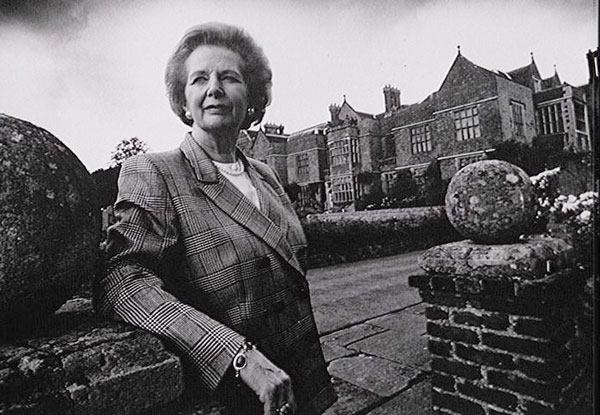 Margaret Thatcher. Photo: BBC Radio 4/Flickr.com
What really, according to Barnett, that one cannot be refused, is that her activity led to an energetic shake in various fields of Britain’s life - both in the parties of conservatives and laborists, and in the life of street protesters, and in the life of entrepreneurs. This shake had both positive and negative consequences. In particular, in the patriotic rise, following the results of the Falkland War, Barnett sees the return to the British policy of the unhealthy Fuhrer spirit, characteristic of the first years after the Second World War. Be that as it may, Tatcher in politics breathed a new life. But, again, not so much thanks to her personal abilities, but the fact that her decisions were always invariably supported by the money that she had, and in abundance.
At the same time, Barnett also emphasizes the moment that most of those actions and decisions for which Tatcher is customary to criticize also do not be of such a personal character, as they often say. Most of the “horrors of Thatcherism” Barnett attributes to the general imperfection of the British state system.