
Translated material
Vodka without herring
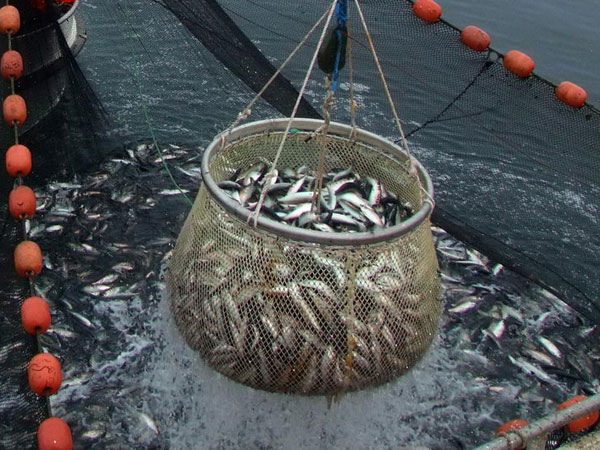
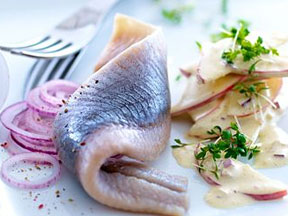
Russians can be left without a favorite snack on New Year's Eve. The herring may disappear from the shelves of stores, and the one that will still be available will surprise at its price.
 Andrey is extreme
The head of Rosrybolovstvo Andrei extreme said that due to administrative barriers and high tariffs with an increase in catching, fish consumption in the country in 2013 could be reduced by as much as 20 percent-instead of 22 kilograms of fish that the average Russian ate in 2012, now consumption can be only 18 kilograms.
Experts of the Federal Agency for Rybolovy predict that salmon consumption will be reduced by 10-12 percent, and picks and cod-by 6 percent. But the largest blow to Russian consumers will be delivered by herring-its consumption can fall by 50-60 percent.
There are several factors that are unlikely to lead to a sharp jump in prices, but together they can create problems.
Despite the overall increase in the catch, about three percent, the catch of fish was reduced, which the Russians eventually find themselves on the table - salmon, mocking, flounders, navagi, salaki, saira, Atlantic herring, picks, pike perch, flash, smellas. This happened, among other things, due to the reduction of quotas for the production of herring in the Atlantic. Quotes were reduced for all countries, so herring is getting more expensive throughout the region. Russian fishermen were able to increase herring in the Pacific Ocean, but then the second factor intervened.
It suddenly turned out that exporting fish abroad is much more profitable to sell it within Russia. Moreover, the point is not so much in the demand and solvency of the population as in administrative barriers. For the export of fish, it is enough to collect one package of documents, which is sufficient for presenting it to Russian officials and for foreign buyers. Russia's entry into the WTO forced the government to reduce export duties on fish, which even more simplified export. For the sale of fish in the domestic market, it is necessary to collect a giant number of various certificates, certificates, certificates and other documents. As a result, the herring additionally caught in the Pacific Ocean was profitable not to sell in Russia, but in the countries of Southeast Asia.
For example, the head of Rosrybolovy brought a conditional captain, who decides where to unload the fish - to the Russian port or South Korean. Communication of the crew of the vessel with South Korean officials begins 3 hours before entering the port. Unloading, if there are no problems, begins a quarter of an hour after arriving in the port.
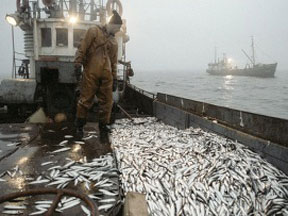 Photo: fish.gov.ru
Otherwise, things will be formed from the captain if he decides to sell fish in Russia. You will have to contact the Russian coast three days before arriving in the port. Per day, it is necessary to send applications to several inspection and control departments. After arriving at the port, as a rule, the ship will wait for at least a day before the start of unloading. Veterinary design can take a week.
Transport lining also intervened in the price of fish. The most populated part of the country - the center and the Volga region - are far from the seas and oceans, the fish has to be driven by rail. According to the prevailing tradition, in mid -June, when salmon Putin begins, railway tariffs for the transportation of fish from the Far East to the European part of Russia are growing. In the summer of 2013, the tariff increased almost one and a half times from 6 to 8.9 rubles per 1 kilogram of fish.
Now, officials of Rosrybolovism are racking their heads over how to return seafood caught by Russian fishermen to Russia, and it is preferably within the framework of a market economy - that is, with the help of financial stimulation.
One of the possibilities of attracting fishermen to the domestic market is a significant revision of administrative rules. For example, you can introduce the regulations for servicing fishing vessels in the ports. It will be much more difficult for local officials to work harmoniously and quickly. However, the threat of punishment can solve this difficulty.
However, as practice shows, any officials are not afraid of business, the main thing is to be beneficial. There is a proposal to resurrect tax rates for water bioresources for fish producers who supply products to the domestic market. Thus, selling fish in Russia will become a little more profitable.
Finally, you can slightly infringe on exporters. Today, fishermen, selling their catch abroad, have the right to return VAT. The whole industry, thus, receives about nine billion rubles. In Rosrybolov, the idea came up to cancel the VAT refund "for low -level products." Thus, the removal of fish will rise quite much and will become disadvantageous.
All these measures can help, but they are unlikely to give at least some effect in the near future. The idea of restructuring the operation of the apparatus in remote ports may completely fail due to the well-known inertness of officials. A decrease in the rates of various fees and an increase in VAT for fish exporters will need to be coordinated for a long time with the Ministry of Finance, which does not like when someone is invading its competence.
Based on all this, the economical Russians will have to think about whether it is worth decorating a New Year's table with a traditional herring under a fur coat. And “Vodochka” soon, it seems, will often have a bite not “herring”, but, for example, olives. For millennia, they are growing on the shores of the Mediterranean Sea and so far no one is going to introduce quotas to their collection.