
Translated material
I go bankrupt, but I don't give up
The news that came from Cyprus for the past few days quickly turned the small island state into the Mediterranean Sea into a prominent participant in European economic policy. The cause of the financial crisis in Cyprus was the specific structure of its own economy and debt problems of Greece.
The share of the island in the eurozone economy is tiny: only about 0.2%. At the same time, the liberal tax policy of the country's government, known to everyone, led to the fact that the banking system of Cyprus has grown disproportionate: the total amount of deposits in the country's banks is approximately 835% of GDP. Cyprus banks, a tax paradise for foreign entrepreneurs, regularly received huge amounts into accounts and very actively invested in debt obligations of Greece.
By the time the Athens faced the threat of default, and the cost of Greek government bonds fell, it turned out that culfaces banks own so many of these securities that their total value exceeds the island's GDP of at least 1.5 times.
In addition, a long -term tributary of capital led to the rise in the cost of labor in the country. The main sectors of the economy of the Republic of Cyprus (in addition to the banking sector) are tourism and agriculture. The growth of salaries reduced the competitiveness of these industries and reduced the income of the state budget.
The deterioration of the economic state forced the government to resort to external borrowings more actively and rapidly increase the public debt. The main creditors of Cyprus are the European Union and Russia. Back in 2011, the islanders borrowed 2.5 billion euros from our camp. In 2012, they asked the Government of the Russian Federation for another 5 billion, but received a refusal.
In early 2013, economists spoke that the financial crisis of the Republic of Cyprus can become much more dangerous for the Eurozone than Greek, because many European companies and entrepreneurs have accounts in Cyprus banks. If they lose their funds and lose the ability to respond in their debts, then the consequences of the created Domino effect will be difficult to predict. Therefore, the EU leadership promised to determine the conditions for the provision of financial assistance by mid -March.
The Cyprus government put forward its own (gentle) proposal "in the name of saving the banking system." The head of the local Central Bank Panikos Dimitriadis called on Cypriots to share their income and transfer the execution “Sommeline of solidarity”. According to the plan, this contribution could be a tenth of the amount accrued for the year by deposits as interest. Even thanks to such a slight “donation” of every citizen, the country would have received an additional 150 million euros.
However, the EU leaders proposed much more severe measures. On March 16, specific conditions were known to save the island’s economy proposed by representatives of the European Commission, the European Central Bank and the International Monetary Fund.
In total, about 17 billion euros will take the country to save the economy. The EU leadership agreed to provide 10 billion, and another 5.8 billion Cyprus should receive himself by introducing a special tax for bank deposits: if the amount is less than 100 thousand euros, then the tax will be 6.75% , and if more, then 9.9%. Many called the new tax “expropriation” , but it is a prerequisite for receiving assistance. According to EU economists, without it, in the near future, the two largest banks of the country, which invested in Greek government bonds, will go bankrupt in the near future.
The tax on deposits, whose fate was to decide the parliament of the Republic of Cyprus, was outraged, first of all, the Cypriots themselves, who did not want to lose their savings. On the streets of cities, numerous demonstrators painted the word no on the palms and imitated a new tax vote. A lot of angry remarks were expressed to the Angel Merkel and the entire Government of the Federal Republic of Germany, which initiated this condition for the provision of financial assistance.
Germany, one of the most economically prosperous countries of the EU, is a donor for many crisis economies, and in this regard, traditionally insists on the strict conditions for issuing loans.
Dissatisfaction, of course, expressed the Russian government, concerned about the fate of the money of numerous wealthy Russians who prefer to store funds not at the savings box office, but in Cyprus offshores. In particular, Vladimir Putin called the introduction of the tax “unjust”, and Dmitry Medvedev even accused Cyprus of “confiscating other people's money”, threatening to “correct relations” with an island state.
To prevent mass outflow of funds from deposits, the government of the Republic of Cyprus temporarily suspended all deposits, announcing the “Bank holidays” until at least March 22. However, on the evening of March 19, despite the calls of President Nicos Anastasiadis, the Cyprus parliament by a majority vote rejected the bill on deposits tax. However, the president himself a few hours before the vote admitted that the introduction of tax could be dangerous for the republic, since it will lead to the outflow of capital from the banking sector, and thus, to a new round of crisis in the country.
The European powers on different voices began to criticize the decision of the Cyprus parliament and threaten the country with imminent bankruptcy. In particular, the Minister of Finance of Germany Wolfgang Shoible said that banks may not open after the “holidays” declared by the government.
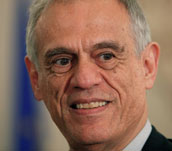 Mikhalis Sarris
In turn, Cypriot officials said that they have a certain “plan B” , and on March 20, the Minister of Finance Mikhalis Sarris flew to Moscow for negotiations with the head of the Russian Ministry of Finance Anton Siluanov on the provision of a multi -billion dollar loan. After lunch, it became known that the conversation did not bring any specific results. On the same day, Sarris spent the second round of negotiations with the First Deputy Prime Minister Igor Shuvalov. The conversation with him also did not lead to any “final decision”, but the parties promised to continue negotiations.
Meanwhile, when the press became known that the Minister of Finance of Cyprus Mikhalis Sarris went to Moscow, the analysts began to guess how the island state could interest Russia, except for getting rid of hated deposits tax. According to The Wall Street Journal, the Cyprus delegation may offer the creditor “shares in the country's banks” and “energy assets”, including a package of shares of the largest gas company in the country.
Whether the Russian side will be able to interest the share in the crumbling banking system of Cyprus is a big question. Although the interests of Russia here should be considered, of course, wider. According to Moody's agency, Russian banks hold in Cyprus a total of about $ 19 billion. They issued another 40 billion as loans to various Cyprus companies. And Russian businessmen transferred about $ 12 billion for storage to Cyprus offshore.
Thus, it is obvious that the interest of businessmen in saving the island’s economy is very great, and the question is only whether they will be able to have the necessary influence on Russian officials who can help Cyprus by means of the state budget of the Russian Federation.
Approximately, for the same reason, Sigmar Gabriel, one of the influential German politicians, the chairman of the SDPG and one of their ministers of the first government Angel Merkel, said that it was not worth saving the economy of the Republic of Cyprus at all. “This system should go to the bottom, it cannot be saved. The Russian oligarchs, the Serbian mafia and tax evaders are a commercial model acting in Cyprus, ”he concluded .