
Translated material
Doping worthy of the book
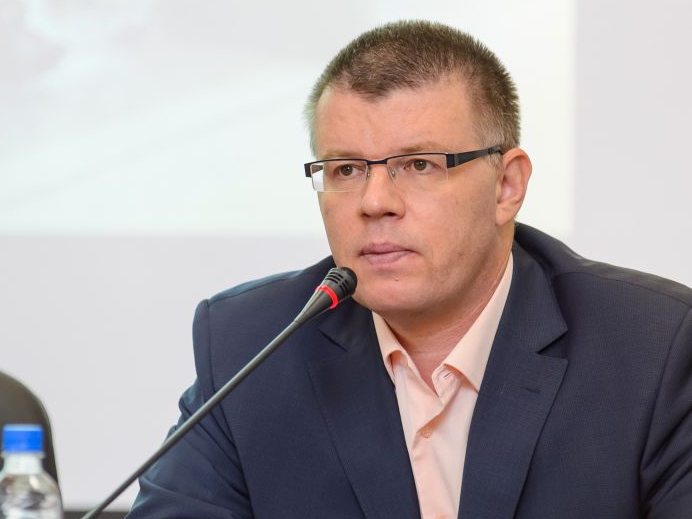
Former Executive Director of the Russian Anti -Doping Agency (RUSADA) Nikita Kamaev, who died last week, as it became known, was going to write a book about the situation with doping in Russian sports. Shortly before his death, he invited the British journalist David Walsh to become a co -author of the book, which had previously unknown facts.
Kamaev wrote a letter to the editorial office of The Sunday Times on November 21 last year - three days after the World Anti -Doping Agency (WADA) recognized Rudad not corresponding to its Code. In it, he asked for the contacts of the sports editor of the publication David Walsha. When the British journalist answered, Kamaev told him about his idea and offered to become a co -author of the future book.
According to Walsh, having information and facts that have never been published before, the functionary wanted to tell the history of sports pharmacology and doping in Russia. Since the 1980s, Kamaev worked as a junior employee in the secret laboratory of the Institute of Sports Medicine of the USSR. He was prompted by the last doping scandal, which led to the resignation of the entire leadership of Rusad, to begin writing memoirs.
“Immediately after graduation, he (Kamaev) was engaged in sports pharmacology, conducted serious research. He had a lot of teachers in this area. He professionally knew the doping problem in terms of using prohibited substances. He model this in action in due time. And most importantly, of course, he was not indifferent. He was very difficult to worry about the injustice in relation to the country, the service, probably, also affected. The main thing for those who stand at the helm are more likely to treat people, ”said Ramil Khabriev, ex-get director of Rusada in an interview with R-Sport .
In early February, another high -ranking official Rusada Vyacheslav Sinev died. He headed the agency from the moment of his formation in 2008 until 2010. A series of deaths of former employees of the Central Anti -Doping Organization of Russia occurred against the background of a scandal, which led to the suspension of the functioning of the Russad and the disqualification of the All -Russian Athletics Federation (VFLA).
In August last year, the German ARD television channel released a film investigation about the mass use of doping athletes. The media had blood tests at the disposal of five thousand athletes. It turned out that a third of medals in endurance competitions at the Olympic Games and World Championships from 2001 to 2012 were won by athletes, whose blood aroused suspicion. Most of them are Russians and Kenytsy.
WADA has created a special commission to investigate the charges on German television. As a result of Rusad and WFLA, they were recognized involved in the concealment of the facts of use by Russian doping athletes. According to the published report, the former president of the International Athletics Federation (IAAF) Lamina Diack, who received personal benefits from this, provided their assistance in this.
WADA was also suspected by the Ministry of Sports and the FSB in interfering with the work of the Moscow Anti -Doping Laboratory, which regularly silent the positive results of doping tests. The report says that at the end of 2014, 1417 doping tests were destroyed in the laboratory. All Russian athletes were removed from competitions under the auspices of the International Association of Athletics Federations (IAAF). The agency transferred a significant part of the information to Interpol for further investigation.