
Translated material
The revolution is horizontal
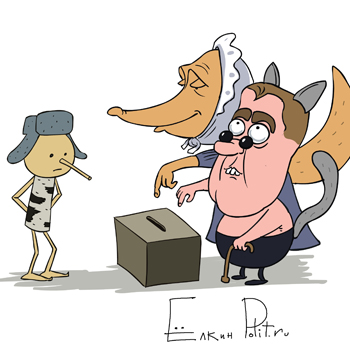
From the moment of Sunday “elections”, both events and moods in society have developed so rapidly that it seemed absolutely superfluous to fix your understanding of the situation - the score went to the clock, and not to the cycle of preparing the material. There was an unusually a lot of simple journalistic work, there was simply no time to be distracted by the speakers. But neither rallies on December 5 and 6, nor mass detentions and a harsh reprisal against participants in these shares, nor quite unexpected for, say, expectations of a week ago the crowding of the rally on December 10, my impressions of what was happening did not change. Now, having waited for the information pause in the events, I want to share my rather banal considerations. I apologize to readers in advance for a certain confusion - the current pause is similar to a temporary slowdown, and there is no opportunity to make a calm analysis of what is happening yet, at least, I do not have.
The appearance of the player
The essence of the most analysts that occurred on December 4 is as follows: there was a significant falsification of the elections - this became known - people in separate cities began to show discontent. But this is not news. In the summer of 2011, the Levada Center polls showed that the vast majority of citizens consider the elections to be falsified -54% expected that the elections would be “dirty”, and 49% awaited falsifications. The novelty of the events in another: about falsifications became known not from above, not on the side, but from below - ordinary people saw it with their own eyes, fixed this on their phones and cameras, told about this in their own words. Only in Moscow and only from among the participants of the “Citizen Observer” project, there were several hundred independent observers in polling stations, and in addition, there are people who signed up for observers from Yabloko parties, the Communist Party, SR and LDPR - there were also many people who did not carry out the party task, but spent their precious time on registration, trainings and the observation process itself.
It is this phenomenon that is a fairly massive participation of ordinary, often apolitical people in direct civil and political action - the most significant today.
Today, something that has never happened in Russia, with the exception of the era of perestroika and the subsequent short -term era, is the politicization of society.
The stories of observers and eyewitnesses of violations written by themselves and posted in their own blogs and accounts on social networks are the element of the information picture of the last week, which brought the situation to boiling.
To understand this new phenomenon, which I call the horizontal revolution , not only and not so much fixed facts of falsifications, not so much recorded by observers and the fact that these facts have become widely known. It is important, first of all, how exactly the observers spent their time on December 4 and on the night of December 4 to 5. I worked in a mobile brigade of journalists (in other words - we traveled in the most problematic areas and interviewed eyewitnesses there) with my friend Dmitry Golubovsky, editor -in -chief of Esquire magazine, and - without irony - had the honor to talk with many people who decided to be observers. During the Sunday and the subsequent week, I also managed to talk with many people involved in the elections - with members of the PEC and TIKs. I can’t boast that I see the picture quite clearly, but I will describe some significant nuances of the accomplished.
Society - from the word communication
The observer is located on the site from the early morning - it is registered before the election, that is, earlier 8 in the morning - until late at night, when the calculation of the votes and the execution of the protocol ends. Some of my respondents issued copies of protocols later than three in the morning.
All this time observer is observing. According to the plans of the “election” organizers on December 4, the observers should have sitting on chairs remotely from the urns, which were also obscured by the observers at all the plots (in the section No. 1 in Moscow-a New Year's Christmas tree, a column imposed on the other site, and the stream of voters, on the fourth urns, stood in a separate gear, which had an additional service door). They also tried to forbid observers to walk around the voting room, conduct photo and video shooting and tried in every possible way to expel them (in many sites - successfully) when trying to pay attention to the PEC to violations and write official statements.
Most independent observers did not agree with the role assigned to them and performed their work conscientiously and according to the letter of the law. This was perceived in the bayonets of the PECs and their chairmen - as the chairman of the section No. 1 put it, Boris Bobrovich, who set the record, expelled the observer from the LDPR Alexander Kondrachev (see interview with Kondrachev) half an hour after the start of the vote, “the young man probably participates in the elections, and he does not quite know his rights and his actions. The fact that he started in the morning is a little incorrect. He began to shoot books (I mean the books of voters whose shooting is really prohibited. Kondrashev denies what he did, and after Tick did not accept the chairman’s statement, nor Kondrachev’s appeal, this observer was removed from the section No. 1 with the help of the police - G.O.) . I don’t know who pumped him up there, who conducts them there, what kind of instruction there, my task is the main thing: in order for the sites to be calm, comfortable for citizens to vote. ” In itself, symbolic. According to my personal observations (6 sites), from about 10 a.m. until the end of the vote, the situation in the plots was indeed restless and not comfortable for voters, but the extremely nervous members of the election commission created it, who tried to impede the work of observers and covered, sometimes, as the observers said, literally with their body, and other violations that occur. But now another thing is more important to me:
Observers were put in such conditions that their work turned into continuous communication. Instead of eyes, they had to mainly use the language.
Who did the observers communicate with? The procedure is important here. In order to submit an application for violations, the observer must sign it from eyewitnesses - voters or other observers. Then it is necessary that the election commission accepts the application - that is, also signed. In turn, in order to file a complaint against observers, and even more so to remove the observer, the precinct election commission also needs several signatures of the PEC members, which usually have representatives from various parties. In addition, police officers are on duty at the site, often a district police officer, and TIK members should call on the site. This was the circle of living, full -time communication of observers on December 4.
Almost all observers I interviewed had to fight for each of their actions - starting from movement around the hall, conducting video and communication with PEC members, ending with monitoring the progress of voting and receiving a copy of the protocol. This struggle caused the need to find a common language with all participants in the presentation in one way or another and somehow affirm their authority. Observers in precinct polling stations-it was a kind of role-playing game, Russian society in miniature.
The pressure of the vertical - in this case, the members of the WIKs and its chairmen - led to an amazing result. The fragmented, atomized Russian society began to glue. Observers from completely different parties and independent observers, united by a common goal of preventing falsifications, were able to find a common language. An unintentional picture, when the Moscow post-inteligent or hipster on an equal footing and respectfully communicates with the Communists or LDPROV, on December 4 became a reality. The most amazing, many most cold -blooded and reasonable observers managed to create a trusting relationship with the UIK members, and an absolutely amazing result - these are gratitude to police officers, which I heard at once from several observers from various sections.
I will give several characteristic comments of observers: “By the middle of the day, the situation began to change. The chairman said that he wanted everything to be honest, and that for this we should work together. From this moment it became easier. Members of the commission and even observers from EP began to consult with us, ask how we believe how many voters were, ”says Daria Romanova. “By the end of the day, relations with the commission became very tense, but she had to reckon with us,” says Anna Margolis. “We have achieved on our site that level of authority, without which it is impossible to work. In particular, some members of the election commission eventually consulted on procedural issues with observers, ”says Yakov Borzenko. In addition to these comments, I included in the material for the Great City, observers noted: “There were excellent police. The district police officer and a boy of about twenty. By the end of the day, only with them it was possible to communicate normally, ”Margolis told me. “It seems to me that the commission members realized that we seriously approached the matter, we really observe and that it is important that we are not enemies,” said Romanova. “What is surprising - the police worked absolutely correctly,” Volina emphasized.
The inability to find a common language with each other, and even more so - with the police, representatives of the authorities and people of another political orientation until December 4, was considered a characteristic feature of Russian society. Observers have proved that this is not the case today. “I am under great impression of what happened and is happening in society. Yesterday on the site I talked even with a united Russia - it was interesting to understand what kind of people were at all, ”the observer Anton Polish told me, in his free time he was engaged in art.
People vertically
Why do I consider the emergence of several hundred independent observers and their communication with each other and representatives of the authorities so significant that only this phenomenon is ready to call the horizontal revolution? Modern Russia is characterized by an extremely low level of social trust. It was trust, as Francis Fukuyama showed in the book “Trust. Social virtues and the path to prosperity ”(M.: AST, 2004), and is the foundation on which civil society is built with its associations, non -state organizations and other institutions of developed democracy. Society and communication is impossible without one degree of trust, and at polling stations on December 4 the most important were not falsification, not the origin of the “revolution” with its rallies and the requirements of political changes, but the emergence of trust and groping a common language between split parts of society.
Why is there such a low level in Russia, and whether the strong and centralized supreme power is a consequence of a deficiency of trust or its cause is not the topic of this article. But the very fact that the vertical of power exists in conditions of a low level of social trust, that is, when people poorly trust each other, it is extremely important for understanding the situation. Power is strengthened by a shortage of trust, and this deficit creates. Moreover, the low level of social trust has long convinced the authorities that society as a significant component of the political game does not exist at all. What could be observed in the elections and on the events that followed him, it shows well that power and bureaucracy were absolutely not ready for the emergence of a new player.
It should be understood that both society and many experts do not fully realize what Russian power is, and how it is arranged. This is mainly information for official use, and on open sources - public statements by politicians and officials - to make an understanding of the device of the Russian management system close to reality. Meanwhile, both the officials and the rule of the politicians have a completely different mentality and another idea of the country and its inhabitants than the Russian citizens themselves.
The clash of these two worldview approaches occurred on December 4: the horizontal rested on the vertical - or the vertical broke under the pressure of the horizontal.
The vertical of power is, of course, an abstraction. It consists of people whom I propose to call people a vertical . I had previously had the experience of communication and interaction with people of the vertical - I worked in FSUP for almost a year, and also held a book festival for budget money for two years - but only on December 4, observations became sufficient for any generalizations. So: people vertically think in general in another language, other categories, and with horizontal people - by society - their concepts practically do not intersect if they take out general discontent with traffic jams and inflation as brackets. Their status and career are not associated with the effectiveness of the fulfillment of the duties that the state has on them and the quality execution of which the population expects from them. They are not afraid of complaints, critics and discontent from outside - they are only worried about the situation inside the system, and, in fact, even in - they completely depend on their position within the “team”, that is, the primary cell of the informal system of the Russian bureaucracy.
The idea of the structure of modern Russian authorities and bureaucracy convexly gives the book of sociologist Anton Oleinik “Market and Power: the system of socio-economic domination in Russia of the“ zero ”years” (M.: Rosspen, 2011), which is based on 116 deep interviews with “high-ranking officials, experts and businessmen”. Everyone who is trying to understand modern Russia should read it - with all the scientific fundamental monograph, Oleinik writes it with a language available to any competent person. The essence of the systems that has developed in Russia will be understandable if I simply give some words and concepts from the “Book of Codes”, which is built on these 116 interviews. About officials: "Team, other teams, a circle of communication, informal ties, a clip." The vertical of power is described by the following words: "Executive discipline, control mechanisms that verify, tied to personality, there are no levers, sabotage." Or here are the words from the section “Coercion”: “It is afraid, pressure, so that others are disbelievable, the fear of dismissal, compromising evidence.” Positive incentives: "Business motivation, give money, bonuses, loot, gingerbread, get an apartment." The very end in itself: "Power-ownership, hold on to the chair, the survival of the structure, the continuity of power."
There is a widespread opinion that members of the precinct commissions are mainly formed from state employees - let's say, of the same school teachers in which voting takes place. This is still partially true, but only partially: among the members of the PECs and, moreover, the chairmen of the commissions are occupied by the vertical people. Again, it is enough to look at the procedure: the members of the PEC are appointed by TIM, which in turn is formed by the head of the district council. A member of one of the ticks Leonid Konstantinov told me in an interview that the members of the Ticks are selected solely on the principle of “loyalty of power”. TIK is a key link in the elective procedure: this commission not only approves the PEC composition, but also accepts or rejects applications and complaints about the PEC members and certifies the protocols of voting results before sending them to the CEC.
Here with such people a vertical, and not at all with teachers and firefighters, and independent observers on the voting day met face to face, and they fought with them and they approved their statements on violations and falsifications.
What is the result? I will try to formulate a vertical in the language of people: the executive discipline of the team due to excessive pressure, the absence of levers and informal ties with observers, as well as due to the lack of mechanisms of control over observers, the absence of fear of dismissal, the lack of compromising on observers and an ill-conceived policy of positive incentives-gingerbread and loot for observers were not valid, as a result of which there were a failure, as a result of which separate Representatives of the teams allowed themselves to resort to sabotage, which in the whole city in Moscow put the survival of the structure at risk, and the continuity of power - to a big question. Together, this led to a real opportunity - at least for some members of the system - to lose power -ownership, the possession of which is tightly tied to personalities and chairs.
If such a language is not entirely clear to you, I will translate to my own:
On December 4, the horizontal began to plunge the vertical, and tilting it for more than a week. The vertical was bent and began to approach the horizontal position,
And individual members of the vertical - see at least my interview with TIK member Leonid Konstantinov, but there are more and more such evidence - they began to leave the system, feeling in the ranks of the horizontal in greater safety and comfort.
Horizontal goes outside
Already on the afternoon of December 5th, when the Internet and social networks were filled with the stories of observers, it became clear that the socio-political situation in Russia became different. Closer to five in the evening, when in the Facebook group several thousand people declared their plans to reach a rally against dishonest elections for purebred boulevard, the word “Revolution” increasingly began to appear in the statuses of users of this social network and in the comments of experts. At 17:30, the editors of the “Big City” perspicively abolished a large report about observers and falsification in the elections that I just started writing - the situation has changed so much that the Sunday elections that ended only less than a day ago were no longer relevant, but a historical event.
The atmosphere of Monday rally and its unpredictable large number is well documented by the press. Back on Sunday, when communicating with observers in the sites, I had an analogy of the current social situation with Facebook, but at a rally on December 5 this metaphor cried out completely: what is happening not only according to people participating in events, but also by the manners of their communication, mutual support and transfer of information from the mouths of the mouth (performing from the stage were simply not heard) resembled Russian The Facebook segment, which suddenly found himself at the same time in the same place, and offline.
The nature of the horizontal culture is shown brighter than what happened after the rally on Chistoprudny Boulevard. In this article I will not go into why, why, and whether people moved to the Lubyanka correctly. Personally, I was handed over to those standing in front, which was proposed to disperse peacefully towards the metro through Lubyanskaya Square. In order to pass the mash in the Pure Ponds metro station, it was reasonable, but as a journalist I was wondering how this discrepancy in the houses would end. Friends and colleagues and I freely reached the Lubyanka in the Maroseyka, where they were practically the only ones, if we did not take into account the mass of employees of internal troops, police and a huge number of buses and vehicles close in their properties to armored personnel carriers. Having noticed the close surveillance of police officers, who literally followed us on the heels and talked about us by walkie -talkie, we decided to go to the Club "Workshop" and wait for the development of events there. 50 meters from the club, events changed: right on us-and for an hunting row-a crowd of very young people ran out, who shouted something and waved their hands. Thirty seconds later, their appearance received an explanation: several dozens of camouflaged people with clubs and in helmets silently fled behind them along the roadway. The internal troops - if they were - played for quite some time with Protestants of an incomprehensible political orientation in Salki, squeezing them to the roadway, then to the State Duma, and then locked them for some time in Mecca of Luxury and Boutiques - the theater passage. We ourselves were surrounded, or, as they say on the streets of the Revolution, in the “box”, and after one of us, the correspondent of Echo of Moscow Alexander Borzenko, employees of the power departments detained and threw him into the bus, regardless of his press card, and the other journalist, his brother Andrei Borzenko, jumped into the bus on his own and, waving a journalistic certificate, after all, all the same He freed his brother out of the hands of a vertical, went to the club, since we were locked right in the club’s courtyard.
Pretty quickly I began to arrive calls and SMS from friends with reports that they were detained on Myasnitskaya Street. Heating and drinking cognac in the “Workshop” has become morally unbearably unbearable, and the only possible solution occurred: to continue their journalistic work, in this case, to find out from the Moscow police, for which my friends were detained and where they are kept. In the end, we found out the information on various detainees, but the primary motivation was to save friends. The editor of Lenta.ru, Alexander Polivanov, described a similar situation in the article “Revolution of Friends” .
All further is not my personal experience, but the continuation of the horizontal revolution. My friend Mitya Tarnovsky, who has nothing to do with journalism, immediately volunteered to accompany me by car and, together with other journalists, we immediately organized a “mobile group of journalists”, which arranged a “carousel” on the police department, where the detainees were kept. From a professional point of view, it was an interesting night, but for this article it was important: firstly, the overwhelming number of detainees-and about 300 people were detained that day-were not political activists who are familiar to rallies and detentions. These were ordinary Muscovites in whom the Sunday show caused a gag reflex. Secondly, a huge number of people grew up to help the detainees-in fact, in a couple of hours we managed to organize three mobile groups-and even more people did it without any connection with us: they called it to the police department, went to the detainees, arranged pickets near the walls of the police department-deep night.
The amazing activity of citizens received its bright continuation in the afternoon of December 6, when the detainees began to bring food, warm clothes and other things necessary in prison. That evening, an unknown, but more than impressive number of people, who was not agreed with the city authorities, was not agreed with the city authorities, and, as regulars of triumphal protests on the 31st of the month told me, they were people unusual for detention and rallies in general. That evening, about 5-6 hundred people were detained, and the manifestation of civil support in the police department continued. The result was obvious: if the detainees on December 5 was charged with Article 19.3 of the Code of Administrative Offenses and then it was awarded from 2 to 15 days of conclusion, then in the majority of the ATS on the night of December 6, the detainees were already incriminated by a softer article 20.2 and only fined 500-1000 rubles, letting go of the same night (an interesting exception-Danilovsky ATM, where the well-known journalist sat a well-known journalist Arkady Babchenko.
Society is never an abstraction, but a concrete historical community. Watching the development of moods on December 5-6, noting which people began to go out and then help the detainees, I established myself in my conclusions, made after observing Sunday trends in polling stations. At a minimum, in Moscow, the formation of society suddenly began - by communication, acquaintance, coordinating their actions and confronts the vertical to people. And a separate observation:
The community of the Moscow post-intelligence began to leave the ghetto, which it created with your own hands, and calmly began to communicate and interact with other strata of society.
Splash in a political swamp
Events on December 4, 5 and 6 prepared the ground for the mass rally of protest on December 10. I am far from revolutionary euphoria, and the rally on Bolotnaya does not seem to me either a victory or even the fixation of the achieved. An important fact for analysis is that people not only perceived this rally as their own, but also arranged it themselves - amateur performances as began on December 4, and did not end: people independently composed and distributed leaflets, discussed on Facebook, the composition of the speakers and the strategy of further actions.
Everyone noted that the opposition managed almost the first time in the recent history of Russia still managed not to quarrel and agree on a single venue for the rally-Bolotnaya Square. But it is important to me not this fact, but the fact that opposition leaders agreed under a too tangible pressure of the horizontal, which actively manifested in social networks the willingness to go to any area and with any speakers, reasonably considering this rally not assigned to anyone other than the protesters themselves .
In fact, this was the first mass rally over the past 20 years, prepared not by quasi-vertical-leaders and functionaries of political organizations -but directly horizontal people. And this is the most important milestone in the socio-political history of Russia. As a 40 years ago, in his conversation, Michelle Foucault and Gilles Delez (intellectuals and power. M.: Praxis, 2002) formulated that the political leaders of the new formation should not be represented, but directly represent their own interest. A rally of December 10 is a rally of those who are of their interest, and not representatives.
Those political leaders who coordinated this rally, and those opinion leaders who acted from the stands are now facing the choice: either disappear from the political card, or change under the pressure of the horizontal
(to the honor of both the organizers and the speakers - many of them have already changed). But, one way or another, they are not the salt of the moment today - that people came to the square did not listen to them, but only the lazy did not speak out to see each other and show their power. Yes, and, as eyewitnesses say, it was heard badly - the not that number of people are in the not that number of leaders.
I will add a spoonful of tar to a beautiful picture: in the rally held on the Swamp Square, the moment of defeat is extremely significant. This rally in many ways personifies the old Kremlin policy of the opposition selection. If Eduard Limonov, who was fundamentally left with a small support group on the Revolution Square, is the blacksmith of his misfortune, then the situation with Alexei Navalny and Sergey Udaltsov, who are on the verge of heading the left wing of the emerging opposition, were simply physically not allowed to participate in the rally. Navalny, as you know, received 15 days when being detained at a rally on December 5, and the motives may give him such a long term - in particular, to prevent the presidential extension procedure, since this can only be done until December 15th. With Udaltsov, the leader of the Left Front movement, the situation is completely clear: he was detained on December 4, while trying to go to the “civilian gathering” organized by him on Red Square, on December 10 was forced to be taken to the hospital, where he was again detained and taken to the court-“I was again detained“ December 10, again detained directly in the hospital due to his own detention due to his own detention A hunger strike, and, having taken him to court, sentenced to 15 days. Such selection is an extremely important factor that allows you to more accurately understand the essence of the occurrence on December 10. The authorities saw the horizontal, but she wants to not notice it with all his might and is trying to turn off the most dangerous horizontal elements for her again, flirting with the most calm and easiest to manage part of Moscow society-post-intelligence and hipsters.
Hipsters Welcome
The selection moment of the rally on December 10 is appropriate to place in the citywide context of the last year. The removal of Yuri Luzhkov from the post of mayor of Moscow occurred after not quite massive, but very active and supported by a variety of economic and political agents protests against the Luzhkovsky Plan for the transformation of Moscow - the so -called. General Plan-2025. The new mayor, Sergey Sobyanin, who had replaced Luzhkov, almost immediately began to include young and active Muscovites - the so -called. “Hipsters” - in the field of their attention and care. For example, the head of the Department of Culture of the capital was appointed young, professional and sympathizing with the conditional audience of Krasnoye October Sergey Kapkov, who part -time is part of the United Russia General Council, and previously worked as a technologist for Roman Abramovich. Prior to this appointment, Kapkov managed to win the sympathies of Muscovites with quick and radical transformations in the CPPPO named after Gorky, who led a short time and really made a place pleasant for walking and picnics.
A similar inclusion of post-inteligenery and hipsters in the scope of attention and care of the state is a competent policy of the authorities to reduce the intensity of discontent, but it seems that it was undertaken late. However, this attempt looks serious and thoughtful, and it is connected not only with the political moment, but with changes in the elite. Luzhkov’s displacement and the subsequent press of investment contracts in Moscow, in my opinion, are due to the fact that the old Luzhkovskaya guard of the capital's bureaucrats did not allow the capital of federal significance to the Moscow construction sites, allowing Moscow to build almost only to its Moscow companies. The parish to the capital after the resignation of Luzhkov’s capital from the first hundred of the Forbes list speaks in favor of such a version. There is another point - the capital of a federal scale is accustomed to the social responsibility of the business imposed by the authorities and can easily include the costs of satisfying the public request of hipsters in their investments. It is not a secret that in the development of the Strategy for Renovation of the Gorky Park, and in the further undertakings of Kapkov a significant intellectual contribution is made by the Institute of Media, Architecture and Design of Strelka, created by a sane billionaire Alexander Mamut and the founder of the magazine "Poster", an equally reasonable ancestor of the social stratum of the hipsters Ilya Shardovkov-cyper.
Why is it worth considering this stratum of Moscow Society in this article in such detail? Hipsters are that part of the Moscow horizontal, which has already forced people to take into account their interests. This is respect. Today, hipsters defend the common interests of the horizontal, but the moment of the opposition’s selection at the rally on December 10 and the inattention to this situation from the leaders of opinions among hipsters gives a signal that the new players are not quite ready to include new players.
Sketches of the future
Who is the horizontal revolution? I am sure that both the society itself, together with the non -systemic opposition, as well as certain “teams”, which are quite comfortably feeling in the system, i.e. elite. However, in this article I am not directly interested in the political development of events - whether the re -election of the deputies will be, whether the presidential elections will be postponed, and who will ultimately take power seats. I am interested in the social essence of the events and the manifested mechanisms of institutional changes.
Two weeks before December 4, the editor of the comments of the Vedomosti newspaper Maxim Trustlyubov presented among journalists, experts and politicians his book “Me and My Country: General Affairs” (M.: Moscow School of Political Studies, 2011). Trustlyubov writes about how “mechanisms of civil participation, solidarity and responsibility” are built for the country - that is, about the institutions of public, political and economic, from which Russia is suffocating from the deficiency and poor quality. To a question from the audience, in his opinion, changes in Russia will take place, the worklubs answered that, in his opinion, the revolutionary path will not lead to positive results, and real changes are possible only through the education of responsible elites, that is, through mental changes in those who rule, or among their children and those who rule the rule.
Like the worklubs, I adhere to more than radical views on the future of Russia, and in general-rather Libertarian, rather than left-wing views, but I will allow myself to disagree with this rather common, due to the grafted 1917 and 1991-1993. rejection of revolutions, position. Watching the events of the last weeks, I was only convinced of the old opinion that without pressure from below the elite did not change. In order to change the Russian institutional structure that has developed back in the days of tsarist Russia and the Soviet Union, the country needs not so much the revolution itself as the constant threat of the revolution, and it is the left revolution.
The hope of the elite also embarrasses me by the fact that the modern theory of the elites has still poorly comprehended those changes that have occurred worldwide over the past ten years, and does not completely explain the mechanisms of the origin of the new elite and leaders of opinion in the information era. Reputations, influence and social statuses of accounts in social networks and the world of horizontal are built faster and otherwise than in the hierarchical world of offline.
The main problem of both network elites and their analysts from the offline Think-Tanks is a mechanism for converting network reputation into real. Last weeks show that the Internet is not at all a parallel reality, and an exchange rate when converting statuses from online to offline is more than acceptable.
Ten years ago, my university teacher of computer science told students at lectures that if you do not have his own page on the Internet (then it was called a “hamster”, from the English. Home Page), then you do not exist at all. How full of today's elites with power-ownership are aware of the real, and not the propaganda-medical meaning of these words?
Internet power is not on the Internet
A little more than a year ago, in March 2010, another godmother of the hipster movement, a sensitive observer for reality and the bright intellectual Yuri Saprykin, at that time the editorial director of the Publishing House of Poster, wrote the sensational column “ The Great Premost ”. В ней он писал о том, что кухонный протест сегодня сводится к расстановке «like'ов» в Facebook'е и не выходит за рамки виртуальной действительности. «Протест сводится к нажатию кнопки на клавиатуре и дальше никуда не ведет», - писал Сапрыкин, и заключал, что «если вся протестная энергия тратится на перекидывание друг другу смелых честных роликов, то беспокоиться, в общем, не о чем».
При глубочайшем уважении к Сапрыкину, мне в этих словах видится определенное непонимание сути масс-медиа и некоторое пренебрежение к слову как таковому, не восприятие информации как набора слов и смыслов, а отношение к информации как к «контенту».
Создание и распространение информации — это деятельность, которая на протяжение всей истории западного мира имела и продолжает иметь колоссальное общественно-политическое значение. Это работа со словом, или, как любят говорить технологи, маркетологи и прочие любители французской философии — «работа со смыслами». Что в политическом плане важнее — 60-150 тысяч москвичей, вышедших 10 декабря на Болотную площадь (прямое политическое действие), или несколько сот тысяч людей с кругом друзей в 60-150 человек в социальных сетях, которые рассказывают о происходящем своими словами, тем самым создавая новую смысловую и медийную реальность, не могу с уверенностью утверждать. Но думаю, что митинг 10 декабря без таких кухонных протестантов попросту не состоялся бы. Две тысячи лет назад было сказано: «В начале было слово». Верно и сегодня.
Зарождение нового мира
После Арабской весны многим наблюдателям — и в России, и в других странах — стало казаться, что роль интернета и соцсетей в политической жизни серьезна, и эта роль ими понята верно. Отечественные технологи даже уверены, что они с этой новой реальностью научились работать — посмотрите, например, письмо членам «Наших», ставшее достоянием гласности незадолго до выборов, или вспомните про DDoS-атаки на Livejournal.сom и ряд критически настроенных интернет-медиа в день выборов и накануне его.
Но я бы не спешил с выводами и прогнозами. Интернет сегодня находится в самой зачаточной стадии своего развития, и я думаю, что если спросить, как видит будущее интернета создатель Facebook'а Марк Цукерберг, он вряд ли выдаст готовый и правильный ответ. Я слежу за развитием Facebook'а c 2007 года, и более динамично развивающегося сервиса я не видел. По моему мнению, разработчики Facebook'а свои идеи черпают из общества и общественных наук, а не предлагают пользователям какие-то новые социальные идеи. К примеру, самый знаменитый функционал Facebook'a – кнопка “like” - это практически точное воспроизведение модели «социального поглаживания», разработанной Эриком Берном в книге «Игры, в которые играют люди. Люди, которые играют в игры» (М.: Эксмо, 2008). Интернет вообще и Facebook в частности развивается вслед за обществом, а не провоцирует изменения в обществе. Однако то, что сложившаяся в Москве ситуация была бы невозможна, если бы на смену ЖЖ, крайне неудобного с точки зрения быстрого общения, распространения информации и координации действий, не пришли бы Facebook и Twitter, - очевидно, и далеко не случайно, что незадолго до выборов Facebook стал более популярным среди русскоязычных пользователей, чем Livejournal. Значимо также и то, что Livejournal подконтролен российскому капиталу —и этот ресурс легко поддается DDoS-атакам, а Facebook не подконтролен российской вертикали вообще, и его защита не допускает DDoS-атак.
Но для того, чтобы нащупать образ будущего, я бы обратился не к Facebook'у и другим соцсетям, а к гораздо менее известному среди широкой публики проекту — к Linux'у. Создатель этой операционной системы Линус Торвальдс не обладает таким признанием широких благодарных масс, как покойный Стив Джобс или Марк Цукерберг, но именно он — родоначальник движения «открытого кода», когда программисты пишут код и ищут ошибки в чужом коде бесплатно, оставляя возможность любому программисту улучшить программу и использовать уже написанное.
Торвалдс, в отличие от Цукерберга, создал действительно иную реальность, в своих основах отличную от доминирующей в обществе. Это не еще один сервис (yet another service) с инновационным набором инструментов — это еще одна реальность (yet another society), реально функционирующая модель общества, построенная на иных, внеэкономических мотивациях и моделях поведения.
Открытый код и добровольная деятельность на благо всех — пустые слова для людей вертикали, которые, впрочем, предпочитают использовать именно Linux для своих правительственных серверов. Для горизонтально-ориентированных людей Linux-модель уже становится каждодневной реальностью, без которой невозможно обходиться.
Есть и гораздо более известный пример новой реальности — это Wikipedia, которой ежедневно пользуются как справочным аппаратом люди во всем мире. Она бесплатна для пользователей, создается также бесплатно и при помощи взаимодействия всех пользователей этого ресурса. Я бы рискнул заявить, что если французская революция наследовала эпохе энциклопедии, то назревающие в мире изменения будут впоследствии названы эпохой Wikipedia.
The end of stability
Перечисленные мною изменения пугают многих. Не только властвующую элиту, не только консерваторов и охранителей. Пугают и вполне аполитичных людей. Боязнь перемен, потеря стабильности и непредсказуемость, которая свойственна истории вообще, была выражена членом «Единой России» и талантливым актером Федором Бондарчуком еще перед «выборами» 2007 года одной емкой фразой: « Ребята , так хочется еще этой стабильности !»
Этот страх перед неизбежным вовсю эксплуатируют люди вертикали. Тут я хочу привести длинную цитату из интервью с одним из наблюдателей, художником Антоном Польским. На избирательном участке он довольно долго общался с представителем «Единой России», и вот как отозвался об этой беседе мне в интервью: «Я ему рассказывал, что прямо сейчас идет формирование гражданского общества. Дело ведь не только в таком массовом добровольческом движении, как наблюдатели на этих выборах. Были же еще истории с лесными пожарами, вовсю идет тема раздельного сбора мусора, люди вообще начинают что-то делать — тут и теория малых дел, и вообще желание глобальных перемен. И неважно, против кого, — важно само действие. Я это все постоянно всем рассказываю, а вчера вот — единороcсу. Он в ответ пытался меня убедить, что если то, что есть, разрушить, будет хаос, а я его — что общество само приспособится к изменениям». Тут важно каждое слово, но в данном случае меня интересуют слова «общество само приспособится к изменениям». Консервативный взгляд, страх быстрых перемен — это охранительная позиция и попытка навязать несмышленому обществу свое видение будущего.
Общество в России — осмысленное, и все без исключения мировые межстрановые рейтинги и доклады отмечают крайне высокую степень человеческого капитала в России — в частности, уровня образования. Да, массовое высшее образование в России — феномен во многом искусственный, и студентов скорее не учат, а формально аттестуют, о чем много говорит идеолог реформы образования и ректор Высшей школы экономики Ярослав Кузьминов. Но мне не кажется, что массовое образование на Западе значительно лучшего качества, и что уровень российского человеческого капитала – накрученная величина. Так или иначе, лозунг «Россия, ты одурела!» уже не актуален, и крайне жалко, что его создатель, Юрий Карякин, который сказал это в телеэфире по случаю сокрушительной победы ЛДПР на выборах в 1993 году, не дожил до 4-го декабря, когда данные с «чистых» участков показали столь же сокрушительный провал партии ультрапатриотов — ЛДПР набрало в Москве 12,6%, меньше всех из пяти партий, прошедших 7% барьер (хотя даже и данные с "чистых" участков, т. е. участков, где наблюдателям удалось в той или иной мере осуществить свою работу, с трудом можно считать действительно отражающими волю граждан: соизмеримая с фальсификационными технологиями, или большая часть, «результатов» выборов формируется с помощью контроля за самими партиями и за СМИ; мои собственные разговоры с наблюдателями и членами УИКов и ТИКов внушают мне мысль, что и эти «чистые» результаты весьма далеки от истинной картины — наблюдателям удалось отловить лишь не самую существенную часть фальсификаций; то, что происходило при составлении протоколов, работе с избирательными книгами и при оформлении протоколов в ТИКах осталось практически за рамками внимания наблюдателей и мало известно обществу).
Общество в России способно само разобраться и с революцией, и с изменениями, и если оно вообще нуждается в экспертах, то едва ли в тех, которые сами боятся и всячески отстраняются от собственного народа. Это я пишу не в упрек крайне ценимому мною Трудолюбову, чья светлая голова ежедневно спасает нас всех от дефицита грамотного анализа российской действительности и которого выше я успел походя причислить к консерваторам, а по адресу тех диковинных ультраконсерваторов, которые готовы чуть ли не защищать цензуру и фальсификации, замирая в страхе перед людьми, которые продают нам еду в магазинах или готовят ее в ресторанах, толкаются вместе с нами в метро или стоят в пробках, вместе с нами ходят или не ходят на выборы и, в конечном итоге, оплачивают нашу работу посредством налогов или чтения наших текстов.
Завидная возможность России
Ход истории невозможно предсказать, но его можно изменить. Какой будет непосредственный политический результат происходящих в России событий, к чему приведут ментальные изменения в головах граждан страны и ее элиты, как изменится институциональная структура общества, государства и экономики — рано судить. Более того, опыт наблюдения за Украиной подсказывает, что обладающие власть-собственностью не исчезнут в никуда — они останутся при своих активах, лишь сменив место дислокации — свои кресла.
Но та же новейшая украинская история показывает, что главный результат Оранжевой революции не удалось отнять даже новому президенту Виктору Януковичу —
украинцы изменились и стали гражданами, которые готовы отстаивать и защищать собственные интересы.
Я ясно вижу будущее, в котором граждане России не только смогут изменить собственную страну и ее институты, но и смогут затем предложить всему миру новую модель устройства общества.
Арабская весна, популярность и механизмы организации движения Occupy Wall Street и кризис евробюрократии со всей определенностью показывают, что мир сегодня нуждается в радикальных общественно-политических преобразованиях. Накануне столетия революций 1917 года Россия, по моему убеждению, будет способна показать миру новый и на этот раз достойный того пример для подражания.