
Translated material
Cannibal-pop star
The story of the Japanese killer who became a celebrity at home
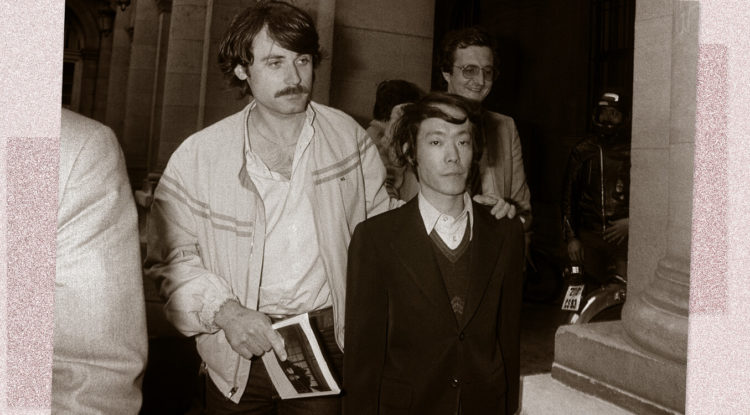
In 1981, in Paris, a Japanese student Issay Sagawa killed, raped and ate his classmate. In France, he was recognized as insane and deported to Japan. Due to the bureaucratic confusion in the homeland of Sagava, he was free and lived the life of a pop star: he starred in a movie, wrote books and distributed autographs. "Cold" tells the story of a killer, whose glory, it seems, was possible only in Japan.
In order not to miss the main materials of the "cold", subscribe to our Instagram and telegram .
On June 11, 1981, a 25-year-old Dutch student Rene Hartwell came to visit her classmate from Japan. They studied together at the faculty of foreign literature in the Sorbonne, and she often helped him learn German, with which the Japanese had difficulties.
His name was Issay Sagava, and he was seven years older than Rene. They began to communicate only at the end of the course. Sagava was low -144 centimeters-because of which he was complex and considered himself ugly compared to Europeans. Rene showed participation to him and called for dinner with the rest of the classmates.
Sagava and Hartwell had a lot in common: they were both foreigners (French students preferred to communicate with each other), both loved literature, theater and culture. At that dinner, they talked a lot, and subsequently Rene even wrote to her parents in a letter that she liked Sagava: he was very sweet, smart and friendly.
In the next weeks, they went to exhibitions together, Rene helped him with German, he called her to visit Sukiyaki ( a Japanese dish that was eaten right during cooking ). On the eve of June 11, Sagawa wrote her another letter in which he called Rene to visit, so that she read out German poetry for a recorder - one of the teachers at the university allegedly gave him such a task.
Having met Rene on June 11, Sagawa led her into his room and sat at the table, on which there were a tape recorder with a built -in voice recorder and poems. Turning on the tape recorder, she began to read aloud, and Sagava stood behind her. Quietly, continuing to conduct a conversation, he went to the closet, standing in the room, took out a small -caliber gun from there - and shot her head.
When the police detained Sagava and asked him why he killed his girlfriend, he replied: "To eat."
Obsession with foreigners
Issay Sagawa was born on April 26, 1949 in Kobe, the administrative center of the Hyogo Prefecture, in a rich and respected Japanese family. His father Akira Sagava was the president of Kurita Water Industries, a large manufacturer of reagents and water treatment equipment.
From birth, Issay developed enteritis - inflammation of the small intestine. The doctors did not think that he would survive, but he was able to save him.
Although the parents and hyper -beeps of Issay, he believed that they were very loving: his childhood was carefree, he was surrounded by nature. At the same time, his family was also traditionalist and very strict: “When I was small, sex in Japan was still a taboo topic. I have never heard my parents uttered the word “sex” aloud. ” When Sagava grew up and he had the first erection, he "was incredibly embarrassed and thought he was sick."
In high school, Sagava was drawn to Western women. “When I moved to high school, I was obsessed with the Western actress Grace Kelly - a situation that has extended until the end of my studies,” said Issay Sagawa in an interview with Vice. He explained his “obsession” by foreigners by the fact that he was always “low, terrible and with a complex of inferiority” - and he was looking for women opposed to him.
Having graduated from school, Sagawa left his hometown in Tokyo, where he first entered the undergraduate, and then to the magistracy. In Tokyo, Sagawa made the first attack - on the citizen of Germany: he was "blinded by her white hips." He found out where she lives, and penetrated her apartment on the ground floor, where he armed himself with an umbrella. He later said that he wanted to stun with an umbrella and, taking a knife from the kitchen, cut off a piece of flesh from the girl to taste it.
He climbed onto the bed and tried to climb the girl, but he touched her stomach with his knee, and she woke up and screamed. The girl managed to fight off from him and call the police. The accusations of an attempt to rape were not put forward - so that she did not, the father of Issay gave the girl a large amount of money.
In 1977, having received a master's degree in literature, Sagava left for France and entered the Sorbonne at the doctoral program of the faculty of foreign literature. After an attack on a girl from Germany in Tokyo, his desire to try the flesh of a European woman only intensified. Having moved to Paris, he often invited the sex workers to him and imagined how he was killing them-he aimed at his head from a gun while they stood with his back, but was afraid to shoot. And then Sagava met 25-year-old Rene Hartwell.
Evening
After the murder, Rene Sagawa abused her body, cut off a piece of flesh and tasted it, and then dismembered the body, stuffing them with a refrigerator. Sagava decided to get rid of what remains of Hartwell’s body only two days later. To do this, he bought two suitcases and called a taxi to the Bulo reserve - a park in the west of Paris.
Helping to put heavy suitcases in the trunk, the taxi driver joked: “Do you have a corpse?” “Books,” Sagawa answered.
“I was stupid and did not know how light it would be at eight in the evening in the summer,” Sagava later told about his attempt to get rid of evidence. On the shore of the lake, in which he wanted to drown the girl, Parisians sunbathed. Before them from side to side, in search of a quiet place, Sagawa ran in a jacket and trousers with two heavy suitcases in their hands.
When he finally found a suitable place, he dropped one of the suitcases into the lake. The random passerby was embarrassed that Sagawa was drowning his suitcases, and he decided to open the second. Seeing the corpse, he shouted: "Killer!" - and began to call other passers -by. In the turmoil, Issay Sagawa just went home.
Four days later, the police made a raid in the Sagava apartment - he was found with a taxi driver. In the apartment, the police found a refrigerator stuffed with parts of the body that Issi left for himself, a dictaphone recording from that day and numerous photos of the corpse.
Sagava was taken into custody. The judge who conducted his case insisted on a psychiatric examination and concluded that Sagava needs to place a psychiatric hospital. The lawyer adhered to the same position. Despite the requests of the Hartwell family to conduct an examination again, they were refused.
While Issay Sagawa expected a court decision, a Japanese writer and translator Inuhiko Yomoto (real name is Goki Yomoto) came to him. Together with Issay, he wrote the biographical novel “In the Fog” (“In the fog”), in which he described in detail the details of the Sagava case. The book was published in 1983 and became a bestseller in Japan. In the same year, Rolling Stones even released the song “Too Much Blood” based on its history.
But the real glory came to him when the “Sagava letters” were published - a collection of letters that he exchanged from prison with the Japanese avant -garde theater director Kara Dzhuro. “Letters” became a bestseller and won the Akutagawa Rynoske Prize - one of the two most prestigious Japanese literary awards.
On May 21, 1984, the French authorities deported Issay Sagava to Japan with a ban on entry the country. At Tokyo Airport, journalists were waiting for him, but as soon as he went down the ladder, he was immediately put in an ambulance, which took him to the Matsuzava psychiatric clinic. Japanese doctors, in turn, recognized him as sane and decided that he committed the murder on the basis of "sexual perversion." After that, Sagava should have been judged already in the Japanese court, but then the system failed.
When the Japanese authorities sent a request to France to get the case file, they were refused . The Japanese had nothing on Sagava (all the evidence in the case was in France), so on August 12, 1986, Issay Sagawa was discharged from the Tokyo hospital Matsuzava and was free.
Gray wolf and red cap
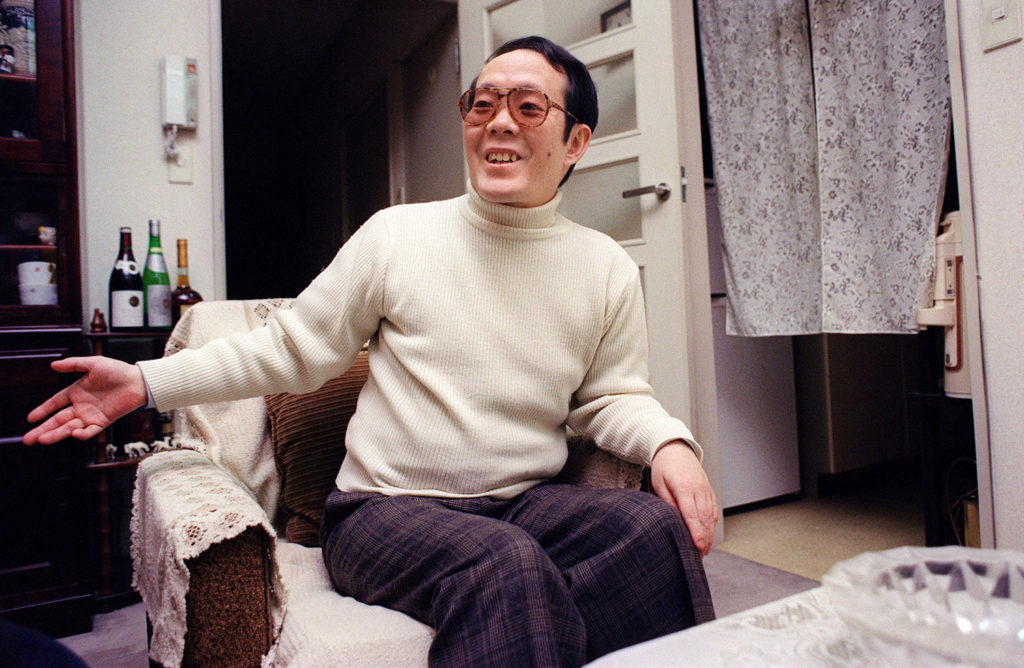
Once at large, Sagawa realized that he had nothing to live on. Then new popularity came to the rescue. In 1992, Sagawa starred in the BDSM Pornophilm in the role of a voyeurist, and in 1995-in the documentary of the director Terry, “Cannibalism is the story of Issay Sagava”, in which he had a close-up of meat, and also played a gray wolf in a parody of a “red cap”, where he ran after the heroine and threatened her that he would eat.
In addition, he wrote books, essays and articles in magazines. In 1995, a book was published - a translation of a psychiatric examination made by French doctors. As illustrations, Issay Sagawa used photographs of the divided body of Rene, included in the case file. According to Sagava, this book was difficult. "[She] should not have been published, but the Japanese want me to sign it for them." In 1997, when the children were kidnapped and killed in Kobe ( then a criminal appeared in the city , who abducted and killed schoolchildren; he left notes written by a red pen in their mouth ), they took an interview with Shonen a . And in 2000, the publisher of Lolita-Manga turned to him ( the genre of Japanese comics, demonstrating sexual relations between an adult and a child )-and Sagawa wrote and drew Sagawa-San based on his business. He himself described this period: “Then a financial bubble arose in the Japanese economy. I could easily put 10 or 20 thousand [yen] on the table, if only I wrote an article. ”
In 2009, Issay Sagawa gave an interview to Vice, in which he admitted that he still wants to eat a person, only now he prefers Japanese women. Then he will even ask the Vice Tokyo editor to turn to all the girls for him, and the editor will do it - ironically: “Hello, all the girls are especially beautiful, young Japanese women,” Issay Sagawa wants to eat you. If you want to be killed and eaten by him, please contact the Vice Tokyo office and we will connect you. ”
In 2013, Sagava had a stroke, due to which he lost the ability to move. From that moment until his death, he needed daily care, which was carried out by his brother or nurse. In November 2022, he died of pneumonia. He was 73 years old. Two years before his death, Sagava gave another interview in which he said that he regrets the murder of Rene Hartwell.