
Translated material
"The people want the fall of the regime!"

On January 25, 2024, Doxa was recognized as an “unwanted organization”.
If you are in Russia or plan to return to it, you can not replace our materials on social networks, refer to them and publish quotes.
Read more about what is possible and impossible, read in the cards .
12 years ago, in dozens of cities of Syria, large -scale protests began against the regime of the Assad family, the ruling country for more than 50 years. Millions of people regularly went to street demonstrations, despite the batons, tear gas, rubber, and later combat cartridges. Gradually, peaceful protests in Syria outgrown into a full -scale war, which continues so far.
Doxa talks about the revolution and war in Syria through the stories of the participation of events from Homs, Aleppo and Daraya.
Editor
Editor
Dasha ManzhuraPublication
March 24, 2023
"Hope grew, and fear gradually disappeared"
On December 17, 2010, inspector_ki conducted an audit in the central market of Sidi -Buzid - a small city in the central part of Tunisia. On that day, a 26-year-old fruit merchant Mohammed Buazizi confiscated part of the goods. During the conversation, according to the memoirs, relatives_z, the police gave him a slap in the face. The young man fury went to the governor’s office, but he was refused a reception. A little later, directly opposite the administrative building, Buazizi committed self -immolation, which became the starting point of the Arab spring - a wave of demonstrations against dictatorship and repressive regimes in the countries of the Middle East and North Africa.
Many people in Syria closely monitored protests in the Arab countries, recalls Mohammad, who studied at that time at Homs: “Everyone began to follow the news. Direct reports from protests were broadcast on all screens. People talked about a series of revolutions at every meeting, whether it was in a cafe or with a family of a house. Surprisingly, the Syrian state media initially covered the Arab spring as folk uprisings, requiring freedom from repressive states.
The Syrian regime maintained protests, because he did not get along well with the regimes of the countries where uprising took place.
By January 14, 10 days after the death of Buazisi from the burns received, the jasmine revolution in Tunisia led to the overthrow of the regime of Zin Al-Abydin Ben Ali since 1987. At the same time, mass protests began in dozens of countries - Yemen, Libya, Algeria, Morocco, Jordan, Lebanon and others.
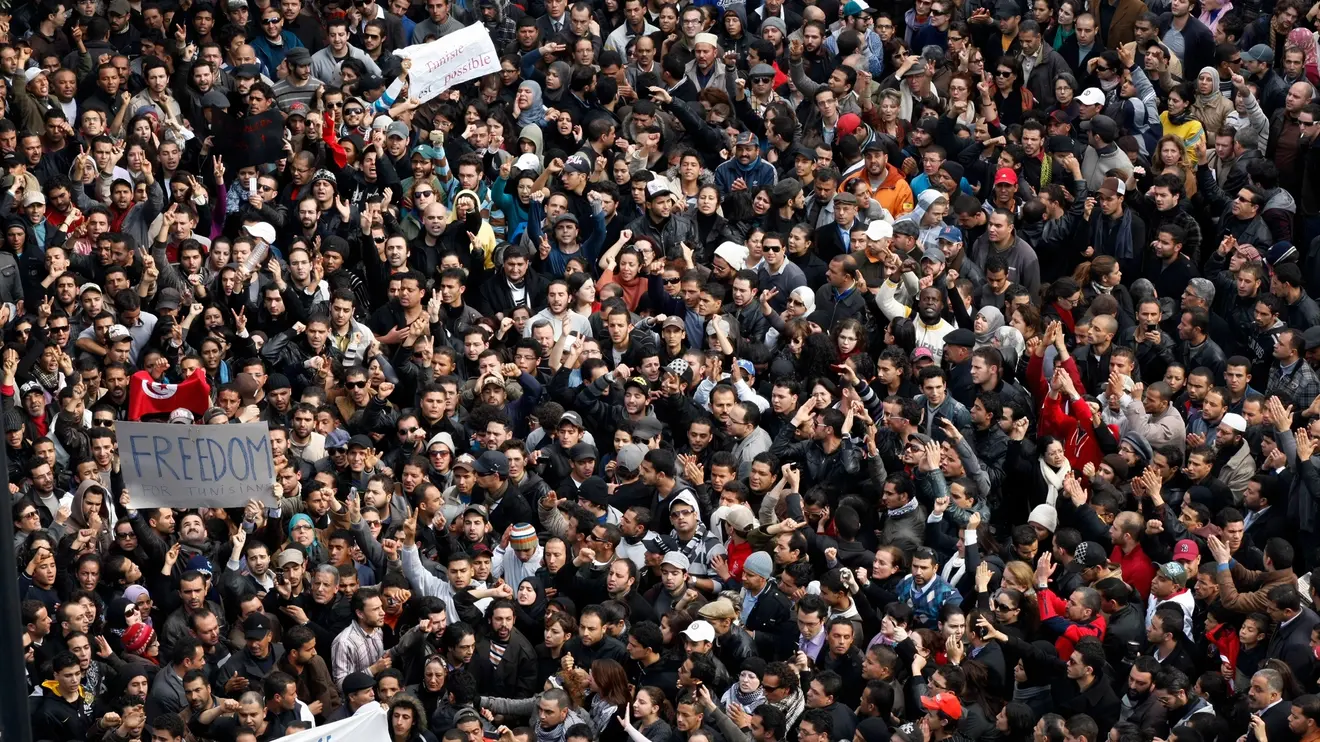
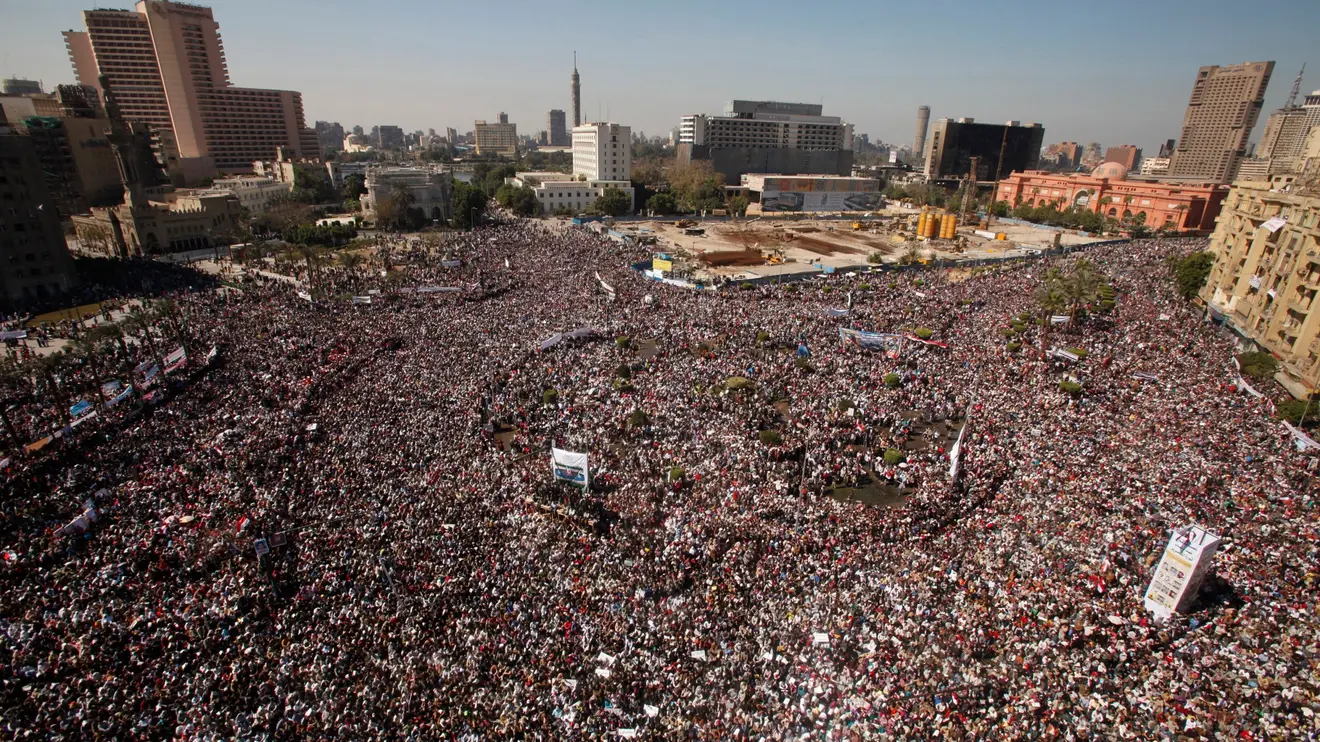
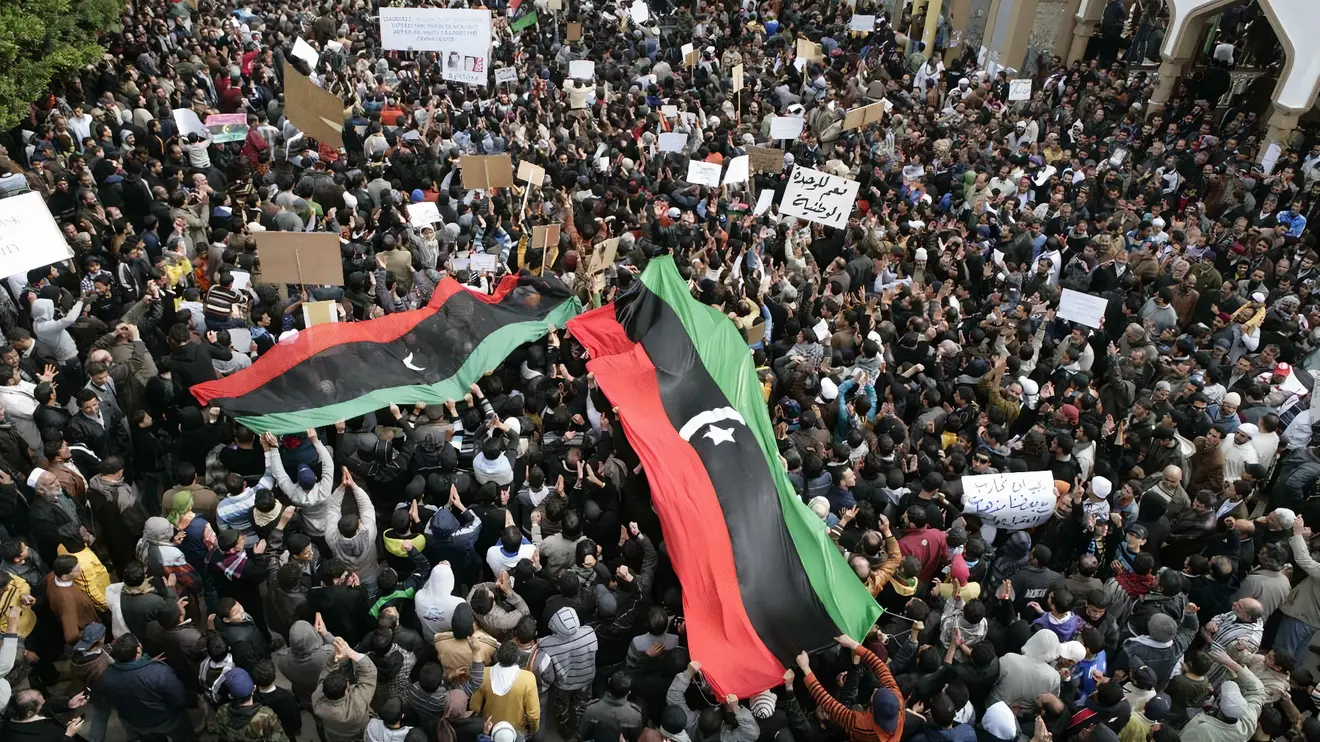
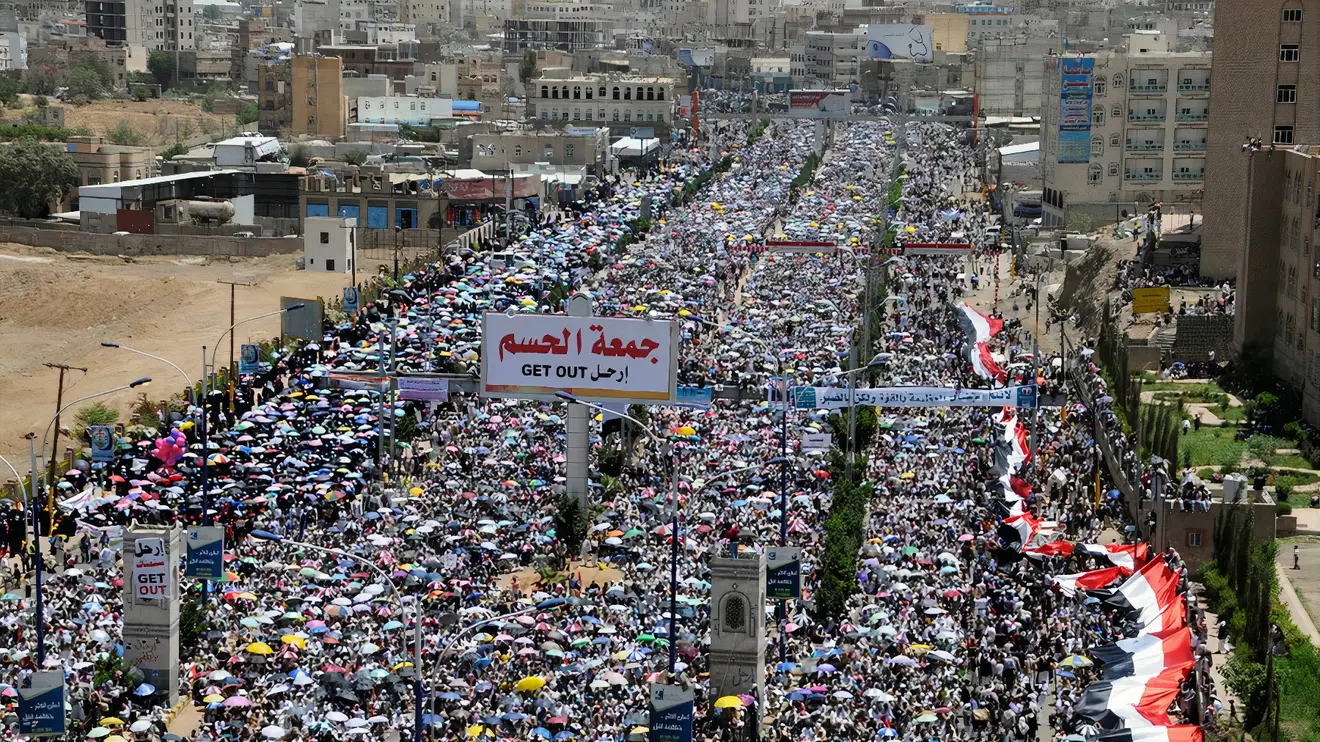
1) protests in Tunisia; 2) “Victory March” on Tahrir Square in Cairo after the overthrow of Hosni Mubarak; 3) protests in Libya against Muammar Gaddafi; 4) protests demanding the resignation of President Yemen Ali Abdalla Salekh in the dignity
Sources (in the order of the gallery): an unknown archive; Suhab Salem/Reuters; Xinhua News Agency; AP Photo/Mohammed Hamoud
The newsletter from Syria Kholud Helmi also watched the news: “I only graduated from the magistracy and often met with friends. We discussed that sooner or later, the protests will certainly begin in Syria. We talked about what to do and what to prepare for when this will happen. Personally, I not only predicted protests, but also waited for them to begin. ”
At the end of January, protests covered Egypt. After less than three weeks of mass demonstrations and clashes with the security forces in North Africa, the second revolution occurred: Hosni Mubarak, who was in power for 30 years, left his post, and later went to prison.
“I was 19 years old, and I could not predict that the protests in Tunisia could become the beginning of the revolution in Syria,” Ola says, at that time a student of the University of Aleppo, “however, when Mubarak was overthrown in Egypt, we began to understand that something similar could happen with us, especially taking into account the historical connection In the second half of the 20th century, Egypt and Syria were part of the United Arab Republic, and later in the Federation of Arab Republics. between the two states.
I remember how at one of the protests in Egypt the man was arrested for the words “inlachlah, Syria next”
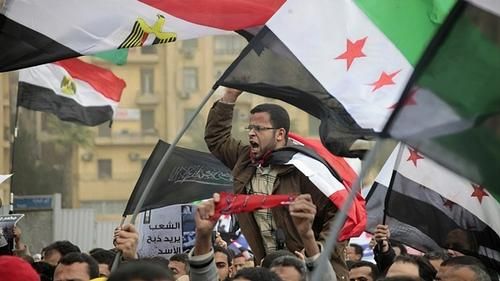
Protests opposite the Syrian Embassy in Cairo in February 2012
Photo: AP/amr nabil
“People were inspired - hope grew, and fear gradually disappeared. The slogan of the Arab spring sounded in my head: " The people want the fall of the regime "Ashhh`b yurid is searched for an-nizam!" - One of the main slogans of the Arab spring. For the first time he sounded during the revolution in Tunisia, then he was chanted by protesters in other Arab countries. ! ", - says Mohammad about the emotions of people in Syria.
It's your turn, doctor
The modern authoritarian regime began to form in Syria after a series of military coups in the 1960s. During the last of them, in 1970, Hafez Assad came to power, which quickly gained popularity due to reducing food prices, weakening of foreign exchange restrictions and resolving more free imports. At this time, the dominant force in the country is the political party of the Baas Party of Arab Socialist Renaissance. Political power has influence in Syria, Iraq and Yemen. The ruling in Syria is still.
Over time, Hafez Assad increasingly strengthened the presidential power, turning Syria into a one -party regime. The main posts in the state began to occupy the president’s relatives: his brother Rifat became the head of the “defense brigades”, and the son -in -law Adan Makhluf began to command the presidential guard. For the role of the successor, Hafez Assad was preparing his eldest son Basel, who suddenly died in a car accident in 1994. After the death of his father in 2000, the president’s post turned to another son - who studied in London residency at the ophthalmologist Bashar Assad. He is still in power.
The Arab spring fell on the second presidential term by Bashar al -Assad, who had chosen in the non -alternative elections in 2007. A few days after the overthrow of Mubarak in Egypt, a group of adolescents painted on the wall of a local school in the city of Dara Singe to Bashar al -Assad - " Your turn, doctor ." For this action, the security forces were arrested by 15 schools_z. According to the memoirs , they were beaten and tortured for the forces of security for a week. Parents and friends constantly came to the Office of the Najib ate, the head of the political security service and the cousin of Bashar al -Assad with requests to free schools.
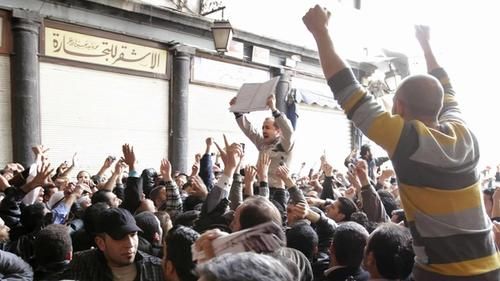
Hundreds of protesters in Damascus chant "Dara - this is Syria"
AFP/Getty images
On March 15, in Dara, people for the first time held mass demonstrations due to the arrest of school_z. “And that was the beginning! - says Mohammad. - That day in Dara, everything has changed. Thousands of people took to the streets, demanding the release of children and political reforms: the abolition of the secret police and holding free elections. ” In the first days of protests, schools were released from arrest. During the demonstrations of security forces, combat cartridges were used against people. According to human rights organizations, then at least 37 people died in the city.
Mohammad says: “Lighting by the State Media of the Arab Spring has also changed: seeking freedoms of protesters began to be called rebels and terrorists.
People who go to protests at the cost of work, means of existence and their own freedom began to be called traitors financed by the West
Three days later, on March 18 , the protests began in Homs - the city where Bashar Assad graduated from the Military Academy. “People from different layers went side by side at peaceful protests, putting forward general requirements. These days were special for me: everyone I knew were on the streets. We imagined that the changes are achievable and this is only a matter of time. But the regime did not allow protests to continue for too long: the secret police were introduced into protests, more and more violence was used, ”says Mohammad, who participated in demonstrations.
Soon the military intervened in protests: a few weeks later, tanks were introduced into the Homs. “Many refused to fulfill the orders of the bosses and decided to protect the protesters. It was then that everything changed. The shootings became commonplace, they continued every day. Then my family decided to move to the village. It seemed to us that we would remain there for a short time and would not happen soon,” says Mohammad.
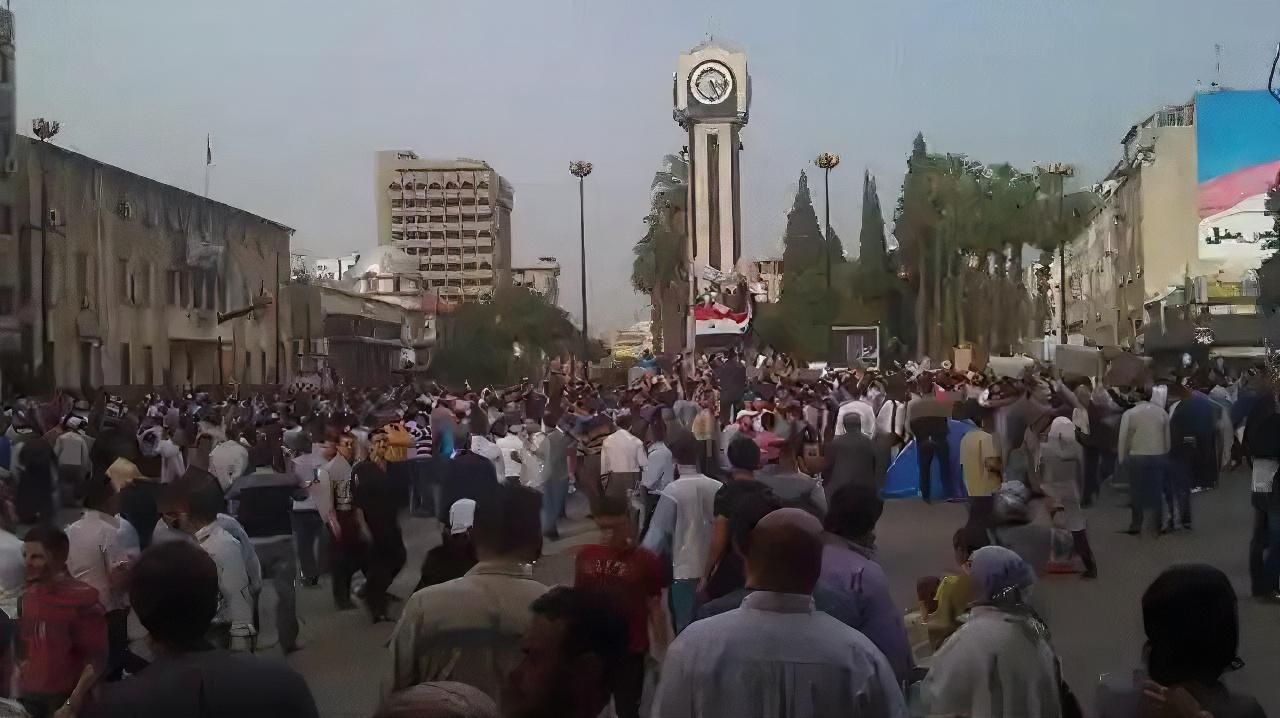
People gather on the hour of Homs in April 2011
Reuters
At the same time, protests began in the very center of Syria, a suburbs of Damascus Daraya. One of the leader_k of demonstrations was the 26-year-old tailor Giat Matar, who advocated exclusively for peaceful forms of protest. He gave flowers and water to the soldiers, despite the power suppression of protests. In September 2011, the activist was arrested - four days later his body with traces of torture was returned to a pregnant wife.
“The reaction of the protest regime was cruel from the very first day,” says Holud Helmi, a journalist and activist who participated in the organization of protests in Daraya. - The police and security forces were everywhere and used force: they used rubber bullets, batons, then combat weapons. In April 2011, my city began to besiege tanks on the exits, people were checked each time when leaving the city and entering it. Once I was searched at a checkpoint and hit several times. I was lucky not to fall under the detentions, but several of my friends, Shurin and dozens of cousins were arrested at the protests. ”
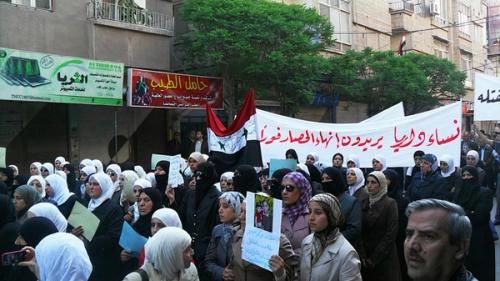
Women carry a poster with the inscription "Women Daraya want a siege stop" in April 2011
Associated Press
By April, mass student protests began in Aleppo, the once largest city in Syria. “I learned about the protests at the University of Aleppo from my friend and immediately joined them,” recalls Ola. - Once we started a rally, and ten minutes did not have passed, security forces appeared on the street. I managed to escape, but my friend remained at the rally, only recently freed from the imprisonment. I called him and said in which direction the security forces were traveling so that he could avoid them. Fortunately, he was not arrested at that time. ”
Later, according to Olya, the University of Aleppo was called the University of Revolution. A student_ki organized one of the first protests in the business capital of Syria. The security forces brutally suppressed the demonstrations andkilled at least four participants.
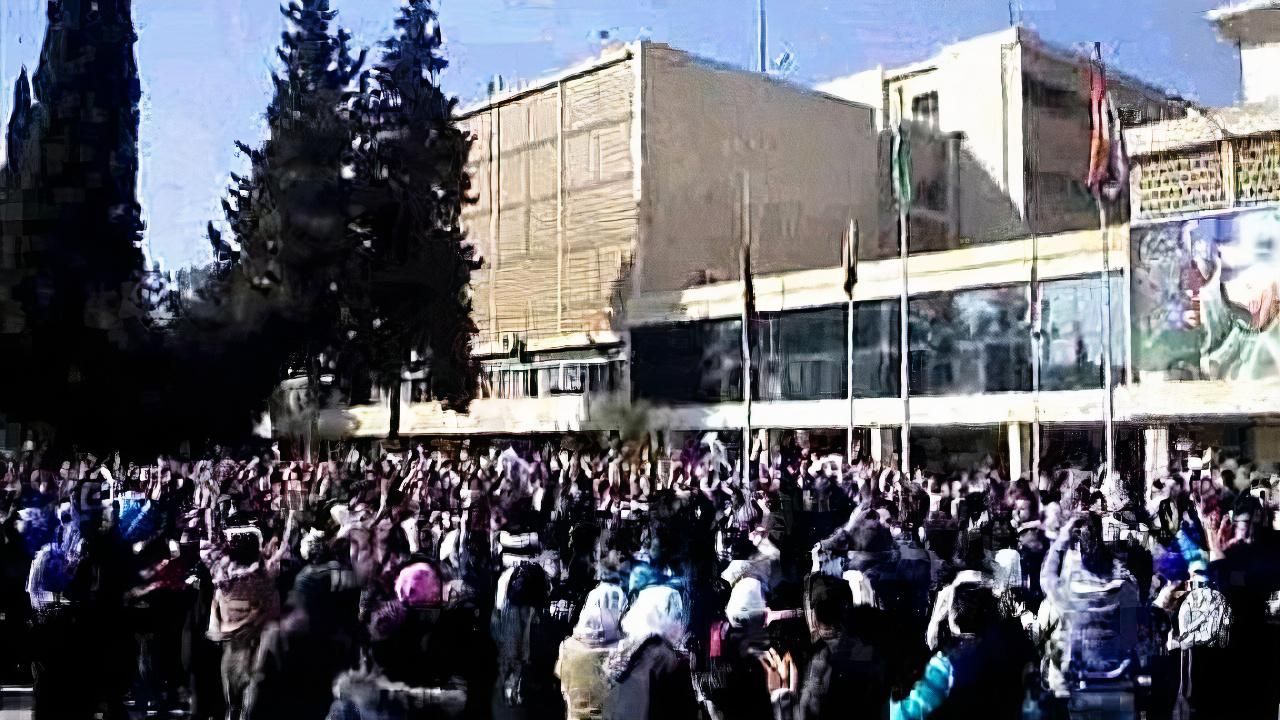
Student protests at the University of Aleppo
Local Coordination Committees in Syria/Ap
Ola about my participation in protests: “I joined the protests, because I realized the injustice that happened around. I remember how we were always afraid of political persecution in the family. I remember how for the first time after the release in the political affairs I saw my father’s cousin, who told how to break his back during torture.
I knew that we deserve more

We talk about the wars going around the world, protests and repressions. We believe that now, when dozens of media have closed or ceased to cover the war, access to independent information is more important than ever.
"I survived only the benefit of giving the fact that I was late"
“In Aleppo, we lived next to the Military Academy of Bashar al -Assad. In the summer of 2011, I first heard the sounds of shots near her, ”Ola recalls
During the protests, Assad regime went to small concessions to the protesting. The country has reduced a set into the army, promised many reforms and canceled the law on the emergency that has been operating since 1963. At the same time, the number of those killed at the demonstrations grew: by October 2011, according to the UN, the number of deathsexceeded three thousand people.
“The requirements changed as protests: people no longer agree that Assad’s regime who killed thousands should play a role in the future of the country,” says Mohammad.
Gradually, civil resistance in Syria grew into a full -scale war. In July 2011, seven officers who crossed the side of the protesters announced the creation of the Free Syrian Army. “After the regime began to use violence and attracted the army to suppress protests, citizens were forced to take up arms to save their families and neighbors from repression and torture,” says Holud Helmi.
Assad forces began the siege of protest cities, including Homs. At that time, Mohammad lived in an area under the control of the regime: “As the situation was aggravated, the regime tightened his grip in areas where he restored control, so at some point I realized that it was too dangerous to stay too dangerous. Our area in Homs, like most of the city, was completely destroyed after the siege.
Over the past 12 years, I have lost four family members and many friends. I lost the house of the family and the school, which was bombed on one of the school days. I survived only due to the fact that I was late [to the lesson]
My family is scattered into different countries, and I lost the opportunity for simple meetings with it, ”says Mohammad.
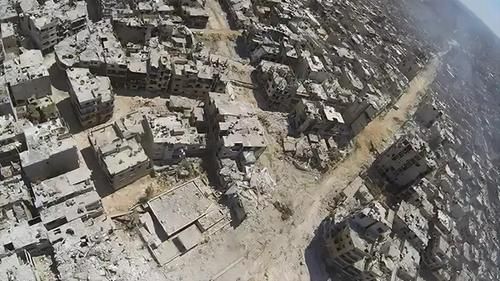
Destruction of the Al-Khalidiy area in Homs
Shaam News Network/AFP/Getty Images
Over the four years of siege, the once largest city in Syria Aleppo has been subjected to significant destruction. In 2014, only 600 thousand people remained to live in the former three millionth city. The Syrian government army suffered regular failures, but after joining the conflict of Russia and the beginning of constant bombing, the opposition forces began to lose control of the city.
“I had to leave Aleppo because of the hostilities and the threat of the arrest of my father, who in my youth was a political prisoner. My hometown fell in December 2016 and is now under the control of government forces.
I will never think about returning home before falling the regime
The regime can give a guarantee, but we are too well acquainted with the lie of Assad and his family in order to sacrifice a return while he remains in power, ”says Ola, who left Aleppo.
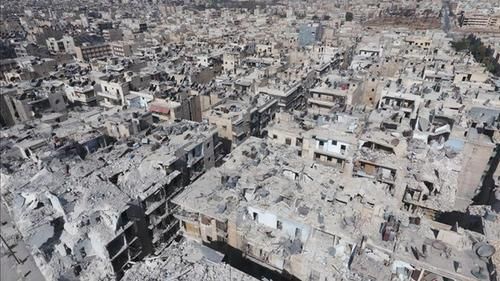
Destroyed area of Tarik al-Bab in Aleppo
TRT World and Agencies
The siege was also the suburbs of Damascus Daraya. Holud Helmi, who lived there earlier, talks about the personal consequences of the war: “In fact, now I'm homeless. I have no place where I could return, I will never return until Assad remains in power. I lost friends who tortured the regime, lost my brother in the colony, and we still do not know if he was alive after he disappeared in May 2012.
Other losses, including all my injuries, are insignificant, compared with the number of dead and the loss of our homeland
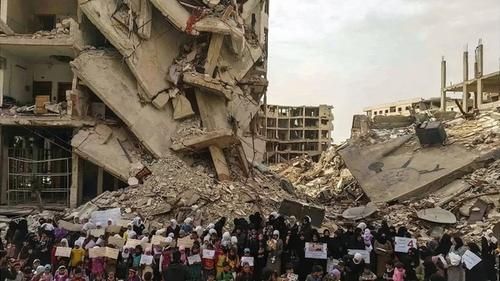
Resident of Daraya with requests for international assistance against the backdrop of destruction
BBC/Karam Al-Shami
Over the 12 years of the war, the Assad regime with the support of Iran and Russia restored control over most of Syria. Despite this, zones of the influence of a democratic opposition, Kurdish formations and Turkey remain in the country. The number of those killed during the war in Syria, according to human rights activists, exceeded 503 thousand people. In recent months, the humanitarian crisis in the country has aggravated a destructive earthquake that claimed the lives of more than 6,700 people.
"Considering what is happening in the world, I do not see the end of this situation in the foreseeable future. Many countries begin to re -establish relations with the government of Bashar al -Assad that it is a big mistake. The Syrians who left the country will not return, so as not to be under the rule of the regime, who killed hundreds of thousands of people, and hundreds of thousands to prison. The main message that every Syrian wants to convey to the international The communities today are that the same regime, which forced to move half of the population and which made a war in Syria the most deadly in the 21st century, should not play a role in the future of the country, ”says Mohammad.