
Translated material
"What happened to the Sun?"
Loud premiere on Berlinal-the film of an outstanding director-documentary Viktor Kosakovsky "Architect"
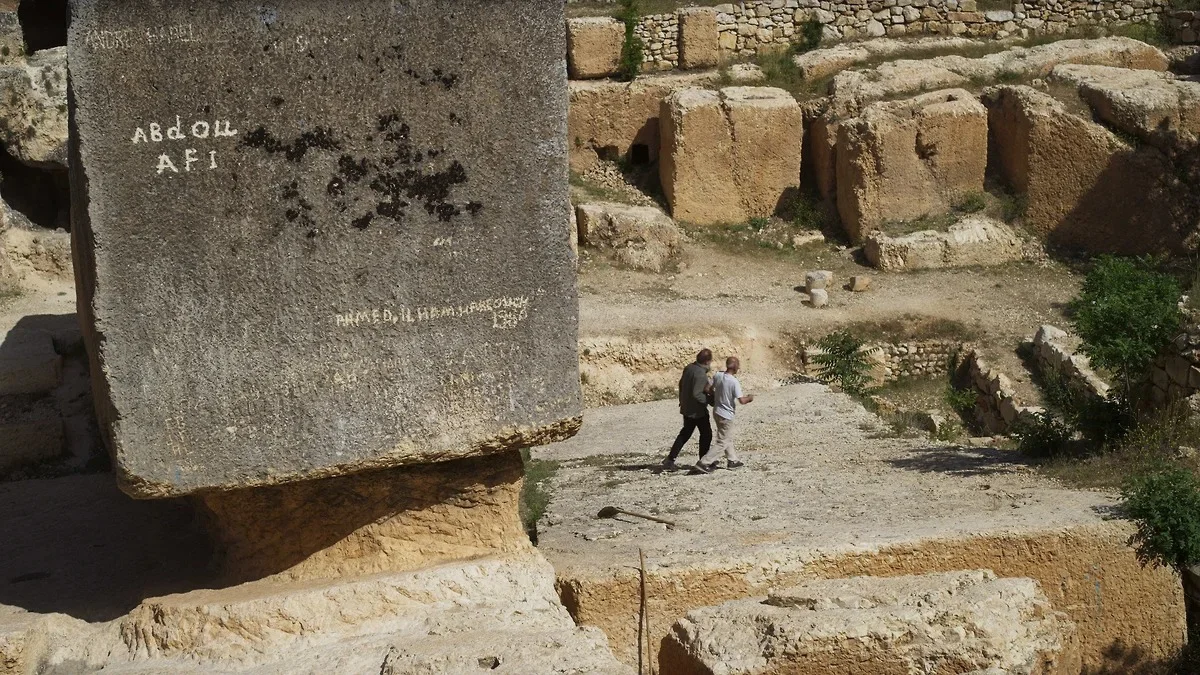
Frame from the movie "Architect"
The world premiere of Architecton, the film director-documental Viktor Kosakovsky, was held at Berlinal. Joint German-French production-the third part of the director's empathy trilogy about the violated boundaries between humanity and nature. And more precisely: the nature of civilization irreversibly changing before our eyes.
The first two films - "Long live the antipodes!" and "watercolor".
“Architecton” is not even a film or documentary, rather, a rare emotional impact, a work of audiovisual art. Frantic drama of multi-speaking experience, which can easily imagine somewhere in MOMA. And the music of Yevgeny Halperin with symphonic development, the leitmotif system, overture and code is as important as unforgettable shots - with a living element of stones. Living and the dead. Warmed up by the sun to the veins. Majestic. Turned into ruins. In dust. Or in terrible rockfalls. In the sea of stones with a tenth shaft of waves.
Cinema is not about architecture - about the ability of civilization to save yourself.
Not about the problem of urbanism.
About humanity.
In it, anxiety is beating about the preservation of the human race.
With virtually no explanation and comments, the picture creates the image of the modern world, captive and destroyed. Among the tips of the quote on the stone of the beautiful poet of the frontier of the 19th and 20th centuries Giovanni Paskoli "What happened to the Sun, why did it go out on this day?"
Fascinating images of multi -colored rocks, dispersed by insatiable sidelines of raw materials. Unimaginable natural (and needlework) cataclysms. The stones first sleep in the sun, then begin to move, push each other, the monstrous rumbling rockfall begins. As if stones fly on us. And do not dodge. Just some kind of storm, the ninth shaft, the waves fall and rise up. Then, in general, it seems that all this living stone element is seething under water ... Until clouds do not appear through this storm. And again quiet and grace.
A lot of filming bombed houses, including in Ukraine. Buildings affected by the earthquake in Turkey, the remains of the 2000-year-old Roman temple complex of Baalbeck in Lebanon. Architects and art historians still do not understand how it was built?
And there are also a lot of long-standing houses through which living foliage sprouted, hiding the ugliness of the crumbling dead and stillborn block buildings. Cement is crumbled, concrete is short -lived. All these multi -million hives are built by temporary workers. All of them will soon turn into communities, mountains of garbage and dirty dust. The remains of this "junk" break special destruction machines. The dust settles on the glass of the camera, it seems, in our lungs.
And next to the masterpieces that remained inherited from past eras. The plateau in Athens, on which Socrates led his dialogs. Lonely columns, pyramids, arches, supports, eternal stone cascades of South America, buildings of Byzantium, ancient Greece, Rome. Masterpieces of the art of Kamenosov. How did they build it? They built to the sky. How did multi -ton stones have lifted into the air? Cut them.
Here it is: a dying irrelevant beautiful culture. Her natural beauty, inscribed in the beauty of the surrounding world, merged with it together. And it seems that the stones are dancing. Then, however, it turns out that this is their dying dance. Because people are not too burdened with the preservation of a cultural property.
The film has a striking shooting of the operator, artist and experimenter Ben Bernhard (“everything that breathes”), capable of composing impressive poetic images using different movie lenses, using various filters, slow and ordinary panoramings, creating multi -layer due to the game with a depth of sharpness. The frozen eternal silence of cosmic landscapes of incredible inflorescences (how many flowers do the stone?) Rub the furious earthquakes.
In general, the Kosakovsky in his paintings combines romanticism, philosophical, uncompromising, characteristic of genuine art (which does not look back at the momentary interests of the audience) and a powerful journalistic message.
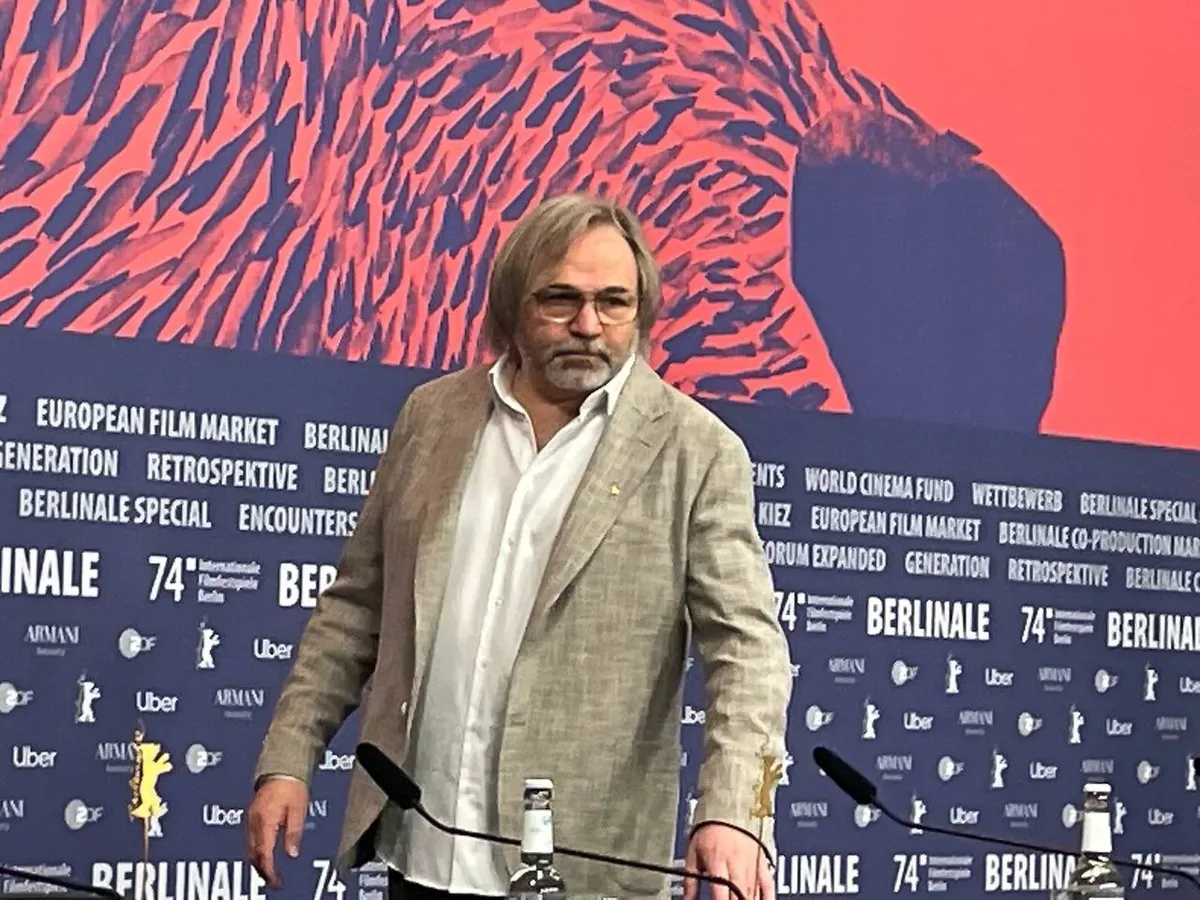
At a press conference, the director said: “Buildings from concrete serve 40-50 years. In the UK, 50,000 buildings were destroyed only last year! And so around the world. And how many more half -dead buildings with crumbling concrete: institutions, schools, and hospitals. ”
Kosakovsky is lamented about the idea of "sustainable architecture." She is no longer: “To produce cement, we destroy the beautiful mountains. A small cement plant requires 26 tons of coal per hour, it works 7 days a week - day and night. Last year, we produced enough cement to build a wall with a thickness of one meter and a thousand meters high around the equator! ”
Viktor Kosakovsky’s speech is the voice of an idealist in the desert of conformism. But he continues to hammer this wall, including with the help of cinema. Explain at a press conference again and again:
“Disaster is the amount of cement that we produce. Sustainable architecture was engaged in antiquity. ”
And the idea of the film arose during the pandemic. It was then that the director drew attention to the area with which he lived in the neighborhood, Tempelhof, known for the airport, which was closed in 2008. Now it is a huge open space inside the capital. Such a gigantic, spacious square filled with air, then the Berliners were united in unit so that they would not be built up with skyscrapers, moles. Understanding that this free space from merchants would not live long, the director began to interview the architects of the world, what ideas they had for the animation of the territory, which over several years of the Cold War has been the air gates of Berlin. The famous Italian architect Michele de Lucci, like many Berliners, suggested leaving this place alone: "Let's turn it into a symbol of what we do not touch to ourselves to remind us that we are just part of nature." Michele de Lucca is the hero of the film. He, like an eccentric scientist Paganel, wanders between ancient buildings, stroking them and tapping them. Listening like a doctor. Exploring. Trying to understand their riddle. In the courtyard of his house from stones with the help of workers, he builds a large magic circle - as an ideal shape, a deep image of awareness of life, designating continuity, perfection and source of the universe. "What will your descendants do with this your circle?" - the author of the film asks. But the architect is not going to teach anyone, even descendants. He just wants to give them the opportunity to think about what is happening to us, today's people. And how descendants will decide to take this opportunity - their business.
Each year, thousands and thousands of buildings are destroyed. And before the finale, we see these endless, endless mountains of garbage. Inheritance to future generations. Our dusty remains.
At a press conference, Viktor Kosakovsky not so much answered specific questions as the world public called to the mind:
“Today, plastic, concrete and shopping religion are supplanting culture from cities. Previously, in the center of the city there was a cathedral with a dome that goes into the sky associated with the sky. There were stained -glass windows with the sun inside the glass, lace ornaments that cut out the ingenious stoves. The city was built as a kind of work created by man for centuries.
But then humanity began to build cities from cement and concrete, which scatters in a few decades. This is absurd. Doesn't it matter what will happen in 50 years? It is necessary to take responsibility.
Do you really want to live in the scattering current urban bags? "
More about the cinema
Larisa Malyukova leads a telegram channel about the cinema and not only. Subscribe here .