
Translated material
From the "Party of Crooks and Thieves" to the "Bunker Grandfather"
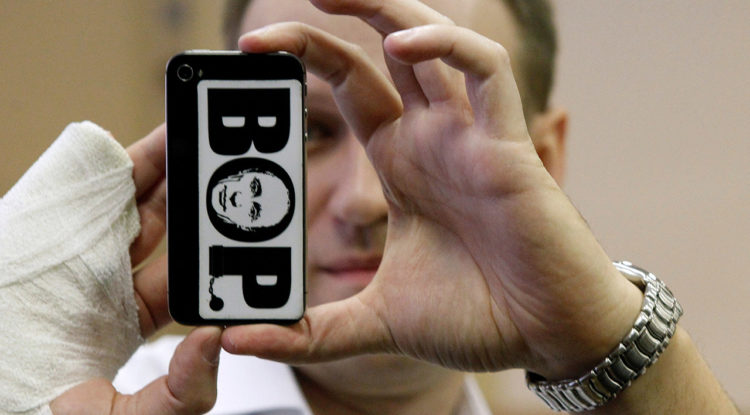
Dictionary of Alexei Navalny. 10 phrases that went down in the history of Russian politics
The legacy of Alexei Navalny is also a special political language that he used and in which not only his supporters, but even opponents began to speak. The phrases of this language are simultaneously figurative and accurate. They quickly and forever adhere to those who were addressed, distributed in media and on street actions. Everyone knows that the “party of crooks and thieves” is “United Russia”, that “Bunker Grandfather” is Putin, and Russia without them is “excellent Russia of the future”. “Cold” recalls how the winged phrases of Alexei Navalny appeared, who actually came up with them (not always he) and how they entered the Russian political dictionary.
In order not to miss the main materials of the "cold", subscribe to our Instagram and telegram .
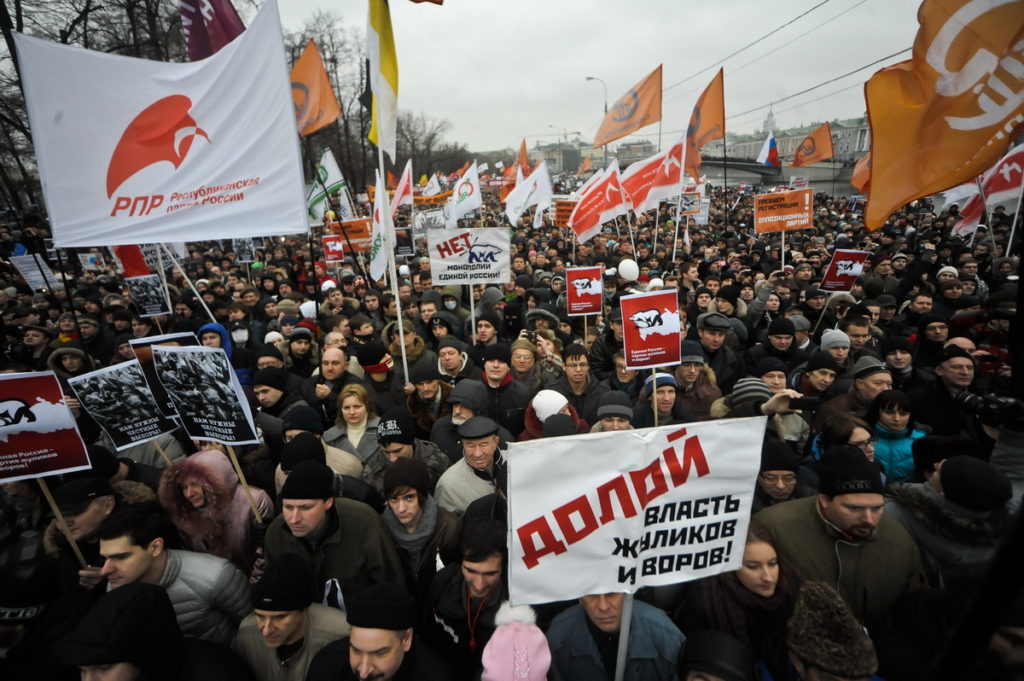
"Party of crooks and thieves"
Any person who hears the expression “a party of crooks and thieves” understands that we are talking about “united Russia”. Even if he himself consists of it.
There is a version that these words were the first to put in such a sequence by Vladimir Zhirinovsky. The main drawback of this version is the absence of anyone except Zhirinovsky himself.
In any case, it was thanks to Alexei Navalny that the definition of the “pjiv” finally entrenched in “United Russia”. February 2, 2011 on the air of the FM Finam radio, he said :
“I am very bad about the United Russia party. The party “United Russia” is a party of corruption, it is a party of crooks and thieves. ”
Navalny was summoned to the debate of Unicorn Evgeny Fedorov, who did not agree with this definition. They met on the air of the same radio station. Following the voting of the audience, Navalny won, gaining 99% of the vote.
On October 11, 2011, the Lublin court of Moscow refused to satisfy the lawsuit against Navalny of another United Russia Vladimir Svirid, who considered the phrase “Pzhiv” by personal insult. The next day, the Vedomosti newspaper came out with the material : “The court allowed to call“ United Russia ”“ a party of crooks and thieves ”.
" Bunker grandfather "
There are many elderly men in the world, but the “bunker grandfather” is only one. In January 2023, in the midst of the war, due to the large-scale leak of the source code of Yandex services, it became known that the search engine blocks Putin's images if users are looking for them according to the Bunker Grandfather.
According to the results of 2021, the phrase “Bunker grandfather” was included in the top three of the main expressions according to the version of the Russian independent competition “Word of the Year”.
It was Alexei Navalny who distributed it during the pandemic. He ridiculed strict quarantine requirements for Putin's meetings, and soon began to call Putin “bunker” and without reference to coronavirus.
“Yes, buy medicines for pensioners for this money. <...> The last but the last but their thoughts are occupied by a parade. But the bunker grandfather wants a parade, he needs to show off on the rostrum, ” said Navalny.
Finally, the nickname was assigned to Putin after the investigation of the palace in Gelendzhik, which mentioned a huge bunker.
"Rospil" and sawed
It was thanks to Alexei Navalny and his “living magazine” that the word “cut” became common in the meaning of “theft of budget funds”.
“Russia has enough money for development, it is necessary to invest it in people, and not in officials and cut it,” he said on his streams.
The term “cut” was popularized using the Rospil project, in which Navalny fought against abuses in public procurement with his comrades -in -arms. Many remember the Rospil logo - a double -headed eagle from the Russian coat of arms, holding two saws in the paws. Here, in fact, the allusion to the "sawing".
In December 2010, a resident of Penza said to the police that this logo is an abuse of state symbols. He was denied the lack of a crime event in initiation of the case.
The emergence of Rospile was preceded by an investigation "how they saw in" Transneft " . Navalny accused the company of embezzlement of at least four billion dollars during the construction of the pipeline East Siberia - the Pacific Ocean. Representatives of Transneft accused the investigators of that they themselves prevented the fight against corruption, and also caused organizations of damage of three billion rubles.
" Beautiful Russia of the Future "
The unofficial slogan of the presidential campaign Alexei Navalny in 2017. So the politician called Russia itself in the future - when he will win the elections.
This phrase is present even in the last handling of Julia Navalny , in which she promises to continue the work of her husband. She says: “We want to live differently,” and then we see Alexei Navalny: “Together we will turn our country into a beautiful Russia of the future,” and white-blue-red confetti pour from the ceiling.
Soon, other politicians began to use this phrase, not only from the Navalny team, but, for example, Maxim Katz and Mikhail Svetov in their videos.
The phrase tried to expropriate propaganda. In 2021, the pro -government activist Ilya Craft filed an application for registration of the Tregue Russia of the Future and the abbreviation of the PRB to Rospatent. However, the “beautiful Russia of the future” is associated with Navalny.
Aquadiscopetics
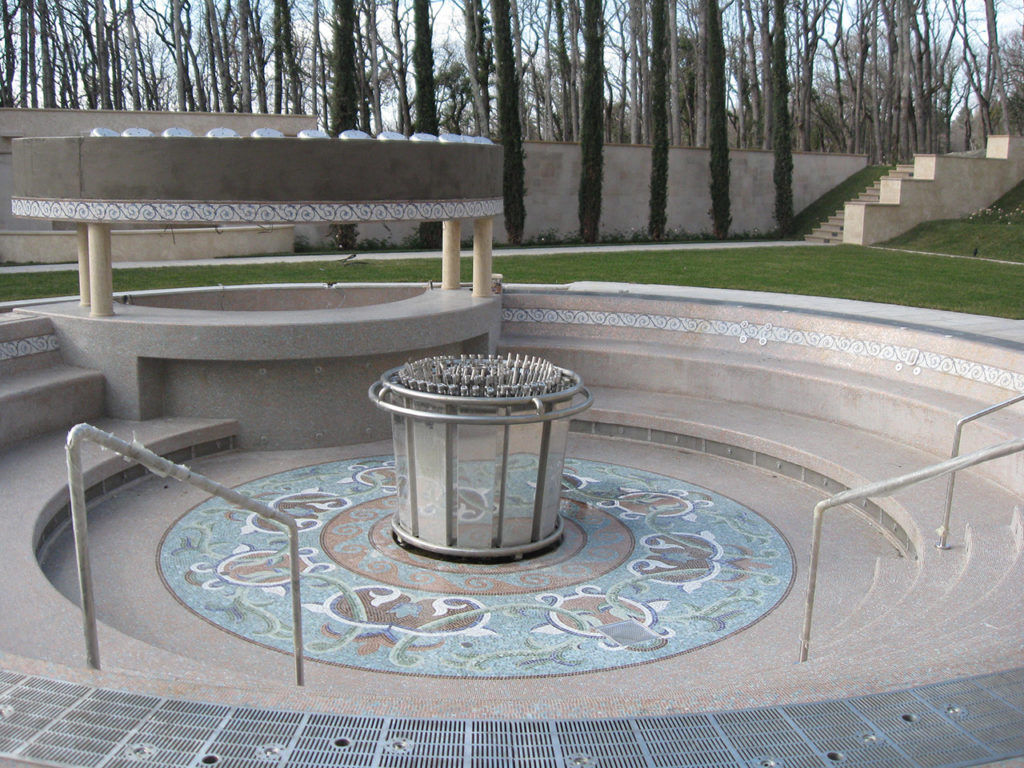
Yes, musical pools with fountains and light music, obviously, existed long before Alexei Navalny. But the aquadiscode became a symbol of vulgar luxury and thoughtless bureaucratic leisure precisely thanks to him.
Aquadiscot is one of the main memes from the investigation "Putin's Palace, the story of the largest bribe." Comedient Alexander Gudkov wrote an adhesive song about her. At the winter rallies in support of Navalny, people chanted “Aquadiscopete! Aquadiscopetics! " Navalny himself later mentioned it more than once, including in the last word in court in 2021, when a suspended term in the Yves Rocher case was replaced by real.
“There are a lot of good things in Russia, and the best thing is the very people who are not afraid who are not lowering their eyes who do not look at the table and who will never give our country a bunch of corrupt officials who decided to exchange our homeland for their palaces, vineyards and aquadiscist.”
" People who look at the table "
The main image from that very last word. On December 19, 2014, in the Zamoskvoretsky Court of Moscow, the parties were held in the next case of Alexei Navalny. The prosecutor's office asked for the sentence of Navalny to nine years in a general regime colony for supposedly fraud when concluding contracts with the perfume company Yves Rocher, his brother Oleg - by eight years in prison.
Then Navalny said his next last word:
“People looking at the table. You see, you all constantly look at the table. I'm talking to you all - you look at the table, constantly, that's it. You have nothing to say ... [Judge] Elena Sergeevna [Korobchenko], what is your most popular phrase - you know her for sure - which turns to me? Investigators, prosecutors, employees of the Federal Antimonopoly Service, Judges for Civil Affairs, Criminal Board ... You are all telling me the phrase the same: “Alexey Anatolyevich, you understand.” I understand everything, but I don’t understand one thing: why do you look at the table endlessly? ”
“People who look at the table,” are people who are formally in the position of superiority, but actually understanding that what is happening is humiliation primarily for them. People who commit meanness and realize that they are committing her. As now understands, “people who look at the table,” are people who killed Alexei Navalny.
" Smart voting "
Now many people think that “smart voting” must be written without quotes. That this is not a specific political project of Alexei Navalny, but any voting strategy for a strong opposition candidate. And even not for the strong - just for any other than the main one.
In fact, a “smart vote” is a brand invented by Navalny in 2018. Smart Voting had a website and telegram boot that helped choose the most promising candidate. Soon they were prohibited by Roskomnadzor, and after the recognition of the FBK “extremist organization” “implementation of“ smart voting ””, no matter what it means, could be regarded as “extremist activity” with potential punishment up to six years in prison.
Nevertheless, even today, a month before the presidential election, some suggest using the Smart Voting method. Formally, this is impossible. In fact, everyone understands what exactly is being discussed.
"House for a duck" and the "Duck" itself
Until 2017, a yellow rubber duck was just a popular toy for children's bathing. Since 2017, it has become a symbol of street protests in Russia and corruption in the circles of Russian officials.
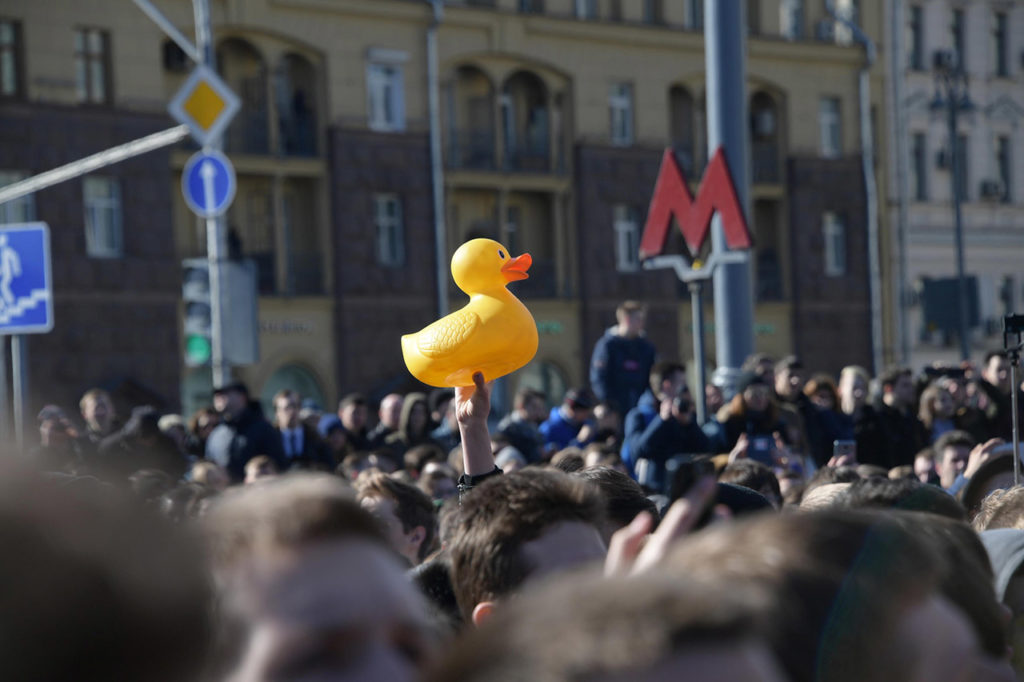
For the first time, Alexei Navalny spoke about the “Duck House” in the film “He is not Dimon for you” , dedicated to the wealth of the then Prime Minister Dmitry Medvedev. Then he showed the "house" in a separate video about the Medvedev cottage. Then he released a video dedicated to comparing the ducks of Medvedev and a member of the British parliament from the party of conservatives Sir Peter Wiggers.
Wiggers was also a defendant in a large corruption scandal. In 2009, he tried to include 30 thousand pounds in his deputy expenses spent on the garden care. Among them - 1645 pounds on a floating house for duck.
The scam was opened, the expenses of many other deputies began, Wiggers was forced to sell the house and transfer money to charity, at the same time saying goodbye to political reputation.
“This is a post that in the beautiful Russia of the future, the incident of the duck house will be resolved as in Britain, and not as we have now,” the Navalny video finished.
It is believed that the film “He is not Dimon” nevertheless ruined the career of Dmitry Medvedev-despite the fact that he continued to occupy high posts, even his colleagues ceased to perceive him to perceive him. And the yellow rubber duck is no longer perceived in Russia as just a toy.
The final battle between good and neutrality
Many learned about Alexei Navalny precisely thanks to this phrase, which in the early 2010s was the slogan of his “living magazine”.
The source of the quote is the commander of the spacecraft from the cartoon "Futurama" Zepp Brannigan. Absolute, by the way, antihero, but outwardly similar to Alexei Navalny.
In one of the series of Brannigan, they fired. He impoverished and was forced to get on someone else's spacecraft to wash the floors. But thanks to some kind of charisma, he began to attract the attention of the crew and other inhabitants, decided to build a populist political career-he promised that everyone would walk naked and drunk.
Soon he makes a coup on the ship, overthrow the former captain and decides to attack a peaceful neutral planet. He sends a spaceship to it, having previously planned his own evacuation, and says: “Prepare for an epic battle between good and neutrality!”
Navalny turned out this quote inside out. In his interpretation, “neutrality” is amorphous and inaction. A good deed, respectively, is resistance to such indifference and apathy.
In 2021, Navalny's associates used the phrase “The final battle between good and neutrality” to call Russians to rallies in support of their leader.
Do not forget, we will not forgive!
Another slogan that will remain in history connected with Alexei Navalny, although in fact it does not belong to him. It was published at the beginning of the Great Patriotic War - October 14, 1941 - in the newspaper Red Star. The author of the article on the cruelty of fascist occupiers, Peter Pavlenko used this phrase in the heading.
Navalny popularized this slogan at rallies against falsifications in the State Duma elections in 2011: “We will not forget, we will not forgive” the stolen voices.
Subsequently, the policy supporters used the phrase whenever Navalny was delayed, arrested or sentenced to a new date. And not only Navalny, but also other participants in the protest movement.
After the murder of Navalny in the correctional colony No. 3 in the village of Harp “We will not forget, we will not forgive” were written by those whomourn about the leader of the Russian opposition. Polish Prime Minister Donald Tusk also wrote in his social networks: “Alexey, we will never forget you. And we will never forgive them. "