
Translated material
"Gray" zones of the Russian Empire
"Gray" zones of the Russian Empire
We tell you how to equip fragments of empires for our needs on the example of Zharkent
On January 25, 2024, Doxa was recognized as an “unwanted organization”.
If you are in Russia or plan to return to it, you can not replace our materials on social networks, refer to them and publish quotes.
Read more about what is possible and impossible, read in the cards .
In addition to the antagonism between the metropolis and the outskirts, each empire had its own “gray zones”, the so -called “frontiers” - cities on borders where laws from the capitals in a strange way mixed with local self -government, and immigrants with autochthonous residents. In conjunction with the recent text about Uyguro_k the best personification of such a space between two late empires, Russian and Chinese, inside already independent Kazakhstan, seems to be the city of Zharkent. With his own existence, he gives hope that a peaceful future is possible even in the epicenter of multidirectional political power lines.
Editor
Editor
Dasha ManzhuraIllustrator
Illustrator
Ira GrebenshchikovaPublication
May 24, 2023
Assalam Aleikum (which translates as “peace for you”), dear readers and readers of DOXA
The city of Zharkent is now called the "southeastern gate" of Kazakhstan, but earlier it was such for both the USSR and the Russian Empire: in just 27 kilometers from it there is a border with China. Since the end of the 19th century, a temple has been standing in the name of the Prophet of God Elijah of the Kazakhstani Metropolitan District of the Russian Orthodox Church, and a mosque in the form of Chinese Pagoda, and Kazakhs, Uyghurs, Dungans and Russians peacefully get along in the city itself.
Despite the archaeological finds, saying that once Zharkent was one of the fortified points on the Great Silk Road, the modern history of the city is largely connected with the Uyghurs and Dungans (Muslim Chinese).
Zharkent is very similar to any small city in Kazakhstan: pre -revolutionary buildings, Khrushchevs, private houses, Islamic and Christian cemeteries, many small shops and cafes with Uyghur, Kazakh, European, Dungan and Chinese cuisines.
However, the border of Zharkent is felt everywhere
On the one hand, on the exit from the city you can still catch the Sinjian Radio, on which the Uyghurs speak a little differently than in Kazakhstan, and put Chinese songs about love for Mao and the denial of God. On the other hand, a Russian woman can serve you in a cafe, and most of the locals, due to a close connection with Almaty, can speak well in both their native languages, Dungan and Uyghur, and in Russian and Kazakh.
I know this city since childhood, because before my relatives had many friends here, and therefore, until the first long leaving abroad, I did not realize its uniqueness. But against the background of everything that happens in Kazakhstan, when “daily plebiscite” happens, that is, when people begin to problematize and comprehend their national, ethnic, political and cultural identity, I wanted to “ accelerate According to Shklovsky, removal is a “conclusion of a thing from automatic perception” through artistic means. »His understanding of the beloved city. Understand what it consists of, how people live in it and how the fragments of empires are equipped for new needs. To do this, I visited his “attractions”-the Orthodox Church and the Uyghuro-Dungan mosque in the Chinese (!) Style, and also talked with people who saw how Zharkent changed over the past half century.
"This is also a gift of God - to believe in God"
On the contrary, the bright, brown-green church, similar to the printed gingerbread, school named after Bauyrzhan Momyshuly-Panfilovtsa, Hero of the Soviet Union, as well as a writer and translator from Uygursky and Kazakh to Russian. On some online cards, the institution is still awarded as a school of “name of Lunacharsky”, and the inscription hangs on the wall: “Evgeny Kulikov, a warrior-internationalist studied here Most likely, we are talking about the Soviet-Afghan war, but it may not only be. ". Information about him on the Internet is absent.
On the alley, blue and yellow flags hang in front of the entrance - in honor of the flowers of the flag of Kazakhstan.
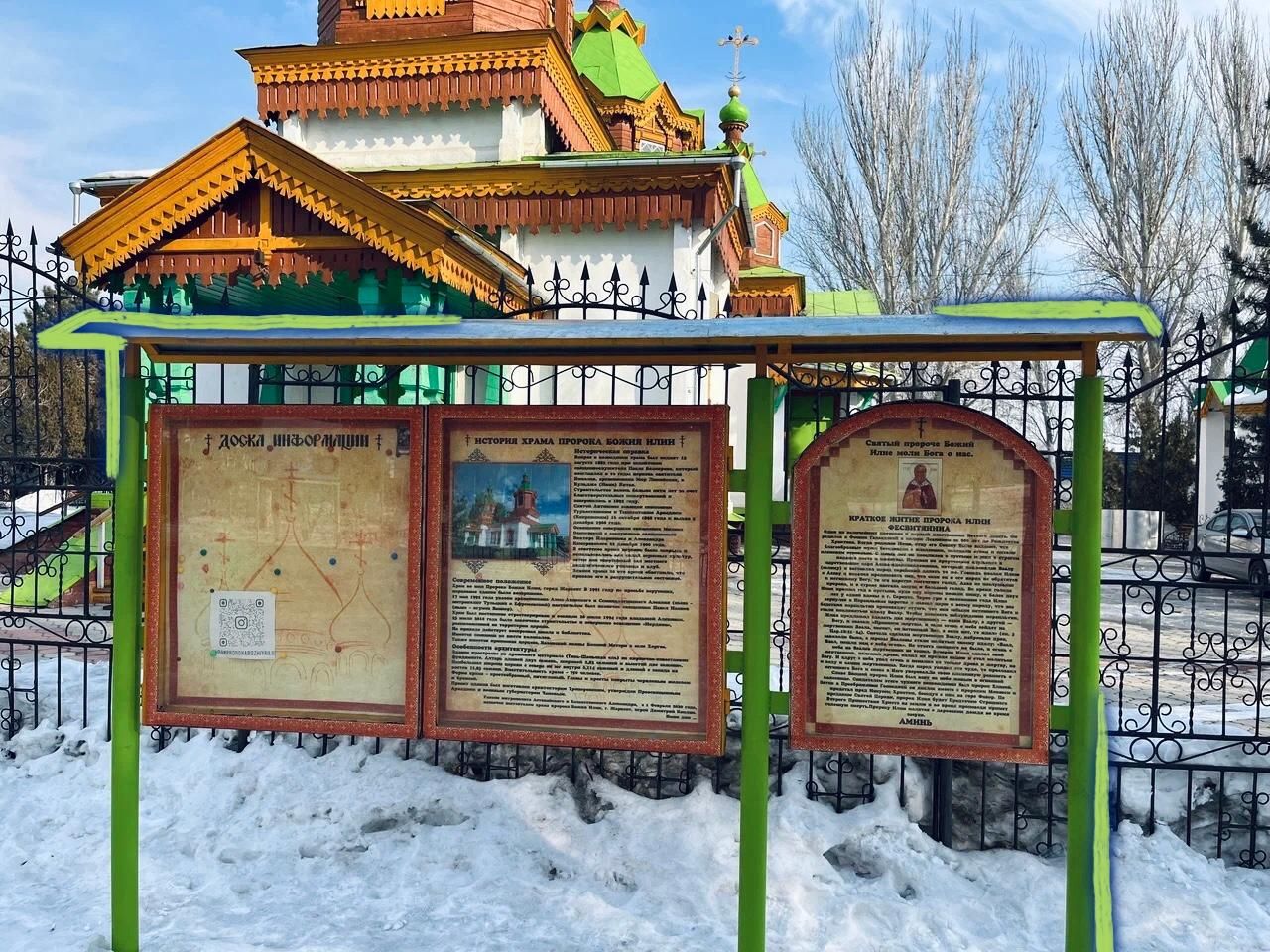
Board with information in front of the temple in the name of the Prophet of God Elijah
Source: Iparhan for Doxa
In front of the Church, a board with information: a short life of the prophet Elijah of the Fesvityan The biblical prophet in the Israeli kingdom in the 9th century BC. e., in Christianity it is the most revered Old Testament saints. , the history of the temple and the QR code with reference to the instagram of the church, with the help of which I previously wrote off with the priest.
Already near the porch there are two broken bells, which the Bolsheviks who established the Soviet regime dropped from the bell tower.
The temple in the name of the Prophet of God Elijah, unlike most Russian churches, is completely wooden. As the parishioners say, the building is constantly updated: entire bells were again hanged on the windows, all four porches, kyotes Decorated wardrobe or shelf for icons. , iconostasis The partition separating the altar from everything else. - New, however, the floorboards are the very ones that were during the construction. By some miracle, they withstood the times of the Union: in the church there was both the granary and the gym of the pedagogical schools, where physical education lessons were conducted and entertainment events were arranged. In the place where various kinds of church utensils are now being sold, there was a boiler room, but for two years now everything has been transferred to gas heating. The parishioners say that this is all the merit of the former abbot of the church, now Abbot Vianor, who served in it for twenty -eight years and was the initiator of large -scale reconstruction, as well as the designer of the new internal arrangement of the temple.
According to the archives, the question of the construction of the temple was raised by the Cossacks on August 12, 1882 with the assistance of the clergyman Pavel Beloyarov, who headed the Orthodox Church in China, in the city of Kulja. But due to the lack of funds only ten years later, in 1892, his own Russian Orthodox Church appeared in the Zharkent. The architect became Sergey Konstantinovich Troporevsky. The building is built of the Tien Shan spruce in a pseudo-Russian style, very fashionable in those days.
The shrines of the temple are the relics of the priest Vasily Kolmykov, the priest of Zharkent, whose story is very indicative for these lands. The merchant son sent here to serve in 1916. When the armed Central Asian uprising of the 16th year against the labor mobilization of the “foreigners” happened, he suffered from the detachments of local looters. However, he was shot by “their” - the Bolsheviks who demanded from him a renunciation of their faith. Refusing to do this, he accepted the martyrdom. In 2000, Vasily Kolmykov was canonized.
There are few parishioners in the church, because young people leave the city, and adults are either reclining or gathering only on holidays.
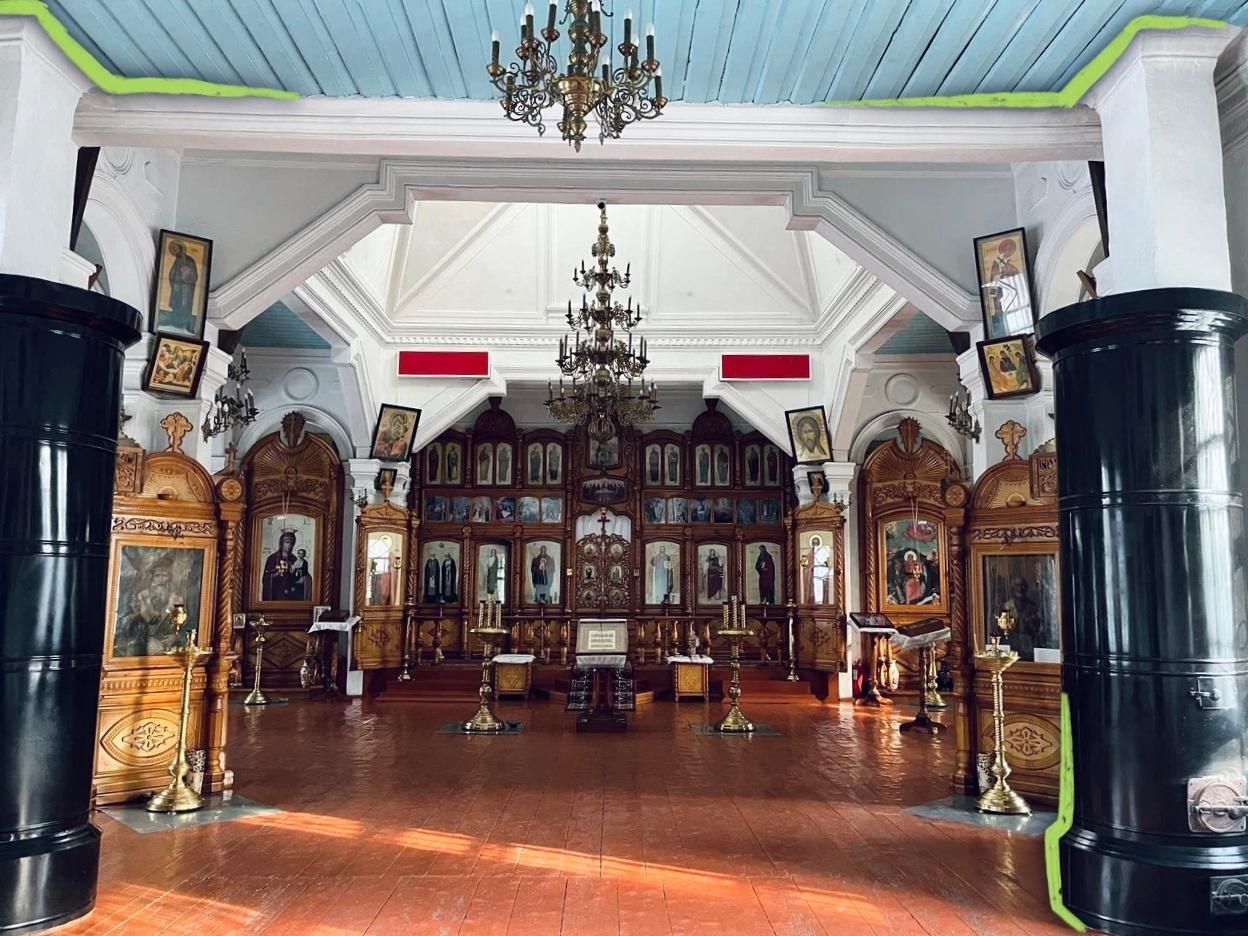
The interior of the temple in the name of the Prophet Elijah
Source: Iparhan for Doxa
The saleswoman of the utensils Nadezhda Ivanovna agreed to give me a comment on how most of the parishioners of the church ended up in the fever and how the temple lives now:
- I am already a pensioner, but on a good basis I help the church: I am conducting accounting affairs, I compose reporting. We have few parishioners, many have driven. Such times have come when it is necessary to give a good education to children, grandchildren. However, we even have young people - they lead to commune their children, they give them to Sunday school. Total, about 50-60 people go on Sundays. Few, but still 70 years of atheism and godlessness are not in vain. This is also a gift of God - to believe in God.
Despite the beauty and antiquity of the temple, it is not protected by the state.
The Ministry of Culture dismissed us: as you want to survive
We have a good relationship with the local authorities, but we were promised a new roof, and so far nothing was done.
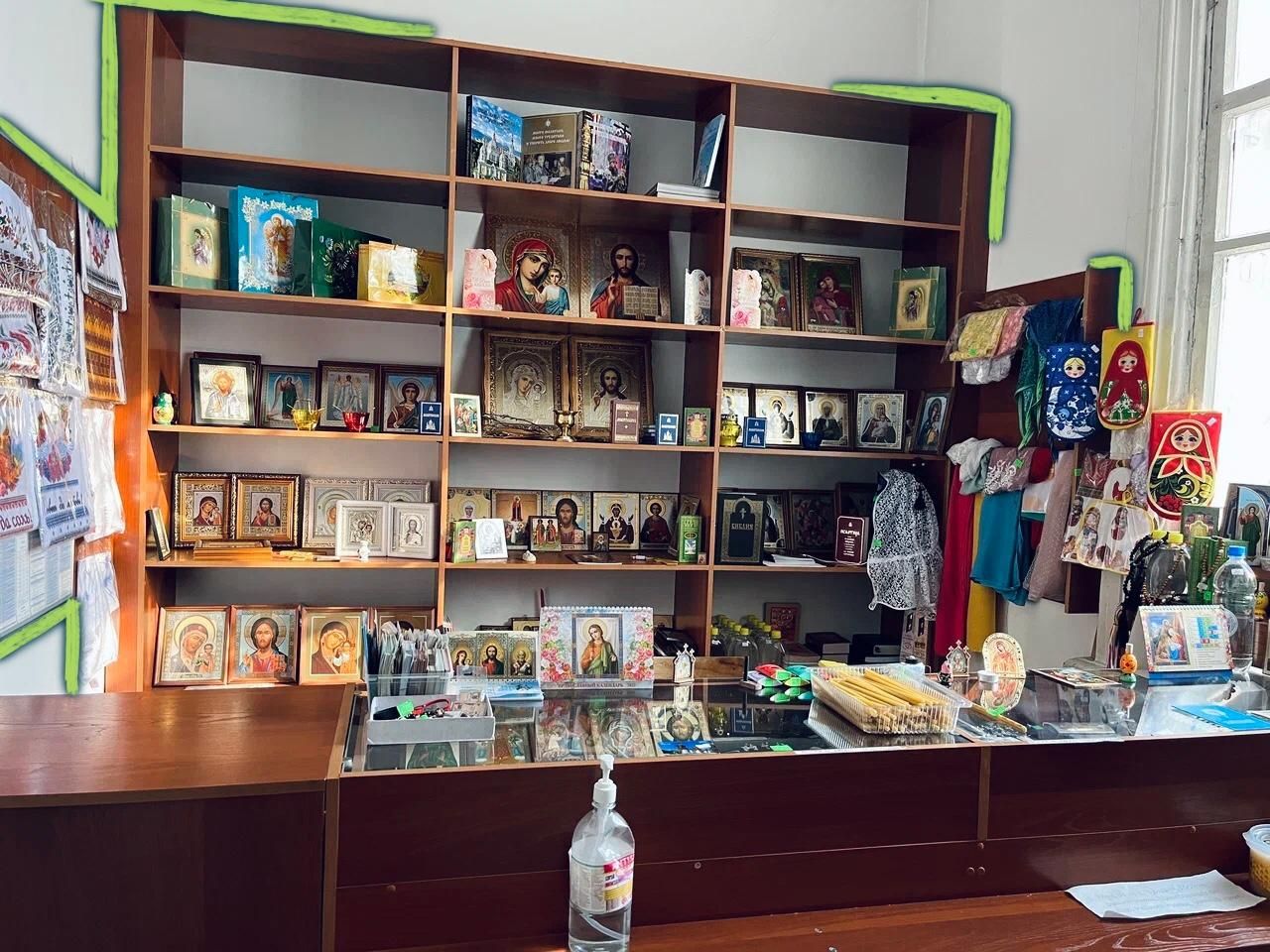
Utility store where Nadezhda Ivanovna is in charge
Source: Iparhan for Doxa
The rector of the church, priest Dimitri Kaplin , says that Of the 45 thousand residents of Zharkent, about a thousand consider themselves Russians. But most of them do not go to church, with the exception of Christmas and Easter. Only 50-60 people gather for Sunday services in the temple.
How did the ancestors of your parishioners end up in a fever? Are there many descendants of the Cossacks among them?
It is possible that these are immigrants of hereditary Cossacks, because in the Russian Empire the Cossacks guarded these boundaries. After there was a Soviet godless time, when they actively fought with believers. The temples were destroyed or given under the granary, rebuilt into gyms like ours. People moved away from God, and if these descendants of the Cossacks are even there, then they do not go to the temple. Often even those who walk, I know superficially.
How do the city authorities relate to you?
Quite often, you have to contact the religious department, which actively conducts work on adjustment. Interested, in particular, as I personally relate to vaccinations. As a priest, I can only express my personal opinion, but I put a question so that everyone decides for himself and for his children. Of course, I cannot give recommendations for society as a whole.
Periodically invited to the local city akimat City Hall, the regional executive body in Kazakhstan, the district state administration in Kazakhstan and Kyrgyzstan. So that the priest is present at the events, so yes, they are always actively involved in social activities. But the main activity in my temple, with those people who came to receive spiritual help, since we have a law that states that sermons in public places are prohibited. I can carry them out only on the territory of the temple and in the temple itself.
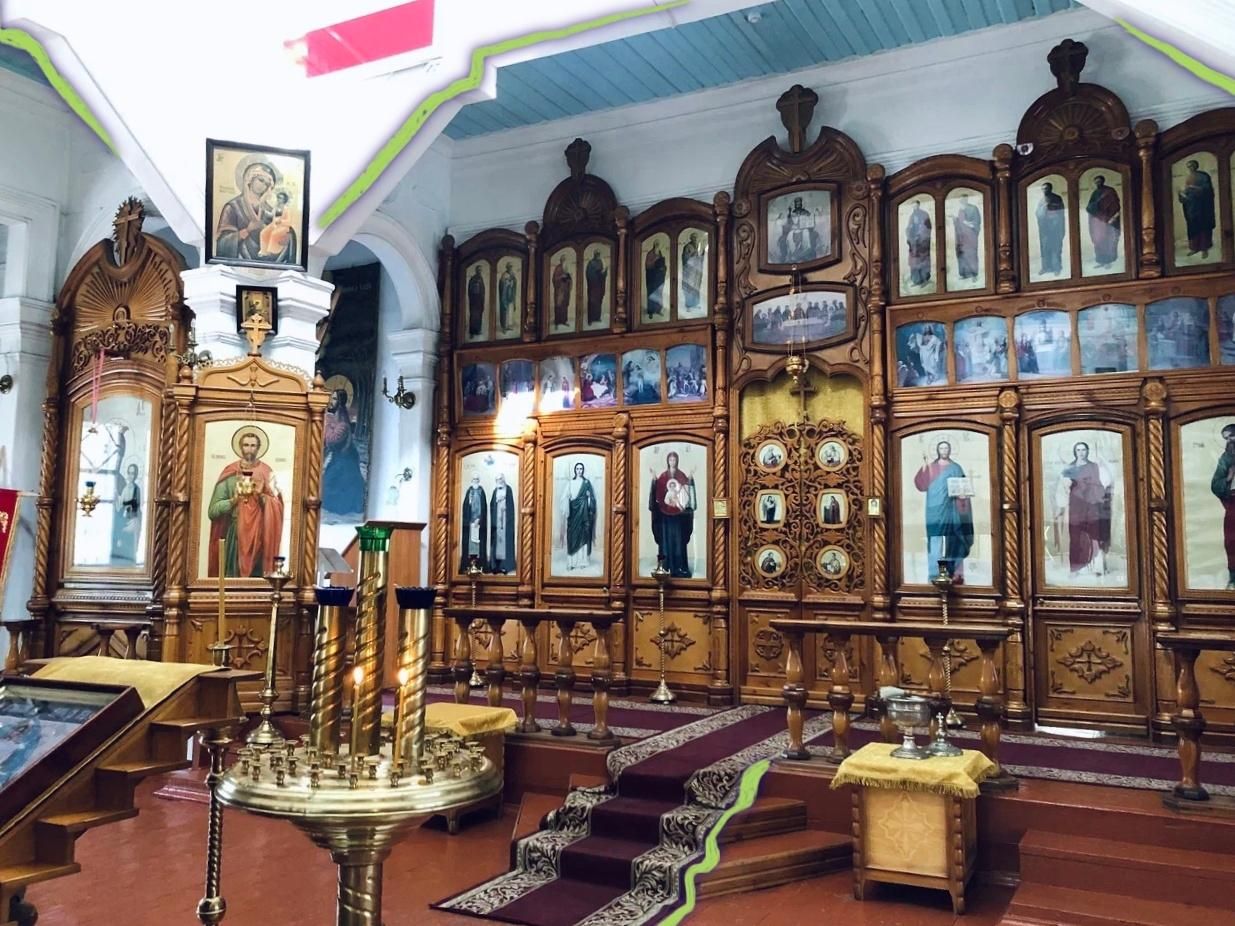
The interior of the temple
Source: Iparhan for Doxa
How to live on the border with China?
The fact is that it is closed Since the beginning of the Covid-19 pandemic, the borders of Kazakhstan and China were closed until recently, because of which many Zharkents did not have the opportunity to enter China either for personal or trade reasons. From the very beginning of the pandemic, and this is also a stumbling block, which does not allow the locals to live here in calm and stability. Previously, there were trade relations, they went there often. On the border with China is the village of Horgos, there is a border zone, MCPS International Center for Border Cooperation .
They said that Horgos also has an Orthodox church, but it is invalid, because there are not too many parishioners left - this is so?
There is an old church of the Kazan Mother of God, even older than our temple. But there are very few Orthodox Christians in Horgos, literally five families, so this church was attributed to a hottime. We collect people several times a year and come there. We celebrate the throne holiday and serve as the post -passion period.
Moreover, they told me that in Kulja The city in the Xinjiang-Uygursky Autonomous District is an Orthodox church, believers Christians, but in order to get there, it is necessary that the boundaries are open. The last rector, abbot Vianor, went there, knew people there, but I had not yet happened.
What means to be a "Zharkent" for your parishioners?
Despite the proximity with China, now there is no this exalted attitude to the hottime, although the city is in a wonderful place with many attractions. Next to us are hot springs in Chongj, and Charyn Canyon, and our mosque-pagoda The central mosque with elements of the Buddhist style .
But now the Zharkent is completely dependent on Almaty
How many people have left the city?
Many. Some, of course, can work here, because they have trucks, trucks and established ties with China; or there are people who are already at the age and they already do not need to leave here; Or there are those who have no opportunity to move. But many sell their own at home and move, and sometimes they even just leave it. It has become more difficult to earn here because of closed borders-this is not only the Russians, but also the Uigurs and the Kazakhs.
Our parish is also empty. About 35 people during the pandemic left for Russia, to Germany.
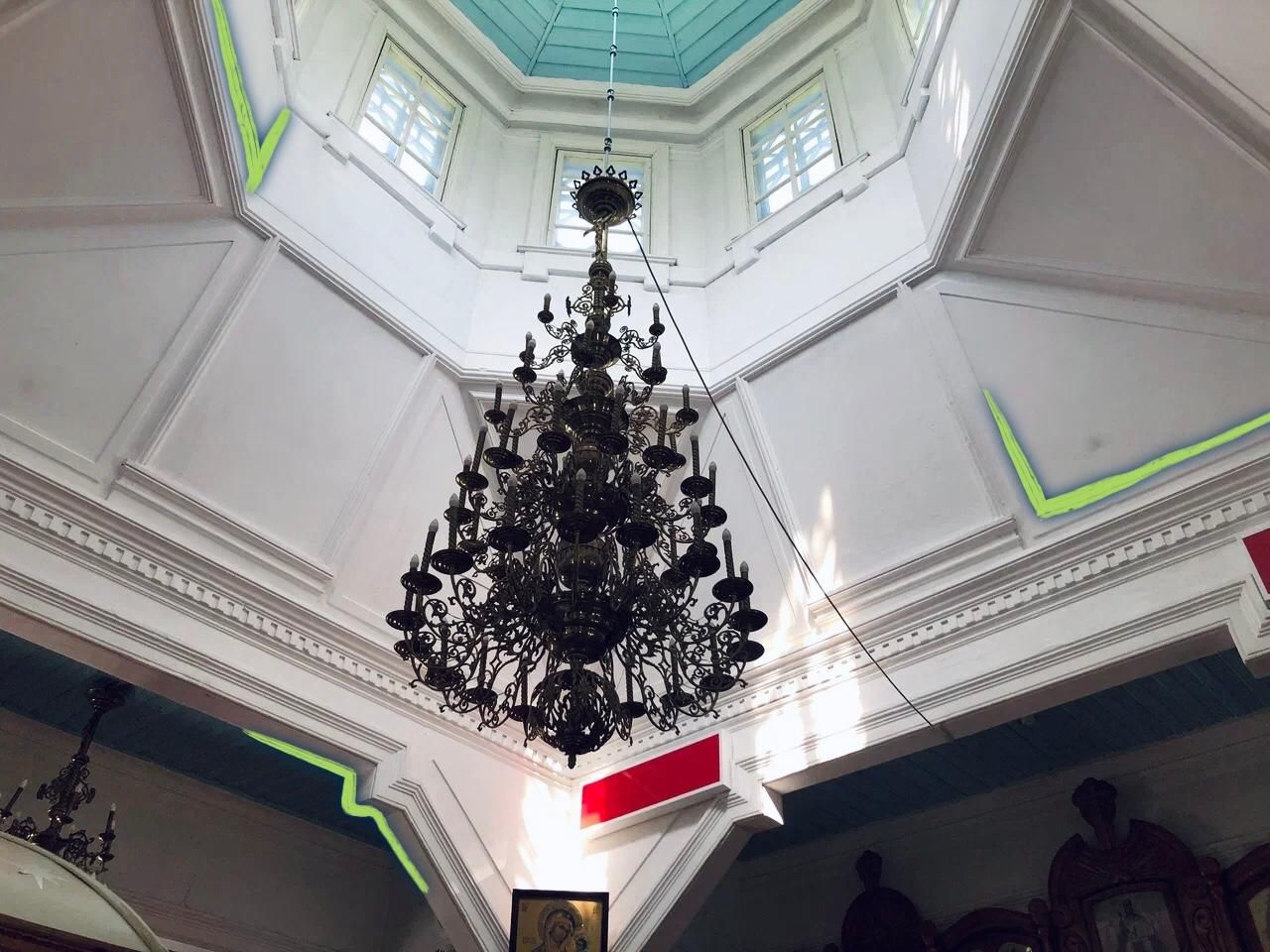
The interior of the temple
Source: Iparhan for Doxa
Mosque-pagoda
The temple in the name of the Prophet of God Elijah stands on the street named after Genghisid A direct descendant of Genghis Khan, a representative of the steppe aristocracy Chokan Valikhanov, an officer of the Russian Empire, orientalist and ethnographer. The mosque in the style of Chinese pagoda is only a ten minutes walk. She stands at the intersection of the streets named after Dinmukhamed Kunaev, the first secretary of the Central Committee of the Communist Party of Kazakhstan, and Magaza Masanchi, Dunganin-revolutionary and fighter for the establishment of Soviet power in Central Asia (executed in 1938, rehabilitated in 1957).
This architectural monument was built in 1892, its construction was financed by the merchant Vali Akhun Yuldashev, who was one of the Uyghurs, who fled along with the Dungans in Semirechye . After fishing by the Russian Empire of the Uyguro-Dungan state, the Ili Sultanate in the 19th century, about 45 thousand Uyghurs and five thousand Dungan decided to accept Russian citizenship instead of Chinese. The architect of the project was appointed Dunganin Hon Peak. In the area where the mosque is located, a legend is popular, which states that the architect did not build a single building more beautiful than the Zharkent mosque, for which he was severely punished: he was executed immediately upon returning to China. This mosque is its only surviving work.
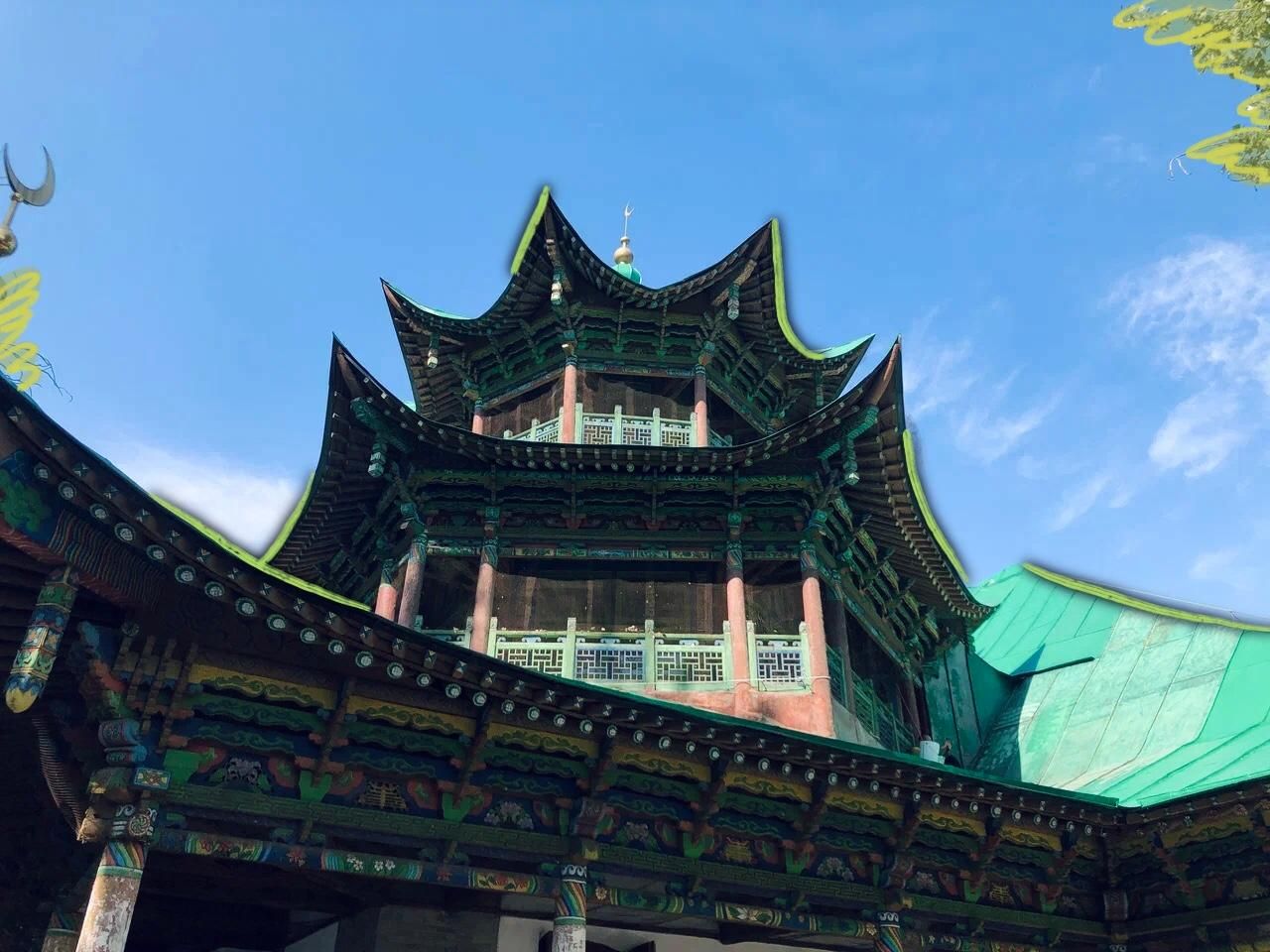
Mosque in the style of Chinese pagoda
Source: Iparhan for Doxa
The wooden parts are made without connection with nails, and the Tien-Shan spruce served as the material. The mosque has two miners Tower (round, square or multifaceted in cross section), with which believers are called up for prayer : one is located above the stone porch at the gate and looks like a pagoda, and the second - above the mihempo The niche in the wall of the mosque indicating Mecca , as the tradition requires this.
The mosque itself is hidden inside the yard, it is not very large and squat. Once upon a time there was still a madrasah with her A religious school , so the whole complex looks like a small town of Xinjiang in a Zharkent. Since the time of the USSR, the mosque has not been functioning for its purpose: there was both a warehouse and a cinema. Now there is an architectural and art museum, which demonstrates more than 500 exhibits: clothing, household items, utensils of residents of the border region of the last century. For a small amount, a museum worker can arrange an excursion on him, but Azan A call for prayer from the minarets of the mosque has not been heard for a very long time. It is in Turkey or in the Middle East, for example, people are allowed to pray in mosques, which are three times older than the state itself, and in Kazakhstan, apparently, they are very concerned about the preservation of buildings.
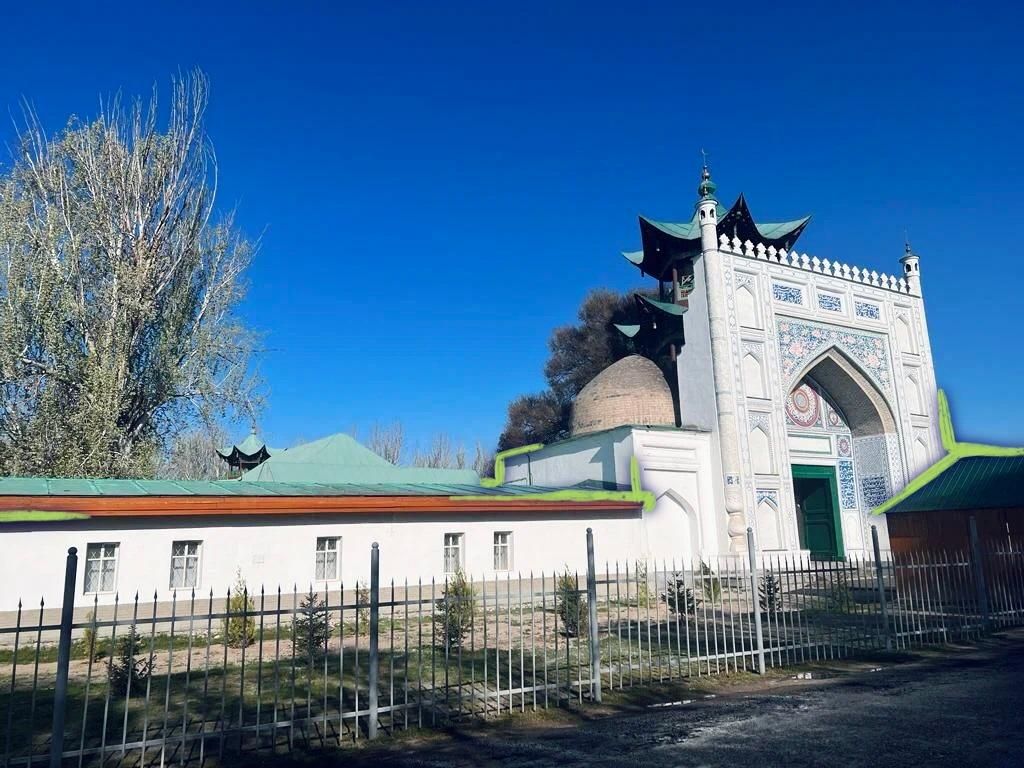
Mosque
Source: Iparhan for Doxa
Judging by the stories of people, the mosques of a similar style can be found everywhere in China, but in Kazakhstan this is definitely not anywhere else. Perhaps it will not be, because because of the ongoing persecution of Uyghurs in China, it is easy to forget that we were once friendly neighbors. Probably, the new Uyghur culture will be the most anti-Chinese.
"Everyone lived the same and worked"
In order to understand what the life trajectory of the Middle Zhakenter and how the city has changed over the past half a century, I was advised to contact Akimzhan Ashirov , the married doctor of the Central District District Hospital of Zharkent.
-My parents returned here in 1962 from Sinjiang, where they migrated from hunger in the 30s, and since then I have been here in Panfilov The Soviet name of the Zharkent . Kazakhs, Uyghurs, Dungan and others since Soviet times all lived the same and worked. In general, we have about a hundred nationalities, there are schools in three languages: in Kazakh, Uyghur and Russian.
The last immigration here was in the mid-nineties, when the borders were opened, and relatives were finally able to see each other. There were two waves of Russian migrations: “ Dutovites Participants in the white Cossack movement of the chieftain Dutov ”(in the 20s of the last century) and those who were sent here after the war in the 60s.
Another important part of Zharkent life is trade with China. Especially now, because after KADSA KARTAR (" Bloody January" - this is what Kazakhstan call mass protests in January 2022 - I.) , Kazakhstani customs periodically falls into large scandals . To find out about this from the inside, I met with my acquaintance Yusupzhan and his two daughters in one of the many cafes of " European cuisine In Kazakhstan, European cuisine is understood as any truly European cuisine-Borsch, Bishftek, and dumplings, and a Kiev cutlet, and a hamburger with a frer. However, borsch or dumplings can easily serve in the most ordinary cafes along with Beshbarmak and Lagman. ", as we call them in Kazakhstan.
- I began to engage in the cargo transportation of “folk consumption” from China to Kazakhstan several years ago, because there is nothing more to do in the Zharkent. Why are cargo trailers and semi -trailers on every street now in front of the houses? Because from the 90s people in Xinjiang went to their home! At first, shutters, “shopping shops”, and now, when the market has developed, we wander there as whole wagons. Not to mention the heap of firms that are engaged in the completion of applications, goods from China to Kazakhstan and vice versa. They have a lot of Uyghurs of the local, “Chinese” who are doing this, so it is not difficult for us to agree with them.
Yusupzhan has been living for the past many years, like half of the Zharkents, in two cities: Almaty and Zharkent. He was born and raised here, he went to study in Almaty, where he worked for a long time after graduation from the university. However, four years ago I decided to return closer to my native land with my daughters, I even thought to build a house, but here, as inappropriately, there was a pandemic, which was why I had to return back to Almaty.
- the volume of trade is increasing every year, therefore the number of machines that are engaged in the export of this TNP is increasing Goods of consumer consumption . The scheme here is simple, like two kopecks: you call in China on your truck, loading goods and export in any direction, whether Kazakhstan, Russia or Central Asia. Previously, they even went to Afghanistan, but now the daredevils go there a little.
But of course, Zharkent is already completely different. In the USSR there were the concepts of the “border zone”, which included Zharkent, and the “border strip”, where it was impossible to call in at all. Only people with a local residence permit or a special exemption, which were issued at the Ministry of Internal Affairs if there was a need, could call in our city: a business trip, a trip to relatives, a wedding, and so on. Therefore, everyone here was like a big family. The doors to the houses never closed, and they could leave the car along with the keys in the ignition lock for several days, and no one even thought of stealing.
Many scarce things were sold: Adidas sneakers, Montana jeans, and so on.
About who we are and where we are, the question is modern. Only in recent years, reports began to appear about some supposedly interethnic clashes. Previously, no one even bothering, as in Almaty, some nation-all somehow went the same, did not think. All Uyghursky knew here, even Russians.

We talk about Russia's military invasion of Ukraine, protests and repression. We believe that now, when dozens of media have closed or ceased to cover the war, access to independent information is more important than ever.
"Pushkin knows better than Confucius"
About how young Zharkents live, I asked Yusupzhan’s daughters - Dilyara and Milan . The first studied in a fever in the 11th grade, and the second in the 8th.
Dilyara: I studied at a Russian -speaking school, where everything is in the rest: five Kazakh language lessons per week and five Russian lessons. Most of my classmates were Uyghurs, as well as a couple of Kazakhs and one Russian boy. All the Uyghurs could speak freely, in Kazakh, and in Russian, and I am much worse, because we are urban, and in my family they speak Russian. Most of my classmates left to study in Almaty, but some remained in the city to work. There are few entertainment: hookahs, parks, saunas and friends to gather.
Milana: I studied at the Krupskaya school, she is also Russian -speaking. I studied with the Uyghurs, Kazakhs and a couple of Russian guys, but we never shared in nations. When I asked classmates why they study in this, and not in the one that the Uyghursky was studied in depth, they answered that they just liked the environment more, although they were talking calmly and in life and Russian. In general, given that I transferred to this school from the city, it seemed to me that people here are much easier. For example, when they found out that I did not really know the Uyghur language, they took it as a normal phenomenon, because I did not live in a fever.
Krupskaya school also has its own Instagram . From the outside it may seem strange that half of the Uyghurs on the Kazakh-Chinese border, that they do not teach in the depths of Kazakh, are engaged in Russian, not Uyghur or Chinese. After all, it seems that Xinjiang, where there are enough large cities and large universities, are very close. All the same should be said that in the camps of “re-education” people are happy, nothing happened on Tiananmen Square, and their rulers imposed Islam of Uyghurams. Large difficulties in order to leave for Almaty or Europe for training, are that the majority of Uyghurs of the rest of the world are considered almost illiterate, since since 1937, Uyghursky, like all other Turkic languages, began to be written in the USSR, and in China, as well as several centuries ago, Arab bastards. Neither the state nor the philanthropists conduct special programs for teaching the Uyghurs of their writing. However, even this would not help to get an education in the Xinjiang, because, as the researchers note , the China’s Communist Party is slowly doing everything to make Uygursky aul language, and leave the language of higher education and money exclusively in Chinese. Of course, the correct Chinese is not Chinese ah Weiwei One of the most famous contemporary artists of the world and China, who was expelled from his native country for work, denouncing the Beijing authorities. , and Chinese Xi Jinping. Therefore, Uyghurs choose to know who Pushkin is, not Confucius, because in the nearest big city - Almaty - Pushkin also know much better than Confucius.
Shard of the "Russian World"
Now the temple in the name of the Prophet of God Elijah is a historical architectural monument, which turned 130 years old. On the 125th anniversary of the church, people gathered not only from all over the country, but also from neighboring states, and local Muslims came to congratulate their neighbors because they believed that this was a common holiday. Because Kazakhstan is a multinational country, and Muslims with Christians have one goal in it - maintaining the world. Now there is little reminds that once here the fate of entire peoples were decided by large empires. Of course, you should drive a little east, and you will find yourself in the world's largest open -air concentration camp (which I wrote here ), but in the hottime you still feel the strange idyll of Kazakh nineties and zero, when China was just a neighbor, and Russia is just a former center of the unfortunate common Soviet country. This is also an illusion, because then there were protests in China, and the war of Russia with Ichkeria. But you will understand what I am about if you find yourself in any of the auls of the southeast of Kazakhstan, where the concentration of feelings and emotions is no less in the bazaar than in the largest Istanbul market, and each piece of space is fraught with an inexplicable smell of antiquity; Where time flows very slowly, but much more destructive than in cities.
Despite the fact that the Church and the city itself were built on the recently conquered terrain as part of the royal version of the “Russian world”, all these years, which have passed since the Kazakhstanis gained independence, the church has been living in peace and harmony with others, and they are with the church and its parishioners.
Empires are leaving, but fragments can calmly survive their collapse, and people can adapt old buildings to new times and new needs. For example - under the worship of God, a single for all
Other materials
"Uyghursky question" in China and beyond
Who are Uyghurs and why are they talking about so little about them?

"We had so little time outside the empire, and now she came to us again"
A resident of the countries where the Russians are fleeing, they talk about their experience of interacting with them and advise how not to screw up in a foreign country

What are ethnic activist and how to overcome internal chauvinism
Conversation with Danghayaa Khovlyg - the creator of the podcast "Says the Republic _"

For 30 years of my life in Crimea, my people never resorted to violence
The last word of Osman Arithmememov, the Crimean Tatar activist, sentenced to 14 years in a colony for "terrorism"
Forgotten toys of the empire
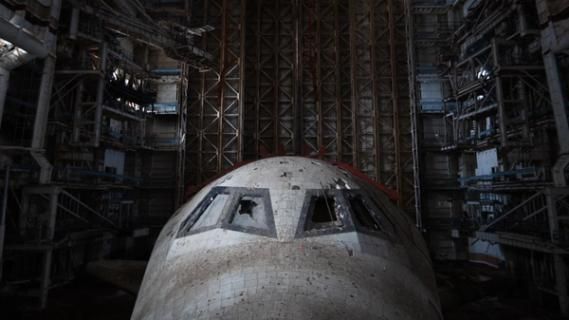
As Baikonur from a symbol of cosmic expansion turned into a colonial relic. Photo report DOXA

