
Translated material
Not in the horse growth
Why do juggling by trillions of state investments not improve the quality of life of people either before or after 2030

Photo: Anatoly Zhdanov / Kommersant
When the authorities tell us how we will live in 2030 and further, we must ask ourselves how we live now, and evaluate not only the promises of the authorities, but also our personal opportunities. And the promises of the authorities - the most good - may not coincide with the capabilities of people.
Large expenses
The economy is an inertial thing, in the long term, it almost does not depend on the efforts of the government, which at best may not interfere with its growth. The government can “push up” individual sectors of the economy, redistribute resources, ensure a solution to some issues, but in general the economy is more than the state, and the amount of funds at the disposal of people is greater than the amount of funds in the hands of the government.
The figures of upcoming government expenses voiced by political leadership for five years, of course, can hit the imagination, but when they compare them with the expenditures of the budget as a whole, they do not seem to be somewhat prohibitive
In 2025–2030, it is supposed to spend an additional about 1 trillion rubles. per year, excluding such expenses as:
The write -off to the regions of two thirds of budget loans, the total volume of which at the beginning of 2024 was about 2.5 trillion. rub. - This money and repaid infrastructure loans are planned to be sent again to regional infrastructure projects;
Selection of 4.5 trillion rubles. for updating the housing and communal services infrastructure (it was about state and private means).
Thus, the volume of additional budget expenditures can be in the range from 1.2–1.4 trillion (excluding housing and communal services) to more than 2 trillion rubles. per year (100% of the expenditures on housing and communal services at the expense of the budget), in total (counting until 2030) the budget can assume additional obligations in the amount of 7.5 to 12 trillion rubles. over 6 years.
How much will it be as a percentage of GDP? We do not have an official forecast for the economy further than 2026, but if we accept that until 2030 the economy will grow at the same pace as from 2024 to 2026, then annual additional expenses can be from 0.5 to 1.1% of GDP.
According to the promises of the political leadership, this money will go to social support and ensuring the growth of income of certain categories of state employees, the development of infrastructure (transport, industry, social objects and housing and communal services), technological development (creating “own” technologies in the first place) and support for science, development of the economy and artificial intelligence, support for non -resource, replacement of technologies and goods from countries that are not of the Russian Federation of the Russian Federation It can maintain commercial relations on goods/technologies from other countries or on our own (what we call “import substitution”), support for small businesses, domestic tourism and the development of the financial market as one of the sources of funds to finance the implementation of government tasks.
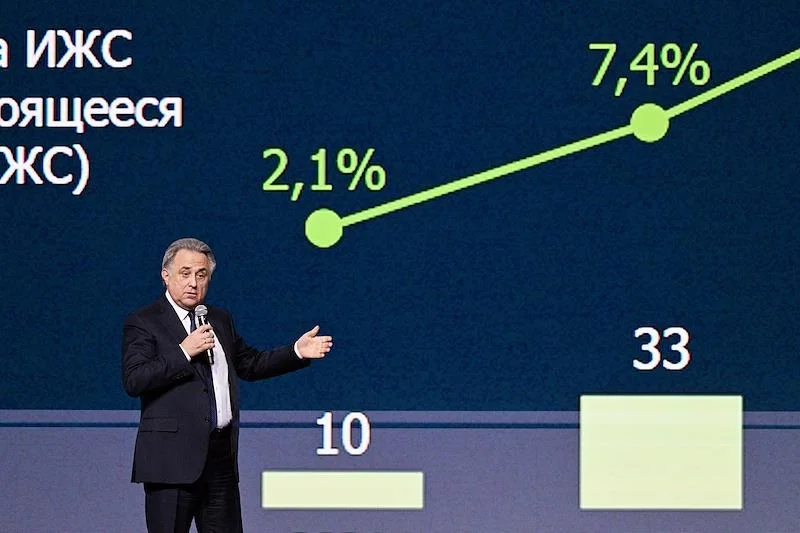
The funds will be spent in the framework of a series of national projects, projects launched back in 2018 and compiled in the areas of “human capital”, “Comfortable environment for life” and “Economic growth”. Now the projects “Youth of Russia” and “Personnel” were added to them.
It is important to understand here that “new” expenses in one way or another echoes the “old” ones.
For example, in 2024, national projects ended their life cycle: “Health” and “Demography”. The financing of the National Project "Healthcare" in five years amounted to 1.3 trillion rubles. Thus, when we actually hear the words about the direction of more than 1 trillion rubles to health facilities, it is actually about maintaining financing healthcare at the same level (minus inflation and the cost of replacing lost “imported” drugs and medicine technologies). This, of course, is better than the lack of such a financial flow, but it is important to understand that the 2024 budget does not provide for any significant increase in healthcare expenses.
The goals are achievable and - no
Government expenses are not an end in itself, they should lead the economy to some significant results. To understand how much these results are achievable, we must try to evaluate the previous dynamics for similar purposes.
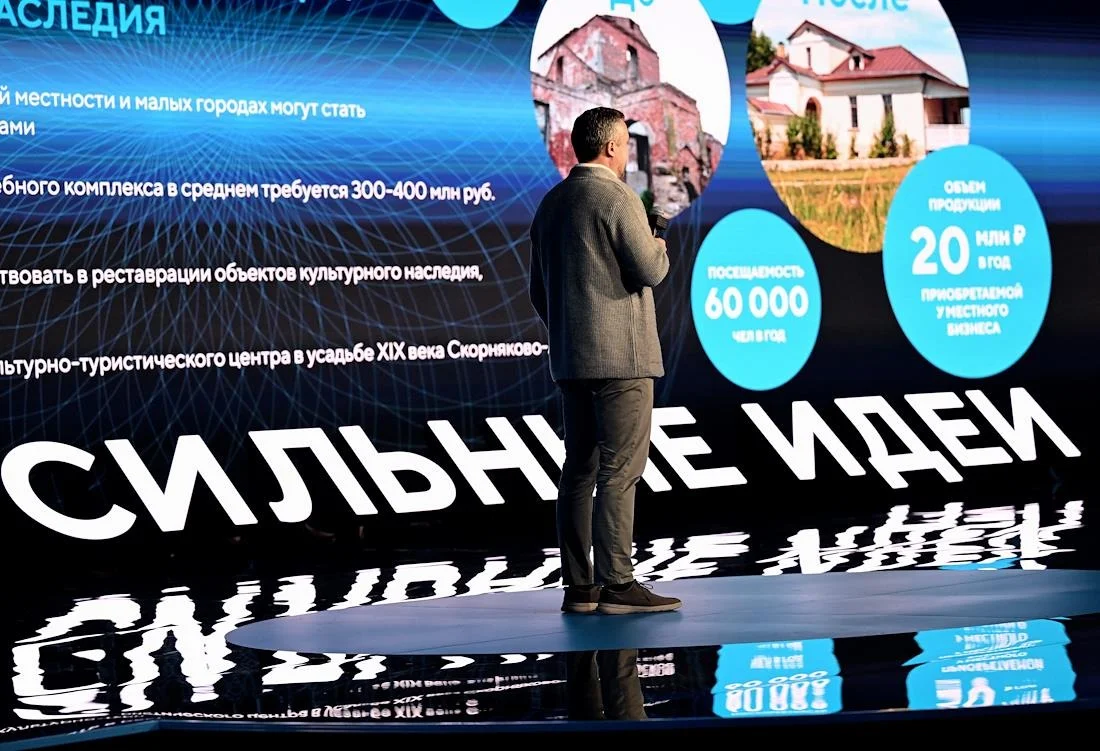
For example, what does a statement of investment in key sectors of 70% in 2030 mean?
Firstly, it is unclear which “sectors” can be considered key (most likely, we are talking about sectors focused on “tasks”).
Secondly, this means that during the forecast period, investments should grow by 7.8% per year. Over the past 10 years, investments on average have grown 1.7%per year, in recent years - primarily due to state investment, and the initial goal of the total share of investment in GDP - 25%voiced in 2018 - was never reached (in 2023 it was at the maximum - 22.4%).
On the other hand, an increase in output/export of products of the agro-industrial sector is declared 25/50% to the level of the 2021th. For 2022–2023, the issue in agriculture increased by 11%, so the remaining 13% growth by 8 years will require modest 1.5% growth per year. Which is quite realistic. As for export plans: in 2018, the goal of an increase of from $ 25 billion to $ 45 billion in 2024 was set for an agro-industrial complex (the goal was almost already reached in 2023, exports amounted to $ 43.5 billion, however, excluding dollar inflation).
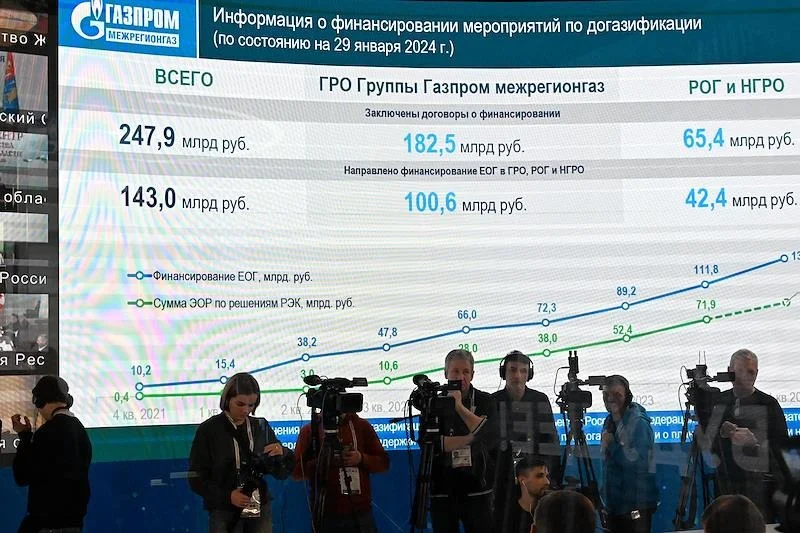
It turned out worse with Nesiriev non -energy export (HNE). In 2018, “everything that not oil/gas” was sold at $ 150 billion, and the source plan in 2018 suggested that by 2024 NNE would be $ 250 billion. But something went wrong,
In 2023, NNE decreased by 25%-to $ 146 billion, therefore, a wilted increase in HNE by 2/3 by 2030 means an exit by $ 243 billion, which is even lower than the initial goal of 2018. And this, as we recall, excluding the inflation of the dollar.
Growth somewhere there ...
At the same time, a truly “big goal” is also declared from the point of view of the economy-this is to become the fourth economy of the world. And what, World Bank also thinks so: according to the basic forecasts of the World Bank, by 2030 the Russian Federation will overtake Japan in terms of GDP for PPP. Why, for example, do not set the task, increase not the general, but the per capita GDP along with the per capita real income of Russians, otherwise this indicator of the Russian Federation is in the sixth ten countries.
But here is the problem. Let me remind you that economic growth is an inertial thing, and it is not possible to disperse it with monetary pumping of individual industries.
If you look at the industrial production index in the Russian Empire-the USSR-Russia from 1861 to 2012 (it was published in the book of the economist S.V. Smirnov “The dynamics of industrial production and the economic cycle in the USSR and Russia, 1861–2012”), it is immediately noticeable that the revolution, war and the change of socio-economic formations led only to brief (by historical standards) breakdowns from the breakdowns One and a half century trend. The Russian economy added one and a half percent a year. With the exception of periods of restorative growth, when people compensated for the failures of previous years with their labor.
At long -term intervals, the economy - whatever you do with it - will move forward in accordance with your
a) natural resource restrictions and
b) at the moment technologies.
And that's it.
The government, we must pay tribute to him, understands this perfectly.
First Deputy Prime Minister Andrei Belousov, speaking at the Forum “Entrepreneurship in Russia: Affairs of the Sector”, said that the six-year government of the government in the economy is divided into two stages “The first is a structural restructuring with an annual growth of 2%. At the second stage, we will go out of 3%, the world economy is growing on average by 2.5% in the year. ” “Economic growth of 2.5-3% can only be investment-active, with an exceeding the growth rate of investment over GDP growth rates,” added the first deputy prime minister (interfax quote).
And on the same day when the Deputy Prime Minister explained the plans of the government to launch economic growth, the resume of the discussion of the Board of Directors of the Central Bank of the Russian Federation was published on the key rate, ending with the following phrase: “The Russian economy, taking into account the conducted monetary policy, will return to the trajectory of balanced growth by 2026.”
That is, the reader will ask, it turns out that now we have an unbalanced “economy growth trajectory”?
No, of course (therefore, by the way, it shows nominal growth).
What is a “balanced economic growth”?
This is a growth in which you do not withdraw additional resources from the consumer sector and hold the distribution of investment constant.
And unbalanced growth is such as now with a “structural transformation”, when the proportion of funds (investments) is growing, redistributed to the “industry focused on the fulfillment of the tasks of the government” (let's say).
What is the problem with such "unbalanced growth"? The fact that sooner or later he rests on limiting labor resources, and growth in production - at least in one of the sectors (consumer or “production”), stops.
Rosstat will not allow: according to his data, Russian industrial production with the exception of the seasonal and calendar effect from May 2023 to January 2024 has not changed, and mining was reduced by 1.7%, and processing increased by 0.8%. That is, the impulse of the budget pumping of industry was exhausted approximately at the beginning of the summer of 2023.
All this may mean that in its current configuration, the economy has reached the production, resource and personnel limit.
The government understands this, and Deputy Prime Minister Belousov says that "without increasing labor productivity, we will not be able to overcome labor restrictions, and the real growth of salaries should be attached to an increase in labor productivity, otherwise excess costs arise."
But there is a problem: enterprises “performing tasks” have no (and cannot) motivation to labor -saving innovations, and in general, such motives are alien to the economy organized for the redistribution of resources by the government and their mobilization.
So, one way or another will have to “click on labor”: to reduce its cost by expanding the offer of labor by migrants (as an option), increasing inflation, reducing the quality of goods, wages with “excisable goods”-this is how in the USSR part of the “labor” was actually paid for “excisable vodka”, some options for limiting consumption or introducing additional taxes for consumption in order to motivate people to “work more for the same ones money".
Therefore, GDP growth in such conditions may not mean growth in welfare - and simple, “measurable” goals like the growth of commodity consumption of households are not set.