
Translated material
Referendum under the muzzle of a machine gun
On January 25, 2024, Doxa was recognized as an “unwanted organization”.
If you are in Russia or plan to return to it, you can not replace our materials on social networks, refer to them and publish quotes.
Read more about what is possible and impossible, read in the cards .
From the first day of the full -scale invasion of Russia in Ukraine in the Kherson region there are Russian military. All this time they occupied cities and villages, tortured and killed the disagreements, robbed and destroyed at home and believed that they were "here forever." On September 23, the occupation authorities began a five -day “referendum on the accession of the Kherson region to Russia”. While the Russian propagandist talks about the “long -awaited return to their native harbor”, local residents are hiding home and pasting pro -Ukrainian leaflets.
On the second day of Voting, Doxa tells how people lived in the Kherson region for the past seven months and how they met the so -called “referendum”.
Editor
Editor
John LockeIllustrator
Illustrator
Stasya BububuPublication
September 23, 2022
Referendum
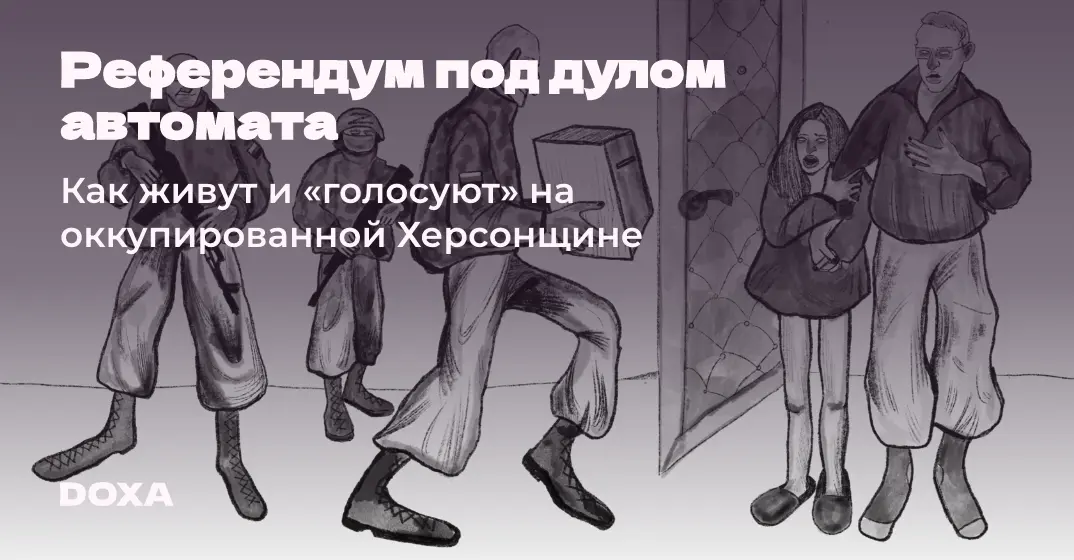
In a cramped entrance, the panels rises a man in camouflage on the stairs, in his hands a machine gun, followed by two women: one has a portable urn in his hands, the other has a pile of papers. The four is closed by another man-military, also with an automaton, it is almost impossible to distinguish it from the first. A man descends towards them, squeezing into the stairs. Women stop:
- Can you ask you, and from what apartment are you? - And I don't live here. - Exactly? - Yes.
Knock on the door. Silence. Knock on the door. Silence. Knock on the door. Silence. The four go down. So in the occupied territories of Ukraine are “referendums” about entering Russia.
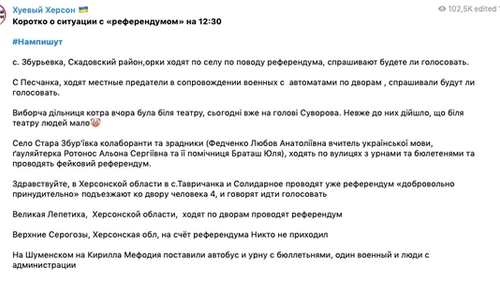
The procedure that was organized in the occupied territories and called a referendum may seem unusual even for Russian voters. “Voting” about entering the Russian Federation will last within five days, from September 23 to 27. Schools in which the "polling stations" unfolded, went for a long weekend. In addition to the "sites" in budgetary institutions and in the courtyards of residential arrays, there are "commissions" that go home with urns. Often such a “commission” is made up of people not only with ballots, but also with machine guns, local residents in telegram channels warn each other. Activist of resistance urge the locals not to open the doors and not go to the "sites", people of pro -Ukrainian views adhere to just such tactics.
The first reports of the plans of the Russian Federation to hold “referendums” in the captured territories of Ukraine began to appear in late spring. On these “referenda”, residents of the occupied regions should “express their will” and join the Russian Federation: at that time it was also about the Kharkov region, which the Armed Forces of Ukraine was released in early September. In the captured territories, cooperations of propaganda media, officials from the Russian regions and political technologists_ni, who were supposed to prepare local residents for a “return to their native harbor”, worked. However, the dates of the "will" were transferred several times. On September 20, it was announced that the “referendums” would still take place: a multi-day vote will be held in the “DPR”, “LPR” and the occupied areas of the Kherson, Zaporizhzhya and Nikolaev regions.
On September 20, it was announced that the “referendums” would still take place: a multi-day vote will be held in the “DPR”, “LPR” and the occupied areas of the Kherson, Zaporizhzhya and Nikolaev regions.
“I am sure that the leadership of the Russian Federation will accept the results of the referendum and the Kherson region will be part of Russia, becoming a full -fledged subject of a single state,” said Vladimir Saldo, the head of the occupation administration of the Kherson region. Back in March, a few days before his “appointment”, Saldo opposed the referendum: “I did not betray my soul, my soul is Kherson, and Kherson is Ukraine.”
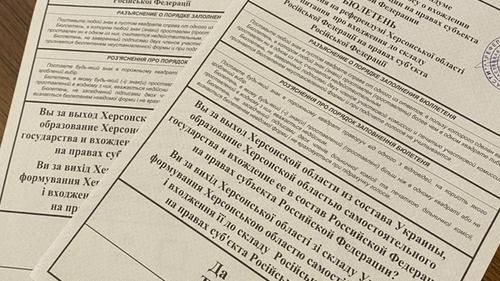
“For the convenience of voters”, the occupation authorities organized a subdominal vote, which is ensured by “visiting groups”. The occupation authorities say that this should “minimize risks” for people in the conditions of ongoing hostilities: “We are going to the voter, not the voter goes to us. There is an opportunity for everyone to come and vote, ”said Marina Zakharova, head of the Kherson“ Izburkom ”.
In the occupied areas of the Zaporizhzhya region, annexed to the Kherson, the “authorities” promised to use brigades from “members of the CEC and police officers” who would bypass residents and “offer” them to vote.
Medusa, citing sources in the presidential administration, published possible indicators that the Russian authorities expect to receive referendums in the occupied regions. In particular, in the Kherson and “attached” Zaporizhzhya regions to it, the turnout should be about 80%, the vote “for” - about 90%.
“Already now it is clear that they did not succeed in the pictures, there is no appearance in these areas. They drove the state employees who depend on their employers. A couple of people who create a picture for one viewer, ”says Stefan Vorontsov, a volunteer from a new Kakhovka.
For Stefan, this “referendum” is a circus that does not mean anything - “bunch in flour”. “To begin with, for people in some villages this referendum has long passed. The youth raised all the youth from there, pensioners were left without access to information - as the “authorities” said to them, so they live. They told them that Zelensky surrendered, and they believe in it. We now have a half-Kherson region without communication: people say that we need to hand over old passports and get new-Russian. That's all. "
Representatives of the Russian authorities say that after the formal entry of the Kherson region and other occupied territories, the Russian Constitution will operate on them, which means that the promotion of the Ukrainian army on them can be a formal occasion to declare war.

We talk about Russia's military invasion of Ukraine, protests and repression. We believe that now, when dozens of media have closed or ceased to cover the war, access to independent information is more important than ever.
Occupation
On February 24, at 7:20 in the morning, the Border Service of Ukraine reported that the Russian troops attacked the state border in the northeast of the country, “and in addition, in the southern direction of attacks are carried out from the temporarily occupied Crimea”-according to the nearest Kherson region. The inhabitants of the Kherson region learned about the full -scale war a few hours earlier and not out of the news: Hurson, Skadovsk, New Kakhovka and other settlements of the region, one of the first in the whole country, woke up from explosions.
“We woke up when we blew up the warehouse of the military unit outside the city. Everyone woke up: I, husband and child. I ran to the window, and saw a red-orange glow, and said: “This war began,” Alina recalls from New Kakhovka. This small city of the Kherson region is the key to the region: here is the Kakhovsky hydroelectric power station, which supplies electricity and water of the dry south of Ukraine. Not far from the hydroelectric power station, in the suburbs of the new Kakhovka, Alina's mother lives. That night, together with her husband and child, Alina decided to leave for her, as she suggested that the battles would be held in the city: “This decision to go to my mother was not the best. Because at 10 in the morning these nonhumans had already hung a flag at the hydroelectric power station, tanks and equipment with z-koks traveled with might and main. The city was simply handed over. "
On the first day of the war, Russian troops advanced 60 kilometers deep into the Kherson region, capturing the city and village. The inhabitants of the Kherson region say that at the time of the invasion, bridges between the Kherson region and the Crimea were cleared - these rumors are confirmed by the former governor of the Kherson region Andrei Gordeev.
“We were not just“ abandoned ”and“ not defended ”, but it was a betrayal,” says Roman, a resident of Kherson. - When in 2014 the Crimea was annexed, the Antonov bridge, which connects the city with the region through the Dnieper, was mined. All Kherson people knew about this. But when the Russians came, the bridge was not mined. Someone says, in two weeks, someone-two months before the invasion of this explosives were removed. ” The most important battles for Kherson occurred on the Antonovsky bridge, as a result of which by February 28, Russian troops surrounded the city. On March 2, Kherson's mayor Igor Kolykhaev announced the absence of Ukrainian forces in the city. “In the early days of the war, there were a lot of videos from the local telegram channels, and one of them was visible how the killed Ukrainian military was lying around. Now this is not found anywhere, and then it was in ordinary local chats. And it was evident that ours recede, because the Russians were moving closer and closer from the Antonovsky bridge, and we soon began to hear not just explosions, but automatic lines, which meant that the Russians entered the city, ”recalls Kherson Karin.
“In the early days of the war, there were a lot of videos from the local telegram channels, and one of them was visible how the killed Ukrainian military was lying around. Now this is not found anywhere, and then it was in ordinary local chats. And it was evident that ours recede, because the Russians were moving closer and closer from the Antonovsky bridge, and we soon began to hear not just explosions, but automatic lines, which meant that the Russians entered the city, ”recalls Kherson Karin.
According to residents, the rapid retreat of the Armed Forces at the beginning of the war greatly demoralized many Kherson. “In the city, double moods began. Maybe if we were told that we would be released in three months, everyone would dutifully waited for these three months, and so everyday expectation tires emotionally and morally. The mood in the city was already such that, “perhaps we are not recruited already and joined in Russia.” Many have already begun to reconcile with this thought. Many people think that they have betrayed us, ”Karina shares. Alina says that in her environment there are no people who collaborate with the Russians. But there are those who get used to the thought of the occupation:
They ask [the evacuated residents of the Kherson region]: "If there is a rash, do you come [back home]?"
The state of uncertainty is also enhanced by information blockade: only Russian channels show on television, mobile communications and the Internet work with interruptions.
The leadership of the region, police, prosecutors, courts was evacuated from Kherson on the first day of the war. The police did the same, dressing in civilian clothes. The head of the Russian “administration” of Kherson was a collaborator, the former head of the city and deputy of the city council Vladimir Saldo.
Briefly, to the question of why the Kherson region was handed over, the adviser to the office of the President of Ukraine Alexei Armorovich replied : "Pierced."
Humanitarian disaster
The first four days after the occupation, Alina, along with her family, lived in the basement of a suburban house with her mother. They were not allowed into their apartment in New Kakhovka: “It was very scary. We prepared everything so that there was something to sit on, so that there was food, water and blankets. When the shooting range began, we fled to the basement, froze, and at night, if it was quiet, we ran into the house to warm up and at least sleep a little. They slept in clothes and shoes on the floor so that if something would fly from the window, be lower than it. If it began again, they fled to the basement. ” After four days, Alina was able to evacuate to the city: “During the evacuation, a schmuck with a machine gun stood and told us not to worry:“ You are in complete safety ”.”
In the occupied settlements, Russian troops established a commandant hour: after 22.00 you need to be at home. But even in the afternoon, many try not to leave the house without unnecessary occasion. “People buy food in the morning and quickly home, so that, God forbid, do not catch the eye of the military,” says Irina from Skadovsk. According to Karina, people did not know how the Russians would behave: "There were a lot of frightening stuffing: it seems the girl went out for a walk with the dog, and she was shot."
Kherson’s capture of the Russian forces began with the European Party shopping center, which the military and then looters plundered first. Already from Europort, Russian soldiers walked along the central streets of the city and occupied administrative buildings. With the advent of the Russian troops of the city and the village of Kherson region, they were not just in occupation, but under complete blockade: the military on the checkpoint did not pass any cargo, including humanitarian convoys. Karina from Kherson recalls that on the night of February 24 the first thought was to stock up in cash and food:
We had one round -the -clock store in the area, and it had an ATM. Banks immediately blocked credit cards, and many people were left without money. The lines of the shops stretched like a snake, for each of the cash desks of a hundred meters. People raked everything they saw
During the first days of blockade, residents bought few remaining goods and grocery stores were quickly closed. Irina from Skadovsk says that until the last, network supermarkets were held, but they closed by the beginning of April. First of all, cereals, vegetables and canned food were sold out.
“It is good that there are farmers that grow vegetables and meat. And the rest with everything is a problem, basically everything is sold on the street by dealers at a sky -high price, ”Alina says about the situation in New Kakhovka.
The situation was especially acute in the villages for the Dnieper. The shops there were plundered in the first days of the occupation. To provide people with food, relatives collected parcels, and city services agreed to transport parcels by bus. And in Kherson, and in New Kakhovka, and in Skadovsk, people call their position a “humanitarian catastrophe”:
“Many, so to speak,“ entrepreneurs ”began to travel to the Crimea and purchase products there. By a funny coincidence, Kherson goods are also sold in Crimea. Somewhere in mid-April, the last warehouses of ATB stores were unpacked, we also stood in line for these warehouses. There were pasta, canned mushrooms, pineapples, some vegetables, tea, coffee and sweets. Then we were announced that on April 28, all shops of Ukrainian networks are closing. Allegedly, they printed the last warehouses and they have nothing more to trade. ”
Volunteers began to engage in food to the occupied territories, who carry products, household chemicals and medicines from non -accumulated areas on ordinary cars. In one of these groups in the new Kakhovka, volunteers and Stefan Vorontsov, but recently his work has practically stopped:
“In early September, we were forbidden to import all Ukrainian products. We have tons of goods and wait, but we cannot. They said that now, customs is being made at the Vasilyevka checkpoint in Zaporozhye from the checkpoint. Now you have to bother with the documents more: you will need to fill out an application, receive permission and only then import something.
And if the humanitarian is not imported, then for the village this is a disaster. If something else from the Crimea is imported and resold more expensive in cities, then nothing is brought to the village, and if they brought it, it is too expensive for local
About a week after the occupation, Russian troops began to give out humanitarian aid to residents: “Nobody took it massively,” says Sasha, a cosmetology from Kherson. - Mostly pensioners took, who, at such increased prices, could not allow themselves to buy anything by retirement, and socially dysfunctional people. My grandmother took two sets: to myself and my diabetic sister. It had sunflower oil, stew, sugar, cookies, rice. And so they [the Russian military] believe that the products that they betray us should somehow attract us. If you have come, give out the products that we are used to - to good products. ”
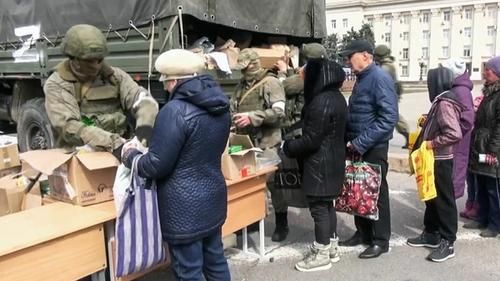
Russian troops distribute humanitarian aid in Kherson, March 2022
Photo: Ministry of Defense of the Russian Federation / TASS
Ukrainian pensioners, people with disabilities, large parents were without pensions and social payments, since Ukrainian banks do not work in the occupation. Volunteers helped them all: “Because diapers or baby food is all very expensive, not to mention specific needs, like lactic nutrition,” Stephan explains. - Now all this is not. In terrible dreams I dream these people. ” Volunteers do not risk bypassing prohibitions to import some goods, as they felt that they were searched for by the occupation authorities, and temporarily lurked.
It is also not easy to get medications in the Kherson region: Russian -made medicines are imported from Crimea, Ukrainian and foreign - volunteers from neocked Ukraine are brought. But due to the lack of experience and knowledge, volunteers are sometimes mistaken:
“Sometimes volunteers said:“ Yes, there is a medicine. ” And then it turned out that they mixed up the name or offer an analogue that does not fit, ”says Karina.
According to Sasha from Kherson, the hospitals did not stop working and tried to provide medicines from their stocks. So, her sister with diabetes was issued for free insulin. And when the pharmacies were earned, they continued to receive free insulin there.
Hospitals as objects of critical infrastructure immediately fell under the influence of the occupation authorities. Where the head physicians refused to cooperate, they were replaced by “their own”.
“My boyfriend’s mother works in the hospital,” says Karina, “and one fine day the invaders came to them and said:“ Now you are working for us. ” They put there the head physician of their pro -Russian man, and he now controls everyone. ”
The wounded Russian soldiers were treated in the same hospitals. “They helped everyone,” Sasha recalls.
Abduction and torture
As of early August, Ukrainian human rights activists recorded at least 412 cases of abduction and holding a resident of the Kherson region by Russian invaders. Most often, former participants in the ATO and local activist_ki become victims. Kherson resident Vlad recalls:
I will not say that the Russians were unlimited, but they solved their strength issues. They came to my friend an atoshnik to visit, talked, but physically did not touch. The phrase sounded: “You can think everything you want, but to say, no. When we hold a referendum, you will be mobilized to our side”
Judging by the stories of the student of Karina from Kherson, the Russian invaders still managed to recruit some participants in the ATO: “My grandmother lives in the village of New Lighthouse. In her neighbors, the guys who served in the ATO. A month after the region was occupied, they were taken. Just arrived people with machine guns and took the guys, took somewhere. They returned a couple of days later, and some of them began to fight on the Russian side. Together with the Russians, they stood on checkpoints and searched the locals. There were no traces of violence on them-perhaps, somehow they pressed it differently. ”
The representative of the local government and local deputy_ki also become victims of abductions if they refuse to cooperate with the Russian authorities.
The Russian “administration” pays special attention to education in the city: for refusing to cooperate and study according to Russian programs, the principals of schools and teachers also run the risk of being in the basement. Only for September this year, the director of two lyceums disappeared in the New Kakhovka: Irina Dubas and Oksana Yakubova.
Torture as a constant attribute of the Russian prison are recorded in the occupied territories of the Kherson region. For the headman of the old Zburyevka Victor Marunak, the memories of the prison are associated with wires on the thumbs and legs, cold water flowing from the head on the back. He hardly remembers the electric current: he was too beaten. Victor told the Russian military that he would cooperate and escaped abroad. Now he is safe.
“I have seen many times how cars drive up to people on the street and packed a person. They see all this, but no one can do anything, ”says Karina.
There are assumptions that one of the torture cellars is on our street, because at night a car constantly came to this place at the commandant hour and shots of a pistol were heard. Ordinary civil cars at this time do not drive
Nazar Kagalnyak from the village of Abrikosovka fought in the Donbass in the ATO, and this attracted the attention of the Russian military. He was kidnapped from the house and a few days later with traces of beatings were brought back. Nazar's house became ill, and he was taken to the hospital in neighboring Olesha, where he died a few days later. Nazar had children whom he raised without his wife, the youngest of them finished the first grade this year.
Human rights activists and local residents are confident that collaborators merged the lists and addresses of the military, activists, journalists, and police officers, so the Russian military knew where and who to go.
Resistance
When the officials and the army left Kherson, the only force of resistance to the invaders became Teroboron. But due to the lack of centralized management and supply in the early days of the war, Terboron has not achieved significant success. Residents say that many volunteers did not accept Terborne ranks because there were no weapons. Then a group of men was organized in the people's militia, with Molotov cocktails they hid in a lilac park - in a collision with the Russian army, 36 people died.
“Young guys came out against heavy equipment with shovels and Molotov cocktails, they were shot from a large -caliber machine gun,” says a resident of Kherson Roman.
Now the main power of resistance in the city is partisan detachments that organize terrorist attacks against employees of the Russian “administration”.
Kherson’s activist_s are expressed by leaflets and graffiti with the anti -Russian position. One of the projects of resistance in the occupied territories of Ukraine was the Zhovta Stychka (“Yellow Ribbon”). Activist of movement urge residents to hang or draw yellow ribbons and Ukrainian flags in public spaces.
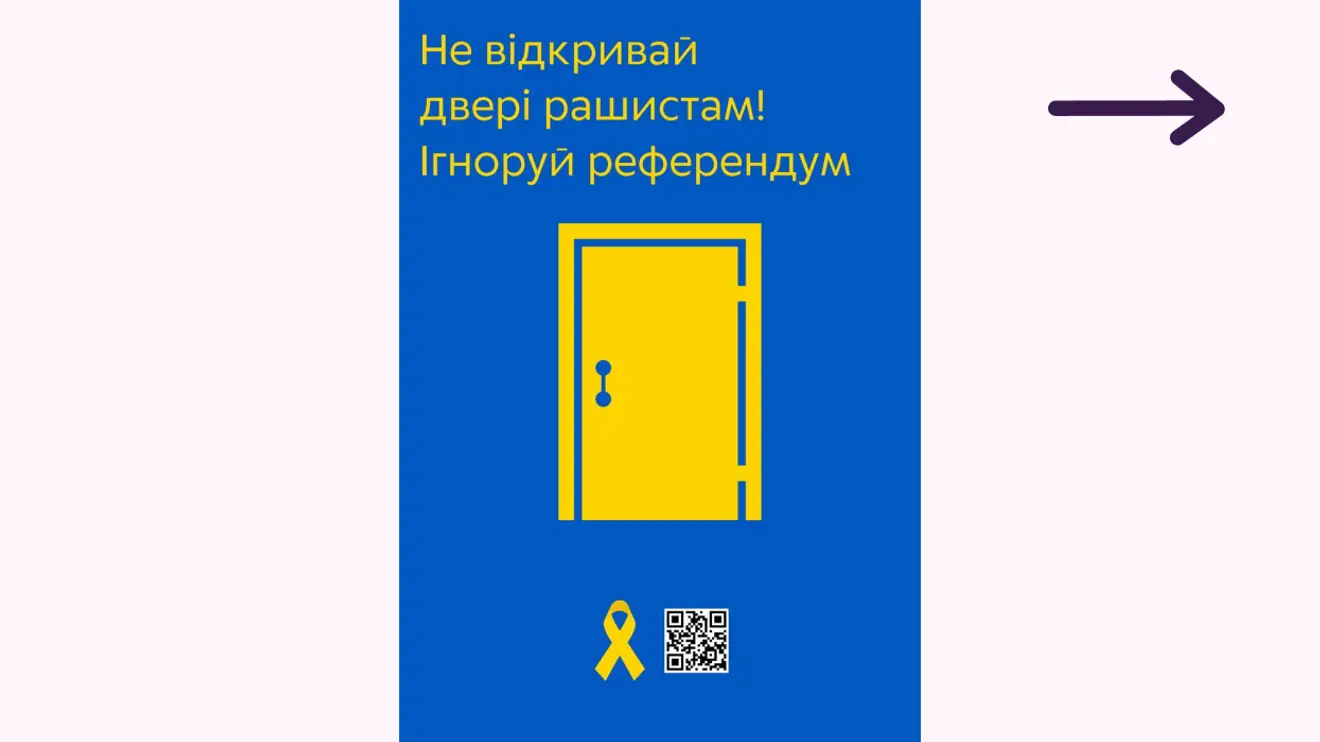
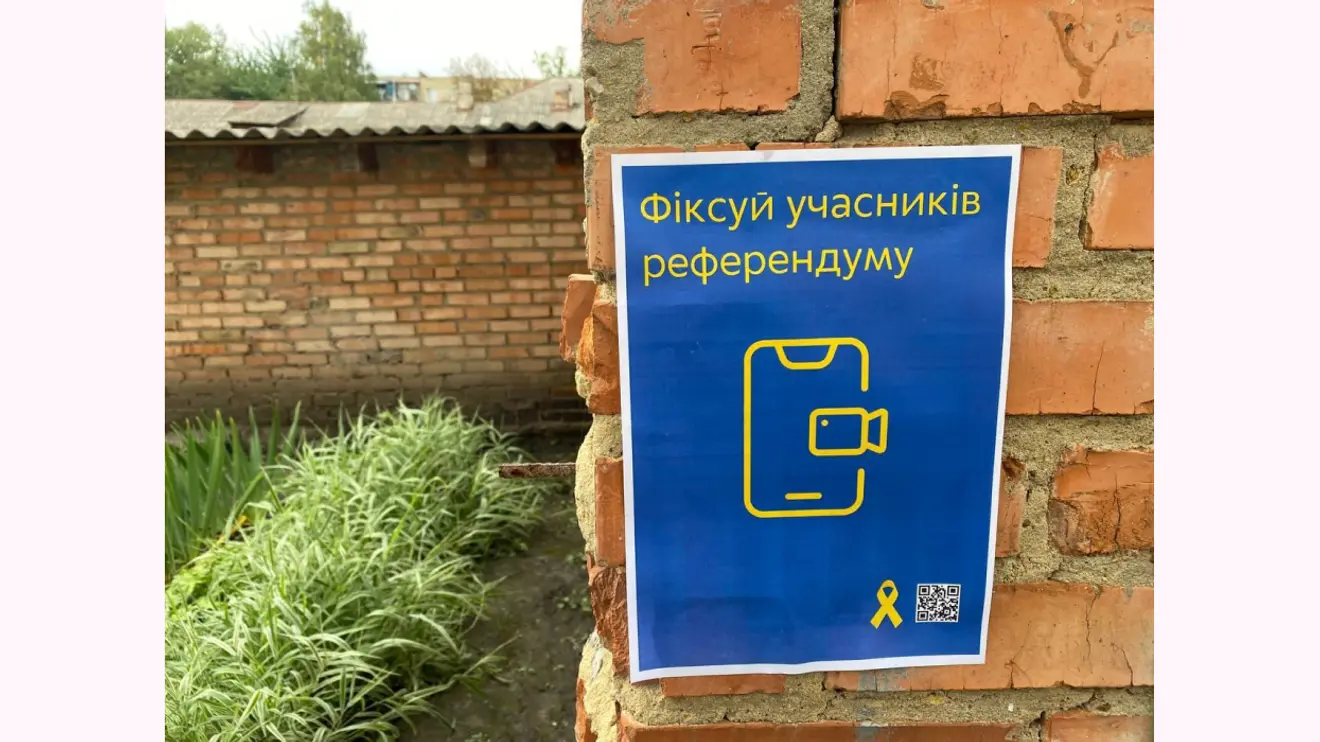
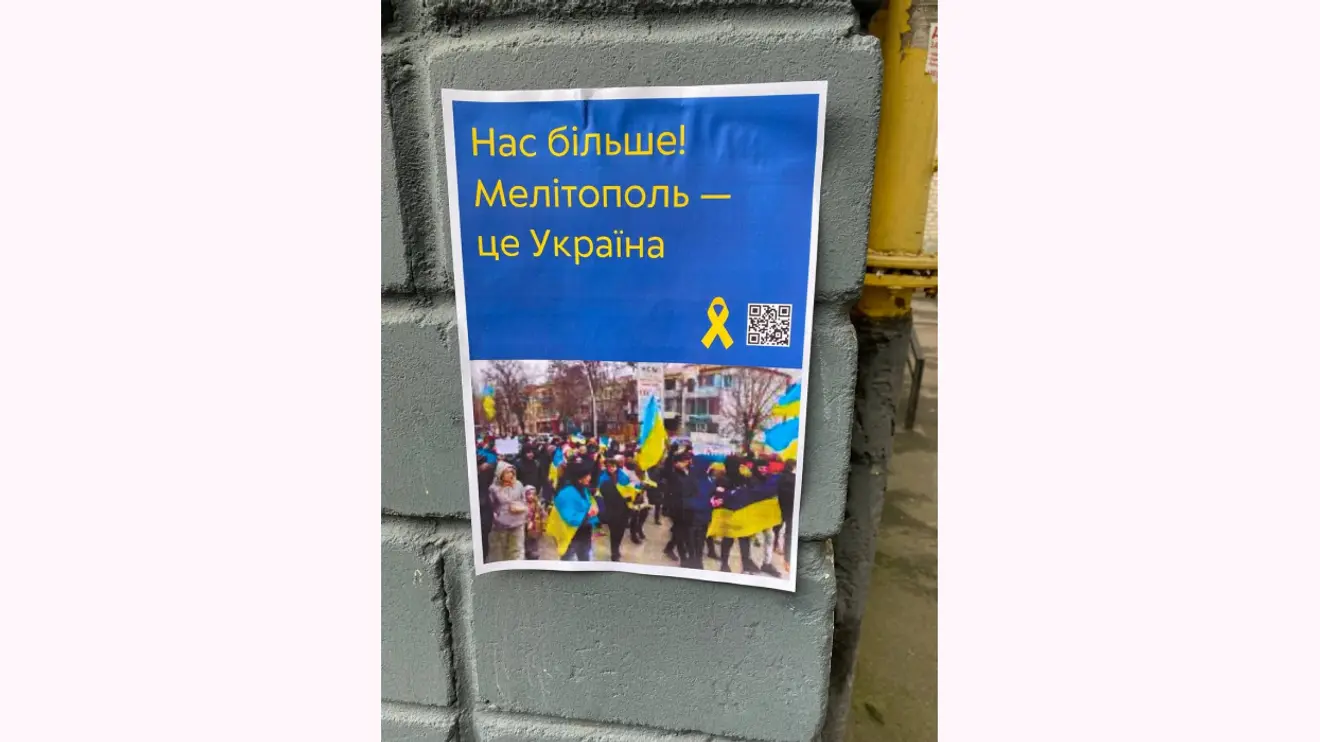
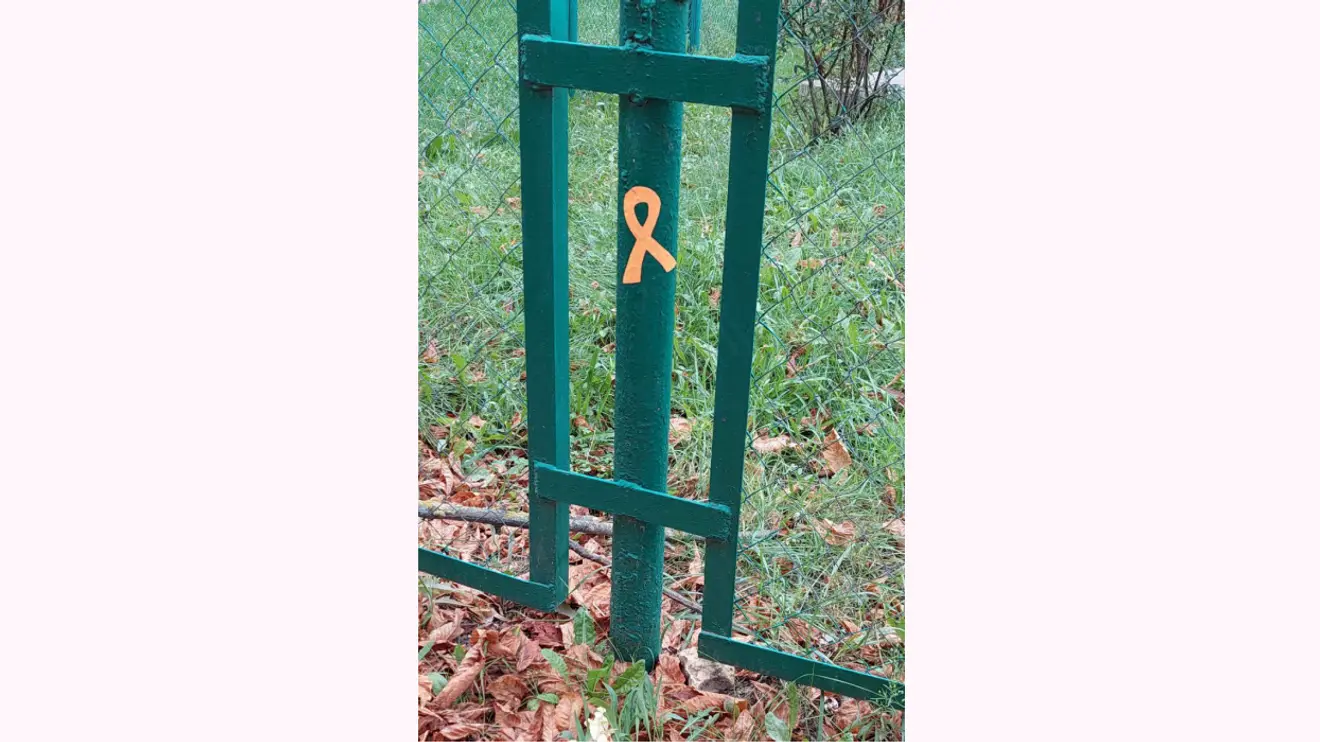
Photo: Telegram channel "Zhovta strip"
In the description of the telegram channel of the activist, they call: “The invaders have no place on your land. Tell them about it everywhere! "
The latest news about mass anti -Russian rallies in Kherson dates from April. Local residents began to reach protests less often, fearing the repression of the invaders.
Many people remained with their opinions and political views in their kitchens, but in order to go out into the city and say “Kherson is Ukraine” ... It is rare that anyone can go to. And if it goes, then they are quickly removed
Like volunteers who actively helped in the early days of the war: they were closed in basements, journalists were overlapped, ”explains the student from Kherson Karina. “Many of them left the region if it was lucky.”
Every day, leaving the Kherson region is becoming increasingly difficult, especially for men. And before, evacuation was accompanied by an exhausting road, bursts, examinations, interrogations, but still succeeded. Three days before the referendum, according to Stefan, the Russian occupation authorities stopped passing the guys 18-35 years, regardless of their health, family status or combat experience: “They are unfolding everyone. Why exactly until 35 years old, I do not understand. If they hope to mobilize these boys, then this is strange. How do they hope to make people with pro -Ukrainian views fight against Ukraine? People who are not for you are not the best military. ”