
Translated material
A long short time
How Russian analysts saw the country's economy until 2022 - and how they see it now
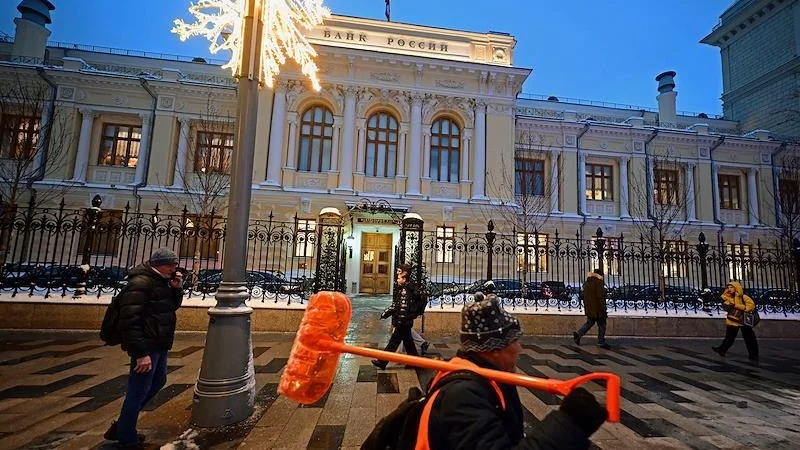
Photo: Alexander Miridonov / Kommersant
The economy is inertial. The consequences of the decisions taken today, we will feel “truly” years later-the current figures for growth or decline in GDP may not reflect the truly key economy development trends. But in a situation where the government actually takes responsibility for managing economic processes, it is interesting to see how their ideas “On the Beautiful” changed, what should be counted on and what should be expected.
Special significance
The release “Middle Forecast of the Bank of Russia following a meeting of the Board of Directors at the key rate” is an important document, it reflects the main indicators of economic dynamics, which is focused on both the government and the largest business. In a sense, the Central Bank “knows more” about the state of affairs in the economy than any statistical department, the Analitic Center of Think Tank or even the ministry. If they focus on “statistical reports”, then the financial regulator “sees money” - and this is a more important indicator of the processes taking place in the economy.
As the USSR Prime Minister Valentin Pavlov, who has been working in the USSR State Bank, wrote at one time,
“In fact, the chief of the most important secrets always and everywhere are financiers, because not a single explicit or hidden act is complete without financing. An experienced professional financier instantly understands what's what, why and why. In addition, if the documents of secret special services relate to some specific personalities, historical situations or the most important political privateities, then financial secrets cover the life of the country as a whole, affect the interests of everyone and everyone. Hence their special significance. ”
Medicial forecasts, as well as the releases of the Central Bank of the Russian Federation at decisions on the key rate in which the regulator explains its vision of the economic situation in the country, is a very good source of information about how the authorities evaluate the key problems of the economy - or rather, that they consider it important to inform the public about their assessment.
What has changed in four years?
So, we turn to the release of the Central Bank of the Russian Federation of February 12, 2021.
“The Board of Directors of the Bank of Russia on February 12, 2021 decided to maintain a key rate at the level of 4.25% per annum. In December [2020] and January [2021], the growth rate of prices remained at an increased level. The restoration of demand is faster and is more stable than previously expected. At the same time, restrictions on the part of the supply are preserved, which continues to exert the increase in prices for prices. Inflational expectations of the population and business are still at an increased level. ... In the future, taking into account the conducted monetary policy, inflation will be near 4%. ”
Inflation then developed above the forecast of the Bank of Russia, which is associated with weakening the ruble and rising prices in world markets. However, prices forces prices not only a weak ruble, but also the increase in the costs of enterprises and - attention - even then the shortage of labor.
GDP in 2020 decreased by 3.1%, the Bank of Russia reports, and in 2021 it should grow by 3.0–4.0%. In 2022, GDP can grow by 2.5–3.5%, and in 2023 by 2.0–3.0% - predicts the Central Bank. We recall these numbers.
So, in 2021, the Bank of Russia promises the growth of the economy in 2022 and in 2023, moreover, significant, as well as the return of inflation to the level of 4%, while noting the increase in prices and calls an important problem the shortage of labor resources.
Let's see what happened in a year. In the release of February 11, 2022 .
The Bank of Russia reports that inflation develops much higher than the October forecast.
“The expansion of demand continues to be ahead of the possibilities of building output. The rapid growth of economic activity with limited free labor resources enhances inflationary pressure. Inflational expectations are not yet reduced, remaining on many years of maximums. ”
That is, an obstacle to the growth of the economy remains a shortage of labor resources, and prices are not going to decline. Annual inflation in January 2022 increased to 8.7%
And - you will not believe - the reasons for the increase in prices for the year have not changed: enterprises laid in them the growth of their costs plus prices all over the world - why not grow Russian. Therefore, the deadlines for the return of inflation to the indicator of 4% are transferred to the mid -2023.
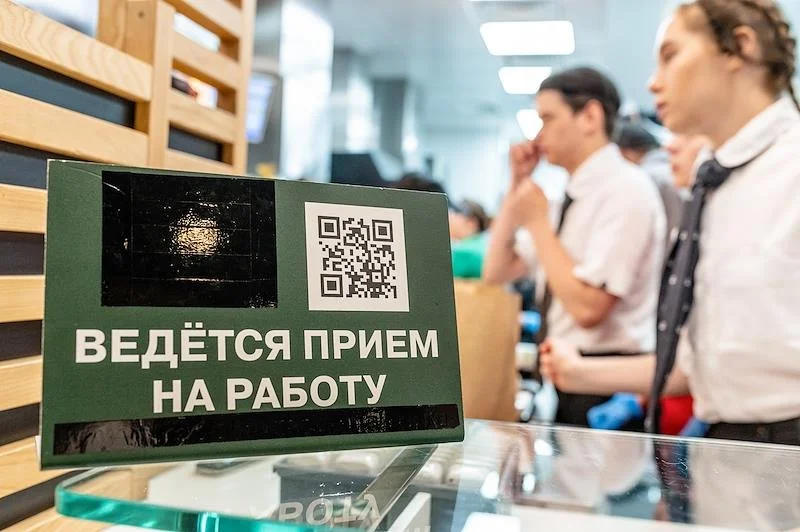
Demand for labor continues to grow, despite the influx of migrants .
“The level of unemployment is at a historical minimum, and the number of vacancies is in historical maximums. The situation in the labor market indicates that in the future an increase in the steady growth rate of the Russian economy will, first of all, be determined by the growth rate of labor productivity, ”the Central Bank of the Russian Federation said.
And what is ahead? GDP growth in 2022 will be 2.0–3.0% - says the Central Bank. In 2023, the Russian economy, according to the forecast of the Bank of Russia, will grow by 1.5–2.5%, in 2024 - by 2.0–3.0%.
What do we see here? The prognosis of GDP growth in the coming years has been reduced, but the prognosis of price growth has grown, although we are promised to return inflation to 4%. And again the main problems -
Lack of labor resources and the inability of the economy to satisfy internal demand. And no hints of the upcoming "structural transformation of the economy."
Let us turn the page - it passed a year after the start of the “structural transformation of the economy”, declared as a key element of government economic policy in the new conditions.
We read in the release of February 10, 2023.
“The current price growth rate is increasing. ... Inflational expectations of the population and business ... are preserved at an increased level. ... Acceleration of the execution of budget expenditures, deterioration of foreign trade conditions and the state of the labor market enhance the dull risks. ”
People are waiting for prices and, in general, do the right thing. An annual inflation will be 5.0–7.0% in 2023 (it turned out to be higher than the forecast, as we know) and will return to 4% in 2024, the Central Bank of the Russian Federation reports. The inflation goal was again postponed to the next year.
But the situation in the labor market remains unchanged.
“At the current stage, the possibilities of expanding production in the Russian economy are largely limited by the state of the labor market. Unemployment remains near the historical minimum. Against the background of the consequences of partial mobilization and the overall growth of enterprises demand for labor ... The lack of labor is intensified. ”
Economic dynamics is far from predicted in 2021. According to the Bank of Russia, the reduction in GDP for 2022 amounted to 2.5%.
Given the ongoing structural restructuring of the Russian economy, the Bank of Russia predicts that in 2023 the GDP growth rate will be -1.0–1.0%, and in 2024 the economy will grow by 0.5–2.5%. In 2025, GDP will add 1.5–2.5%.
We summarize. Inflation cannot be stopped, the economy has not grown. The reduction in GDP amounted to 2.5%, which the government considers success in the current conditions. The shortage of labor resources still inhibits development. And no one recalls the optimistic forecasts of 2021.
Well, a look from February 2024 .
“The current inflationary pressure has decreased compared to autumn months, but remains high. Internal demand continues to significantly ahead of the possibilities of expanding the production of goods and services ...
The return of inflation to the target in 2024 and its further stabilization near 4% suggest a long period of maintaining strict monetary conditions in the economy. ... annual inflation will decrease to 4.0–4.5% in 2024
... Internal demand continues to significantly ahead of the possibilities of expanding the production of goods and services. ... The shortage of labor resources remains the main restriction to expand the release ...
On the medium-term horizon, the balance of risks is still shifted towards the intelligence. ”
The growth of the Russian economy in 2023 of the Central Bank estimates at 3.6% (after a decline by 2.5% in 2022). The forecast of GDP for 2024 is an increase of 1.0-2.0%, for 2025, the Central Bank predicts an increase of 1.0–2.0%. Everything is bad. Nothing in common with the forecasts of even two years ago.
And - all the same. Growing inflation, which cannot be suppressed in any way, the shortage of labor resources and the economy that stagnates in the four -year period.
Yes, GDP grew 3.6% in 2023 (after a decline in 2022 by 2.4%). But recall that in 2021 the Central Bank of the Russian Federation predicted for the economy at least three years of steady growth.
There are not enough labor resources again, prices are rising, but at the same time, the government and the budget cope with their obligations, the issue in individual sectors is growing, and in general everyone demonstrates optimism.
"Living money"
Now let's look at the indicator that is impossible for an ordinary person and it is impossible to pronounce aloud - estimates/forecasts of the amount of the account of the account of current operations and the account of operations with capital (we are talking about exceeding foreign exchange earnings over foreign exchange expenses).
In fact, government policy is largely determined by the dynamics of these same indicators.
In February 2021, the Central Bank of the Russian Federation predicted the volume of this balance in total:
$ 39 billion in 2021,
$ 29 billion in 2022,
$ 25 billion in 2023.
In fact:
In 2021, the balance amounted to $ 120 billion,
In 2022, the Central Bank already predicts it in the amount of $ 133 billion,
for 2023 - $ 108 billion,
and in 2024 - $ 78 billion.
And what happened? Yes, according to the results of 2022, the balance is a colossal $ 229 billion - a lot of forecasts. However, it is sharply reduced in 2023 - to $ 50 billion, while the forecast for 2024 is already $ 46 billion.
“Free money” turns out to be incredibly a lot in 2021 and in 2022, but then it becomes less, and it is noticeable. The “currency pillow”, an excess of these means, allowed the government to do anything in principle, anything, without regard to the general state of affairs in the economy.
But the Central Bank of the Russian Federation warns -
“... Further strengthening of external trade and financial restrictions can weaken the external demand for Russian export goods and have an incessive effect through the dynamics of the exchange rate. ... The negative impact of existing external restrictions on the potential of the Russian economy may be stronger, which is also significant inactive risk.
In the case of an additional expansion of budget deficiency, the index risks will increase, and a more stringent monetary policy may be required to return inflation to the goal in 2024 and maintaining it near 4% in the future. ”
In other words, the Central Bank of the Russian Federation says, the less currency is in the hands of the government, the more rubles will be in the economy, the more it will be more expensive to cost people's consumption.
And how is the economic growth? And so: there is currency revenue from the export of resources - there is growth, there is no currency revenue - instead of the growth of consumption, there will be an expensive consumer loan.
This thing - that long -term economic growth does not really depend on situational actions, the government understands. And this paradoxically unleashes his hands for any action.
I explain. If you plan to maintain power forever and you know that the level of economic development of your country in relation to other countries will remain plus or minus the same and determine the prices of hydrocarbons-then you may not take into account economic indicators in your policy.
If there is economic growth, and it is needed so that your country remains “in the top”, then you have a motivation to do what will be useful (or at least not harmful) for the economy. And what will be harmful is not to do.
But if there is no economic growth, then "everything is allowed." Whatever you make decisions, no matter how you swing the “economic boat”-it is quite difficult to overturn it with your own efforts: any actions of the authorities will be compensated to some extent by many people who simply want to live, feed their families and are quite rational.
And even if there is no growth, then the efforts of people can partially compensate for the consequences of ineffective administrative decisions, which means there will not be a sharp economic recession - in any case, in the long term. (Well, everything can happen for a short time.)